In a deal that could redraw regional trade routes and unlock the full potential of Jordan's vast mineral wealth, Amman and Abu Dhabi have signed a landmark $2.3 billion railway agreement, one of the most significant infrastructure partnerships the Middle East has seen in years.
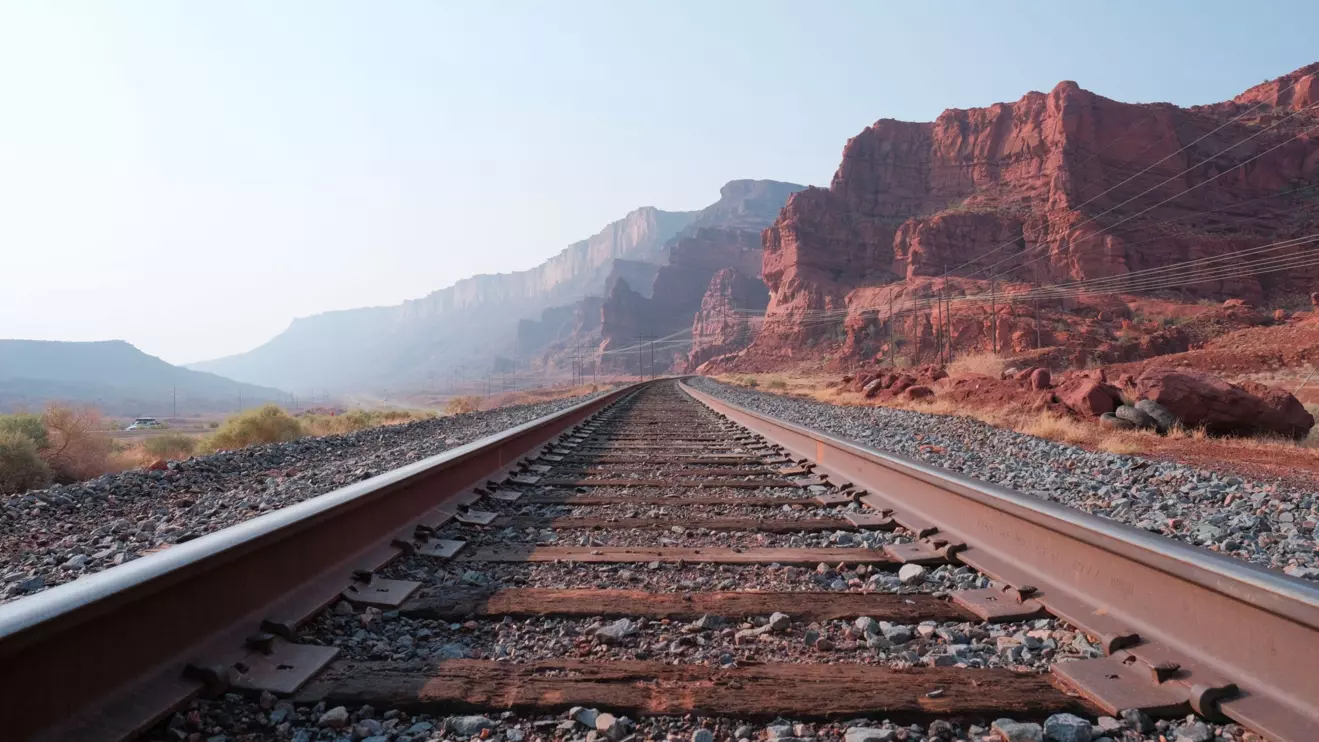
The centrepiece of the deal is a 360-kilometre rail network that will cut through Jordan's southern landscape, connecting the phosphate and potash mines of the provinces of Ma'an and Karak to the Red Sea port of Aqaba via two main corridors, complete with tunnels and bridges.
Designed to carry up to 16 million tonnes of phosphate and potash annually, the railway will transform Jordan's ability to export its most prized natural resources to global markets, faster, cheaper and at far greater scale than ever before.
The signing ceremony, held in Abu Dhabi in the presence of Jordanian Prime Minister Jaafar Hassan and UAE Vice President Sheikh Mansour bin Zayed Al Nahyan, was a moment laden with symbolism: two neighbouring nations, bound by shared interests, committing to a project that extends well beyond rails and rolling stock.
More Than a Railway - A Regional Lifeline
What makes this project truly compelling is its broader strategic ambition. According to the Jordanian government, the Aqaba rail network is conceived as the first link in a far larger connectivity chain, one that would eventually stretch from the Red Sea port northward through Syria and Turkey to the Mediterranean, while simultaneously deepening ties with Saudi Arabia and the Gulf states.
In a region hungry for new trade corridors and less dependent on traditional chokepoints, Jordan's railway could emerge as a critical artery of Middle Eastern commerce, positioning the Kingdom as an indispensable transit hub between continents.
Wednesday's signing did not come out of nowhere. The two countries had laid the groundwork with preliminary documents signed in September 2024, and the railway project itself sits within an even more ambitious framework: a sweeping $5.5 billion investment programme agreed between Amman and Abu Dhabi at the close of 2023, a testament to the depth and durability of their bilateral relationship.
To execute the project, a dedicated joint venture company has been established between Abu Dhabi's IMAD Holding and Jordanian partners. Both governments confirm the network will be operational five years after construction begins, though a precise start date is yet to be announced.
Betting on Jordan's Mineral Crown Jewels
The economic logic is airtight. Jordan is no minor player in global mining: the Kingdom ranks fifth worldwide in phosphate production and seventh in potash, two minerals whose strategic value is only rising as the world scrambles to secure food security and industrial supply chains.
Yet for decades, inadequate infrastructure has limited Jordan's ability to fully monetise these reserves.
This railway changes that equation entirely. For Jordan, it is a generational infrastructure investment. For the UAE, it is a calculated and far-sighted bet on the critical minerals economy of tomorrow, and on a neighbour whose geographic position and natural resources make it a partner worth backing at scale.