
Iran
One country votes. The other executes
On the eve of Israel’s general election, Iran said on Monday that the outcome would make no difference to the Islamic Republic. The remarks echo the regime’s long-standing rhetoric toward Israel.

Let us be blunt. Weeks of diplomacy, goodwill gestures and presidential announcements of imminent deals have produced exactly nothing.
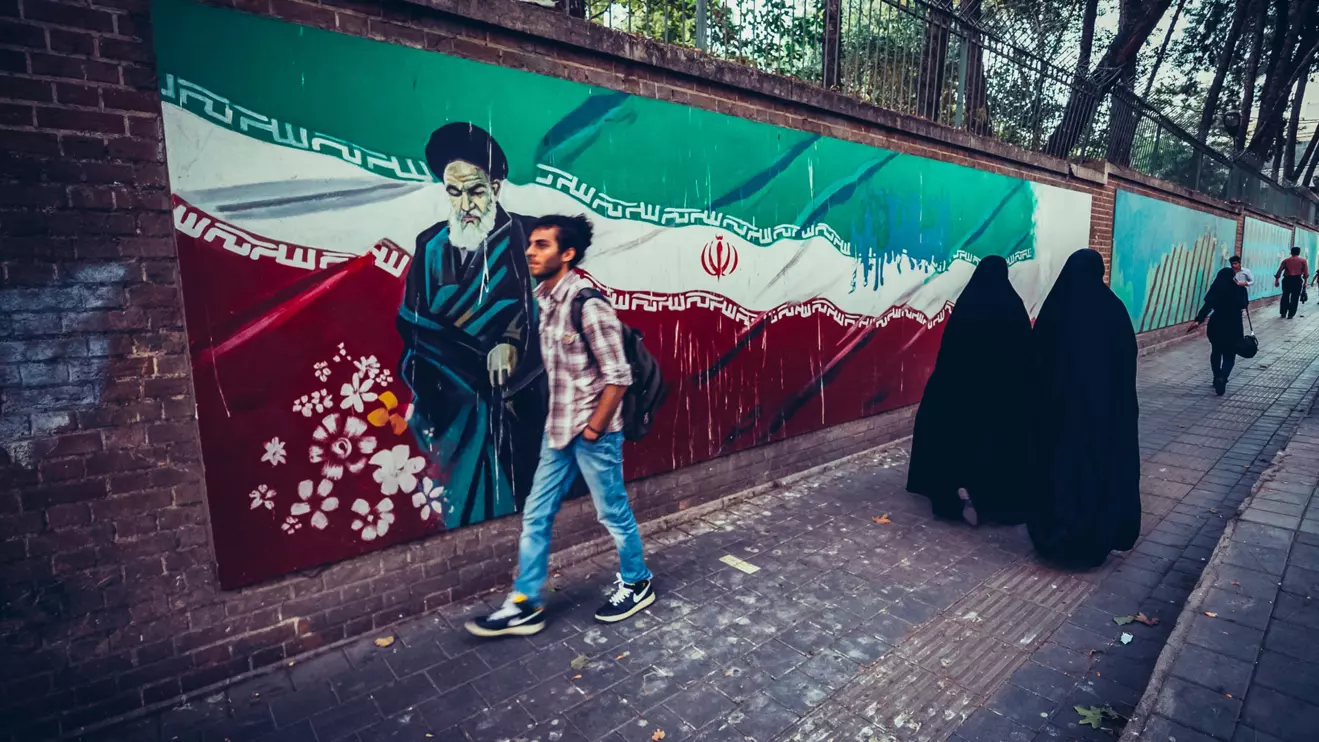
Decades of engagement with the Islamic Republic have taught the world one consistent lesson: concessions are interpreted as weakness, and weakness invites escalation © Mena Today
Let us be blunt. Weeks of diplomacy, goodwill gestures and presidential announcements of imminent deals have produced exactly nothing.
It is time to face an uncomfortable truth: the Islamic Republic of Iran does not want a deal. It wants survival, and it will lie, stall and dissemble for as long as Washington allows it to.
Donald Trump has announced the signing of an agreement so many times that the words have lost all meaning. Tehran's negotiating strategy is as old as the regime itself: concede nothing, offer vague assurances, buy time, and exploit every pause in military pressure to regroup, rearm and reassert control over its proxies.
The demands on the table are not unreasonable. Halt the nuclear programme. End ballistic missile development. Stop funding Hezbollah, Hamas and the Houthis — the network of armed militias that Iran has used for decades to destabilise the Middle East, wage war by proxy and evade direct accountability for its aggression.
Iran's answer to every one of these demands has been: no.
Lebanon Is Not a Province of Tehran
The most revealing moment of recent weeks came from an unlikely source. Lebanese President Joseph Aoun , a man who has every reason to choose his words carefully, directly called out Tehran on Friday, making clear that Lebanon is a sovereign state, not an Iranian protectorate.
He is right. Yet the Revolutionary Guards continue to direct Hezbollah's operations from Tehran, ordering the group to maintain its attacks against Israel and explicitly linking any Iran-US agreement to a ceasefire in Lebanon. In other words, Iran is using Lebanese soil, Lebanese civilians and Lebanese sovereignty as bargaining chips in its negotiations with Washington.
This is not the behaviour of a regime seeking peace. It is the behaviour of a regime playing for time.
The Only Language Tehran Understands
Decades of engagement with the Islamic Republic have taught the world one consistent lesson: concessions are interpreted as weakness, and weakness invites escalation. Every pause in military pressure has been used by Tehran to advance its nuclear programme, expand its missile arsenal and tighten its grip on its regional proxies.
The Revolutionary Guards' strikes on Kuwait and Bahrain are the latest illustration. Rather than moderating its behaviour in the face of American military power, Iran is widening the conflict — testing limits, probing responses and betting that Washington's appetite for confrontation will eventually fade.
That bet must not pay off.
A renewed and decisive military offensive — one designed not merely to degrade Iranian capabilities but to fundamentally break the regime's capacity and will to project violence across the region — is no longer a hawkish fantasy. It is a strategic necessity.
The Iranian people deserve better than the sanguinary theocracy that has ruled them for over four decades. The Middle East deserves better. And the world cannot afford a nuclear-armed Islamic Republic that has just demonstrated it will strike Gulf airports when it feels cornered.
The time for talk is over. The time to finish the job has come.
On the eve of Israel’s general election, Iran said on Monday that the outcome would make no difference to the Islamic Republic. The remarks echo the regime’s long-standing rhetoric toward Israel.
Top officials from Mecca Pact countries Saudi Arabia, Turkey and Pakistan are to meet Iran's leaders in Tehran on Monday in their first high-level contact since the kingdom became a pressure point in the wider Iran conflict.
Attacks by Yemen's Iran-aligned Houthis have nearly emptied the skies over Riyadh this month, aviation data showed on Monday, with cancellations grounding almost nine out of every 10 scheduled flights at the Saudi capital's airport.
To make this website run properly and to improve your experience, we use cookies. For more detailed information, please check our Cookie Policy.
Necessary cookies enable core functionality. The website cannot function properly without these cookies, and can only be disabled by changing your browser preferences.