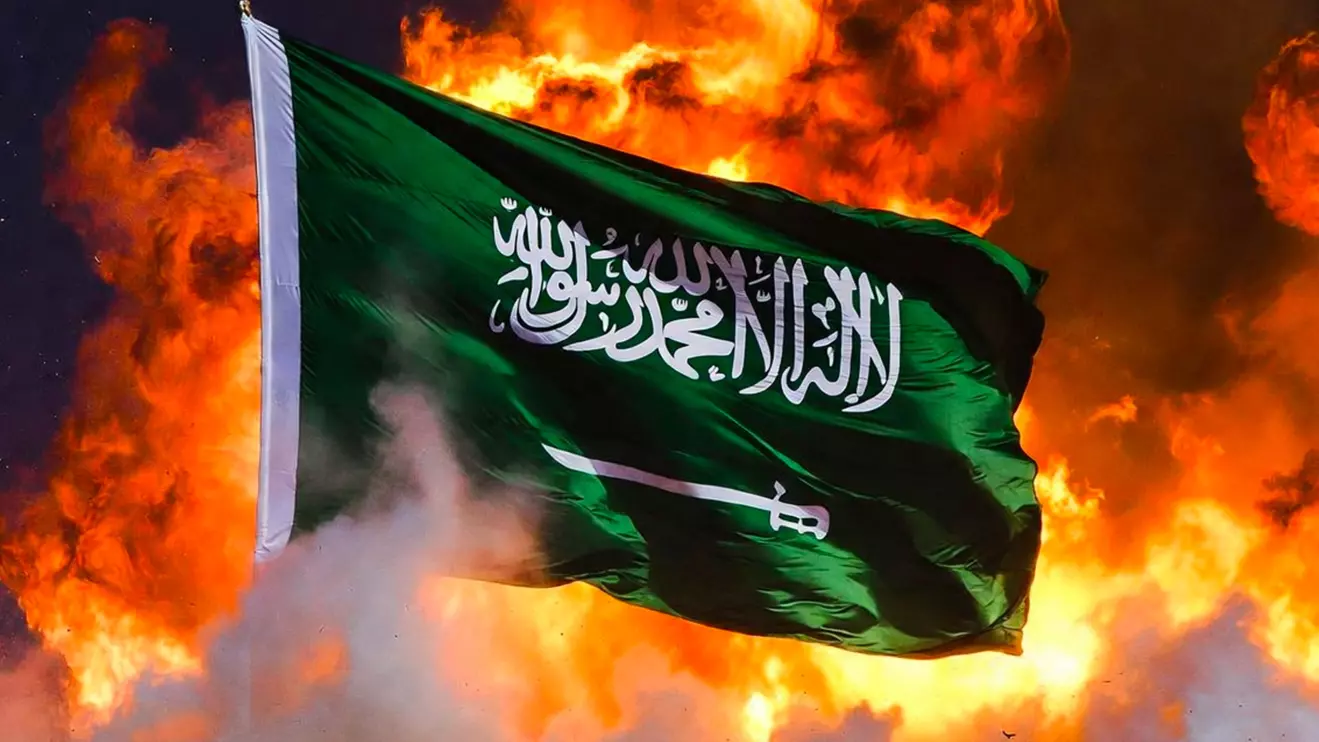
The United States has warned it fears a "rapid escalation" of hostilities in the Middle East, following Houthi attacks on Saudi Arabia that struck the kingdom's capital for the first time in months.
President Donald Trump, who was scheduled to spend the entire weekend at the Camp David presidential retreat in Maryland, returned early to Washington on Saturday evening, touching down just before 8 p.m. The White House offered no explanation for the change in plans.
The early return came as a new threshold was crossed in the ongoing hostilities between Saudi Arabia and the Houthis, who control large parts of neighboring Yemen and are fighting Yemeni government forces backed by a Saudi-led coalition.
Powerful explosions rang out in the Saudi capital twice on Saturday, after the Houthis attempted to strike Riyadh with a ballistic missile and separately targeted Aramco facilities in Yanbu.
"This military conflict has the potential to escalate rapidly," the State Department warned in a security alert posted on X, addressed to American citizens in the Middle East.
The department also advised Americans outside the region to "seriously reconsider travel to and through" the Middle East, and urged anyone traveling to or from the area to closely monitor airport and airline operations.
Fears of a wider US military response
Trump's abrupt return has fueled speculation in Washington that the administration may be weighing a broader military response against the Houthis.
According to reports, Defense Secretary Pete Hegseth also cut short a personal trip to return quickly to the capital, as officials reportedly reviewed strike options against Houthi targets in Yemen. US embassies across several Middle Eastern countries considered likely targets of possible retaliatory strikes issued their own warnings to American citizens on Saturday.
The developments come against a backdrop of prolonged regional tension: little progress has been made in recent months toward ending the broader conflict involving Iran, even as oil flows through the Strait of Hormuz have gradually increased. Iran's security chief, Mohsen Rezaei, said Tehran remained in contact with Qatar as a mediator and had relayed its conditions for ending the war to Washington.