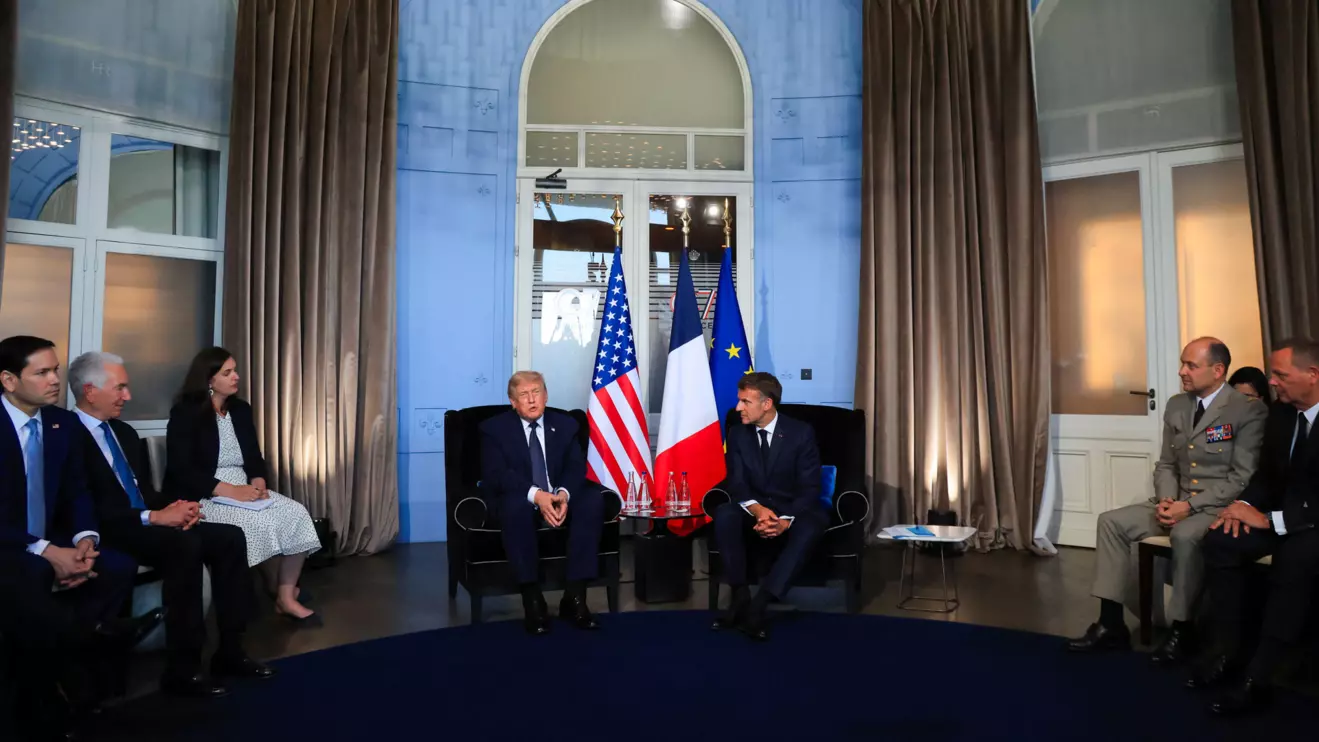
Two very different scenes played out Monday as the US-Iran memorandum of understanding was signed.
In Evian, at the G7 summit, congratulations flowed freely. World leaders shook hands, smiled for cameras and raised glasses to what Donald Trump is billing as a historic peace breakthrough.
In Jerusalem, nobody was celebrating.
Israeli Prime Minister Benjamin Netanyahu has yet to say a word publicly about the deal. He doesn't need to. Senior Israeli officials have been blunt in private: the agreement is "terrible for Israel », a verdict shared, according to sources, from Netanyahu on down throughout the entire government.
And it is not difficult to understand why.
The memorandum contains no requirement for Iran to halt its ballistic missile programme. None. It says nothing binding about Hezbollah, the Iranian-created militia that has been firing rockets into northern Israel and occupies southern Lebanon as Tehran's forward military base. The deal that was supposed to end the Middle East war has handed Iran a diplomatic victory while leaving its most dangerous instruments of regional destruction entirely intact.
Trump's Broken Promise on Lebanon
There is a particular bitterness in Beirut as well. Lebanon's president, prime minister and foreign minister fought hard - publicly and privately - for one specific principle: that the Lebanese file must be handled independently of the Iran negotiations. Lebanon is a sovereign state. It is not Iran's to negotiate on behalf of.
Trump appeared to agree. He said so. The Lebanese government built its entire diplomatic strategy around that assurance.
Then Washington folded.
The MOU bundles Lebanon into the broader Iran framework, exactly what Tehran demanded and exactly what Beirut was promised would never happen. The Lebanese leadership, which has shown more courage in confronting Hezbollah than any government in a generation, has been left holding a promise that turned out to be worthless.
Israel Will Not Stand Down
One thing is certain: Israel is not bound by Washington's deal. Defence Minister Israel Katz made that explicit: Israeli forces will remain in Lebanon, Syria and Gaza for an indefinite period. If Iran attacks, Israel will respond with full force.
Jerusalem is not Evian. There are no champagne flutes in the Israeli security cabinet. There is only the cold calculation of a country that has just watched its most important ally sign an agreement with its most dangerous enemy, an agreement that left the missiles in place, the proxies intact, and the cheque book open.
The G7 leaders can celebrate. Israel and Lebanon will be dealing with the consequences.