Lebanon
US mediates fresh Israel-Lebanon dialogue
The latest round of U.S.-facilitated talks between Israel and Lebanon began on Tuesday in Rome and will continue through Thursday, State Department spokesperson Tommy Pigott said.
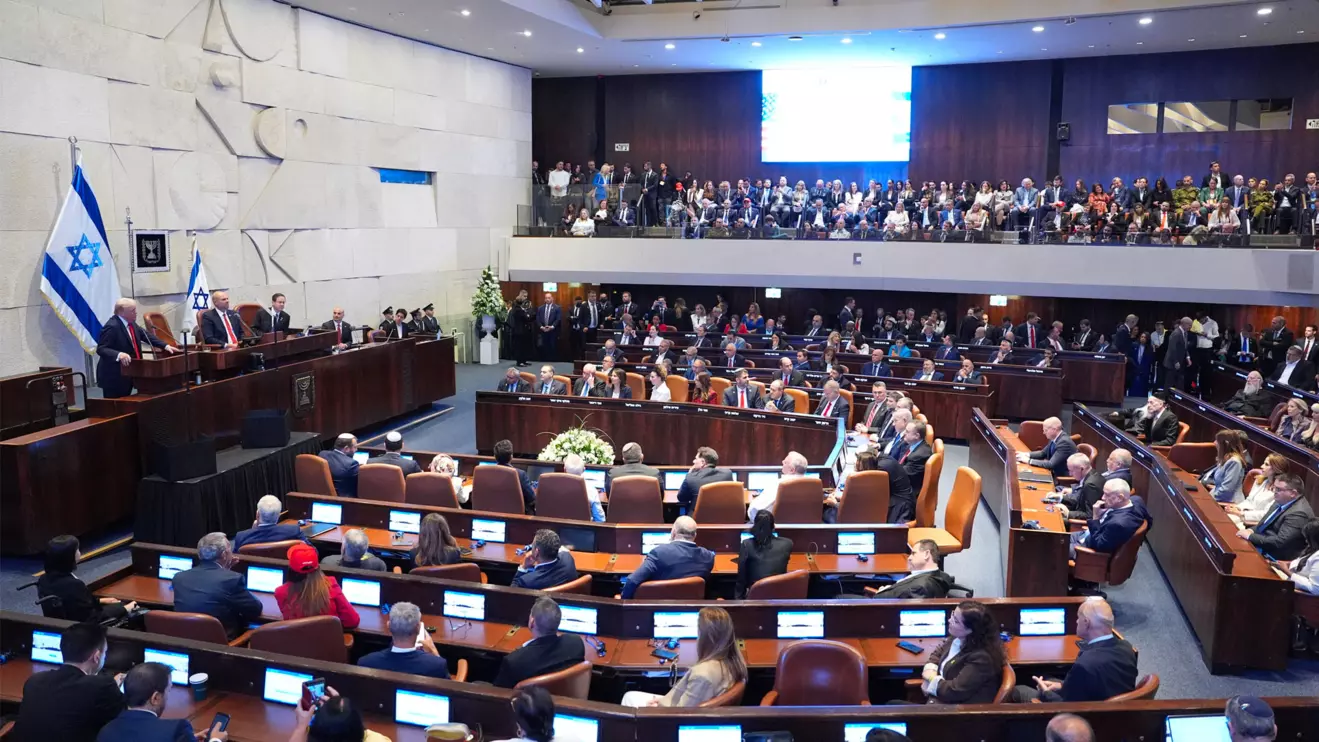
In a forceful address to the Israeli Knesset Monday, U.S. President Donald Trump called on the Palestinian people to “turn forever from the path of terrorism and violence” and to reject the influence of “malign forces of hatred” within their ranks.
President Donald Trump speaks to the Knesset, Israel's parliament, Monday, Oct. 13, 2025, in Jerusalem. Evan Vucci/Reuters
In a forceful address to the Israeli Knesset Monday, U.S. President Donald Trump called on the Palestinian people to “turn forever from the path of terrorism and violence” and to reject the influence of “malign forces of hatred” within their ranks.
“The Palestinians face a choice that couldn’t be clearer,” he said. “This is their chance to change — forever — by excising those who spread hate among them.”
Trump’s speech, delivered before applauding lawmakers, came amid escalating hopes for lasting peace following recent hostage exchanges and a fragile ceasefire.
In a surprising twist, Trump also floated the idea of a peace deal with Iran, despite having previously supported Israeli strikes on Iranian nuclear sites earlier this year.
“It would be a wonderful thing if we could reach an agreement with them,” he told the Knesset.
“Are you happy with that? Wouldn’t that be good?” he asked rhetorically, suggesting that Iran was “tired” of conflict.
He added: “We are ready when you’re ready,” extending a diplomatic olive branch to Tehran.
Trump’s remarks signal a dual-track approach: pressing for Palestinian behavioral change while reopening lines of diplomatic communication with Iran. Whether either message will gain traction remains to be seen in a region still bracing for turbulence.
The latest round of U.S.-facilitated talks between Israel and Lebanon began on Tuesday in Rome and will continue through Thursday, State Department spokesperson Tommy Pigott said.
Qatar said mediators were making progress in efforts to end the U.S.-Iran war on Tuesday, driving oil prices lower, although Tehran has denied President Donald Trump's assertion that talks are already under way.
Iran is betting it can outlast Washington by turning the Middle East's trade routes, shipping lanes and energy infrastructure into pressure points that steadily raise the cost of confrontation, according to Gulf officials and analysts.
To make this website run properly and to improve your experience, we use cookies. For more detailed information, please check our Cookie Policy.
Necessary cookies enable core functionality. The website cannot function properly without these cookies, and can only be disabled by changing your browser preferences.