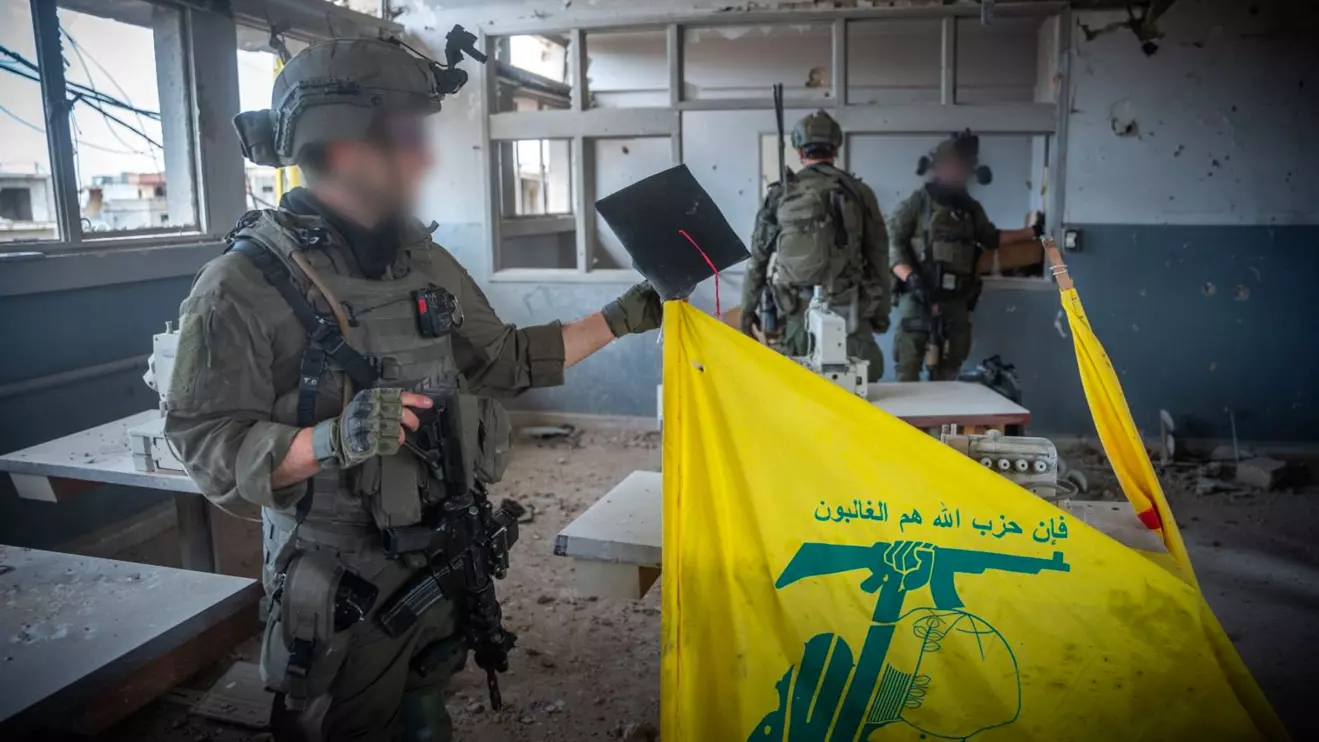
The Israeli military announced Friday the discovery of an active Hezbollah tunnel network beneath a church in Khiam, a town in southern Lebanon where fierce fighting continues.
The announcement, made by Arabic-speaking spokesman Colonel Avichay Adraee, reveals what Israel describes as a deliberate and systematic strategy of using civilian and religious sites as military infrastructure.
According to the Israeli military, forces from the Givati Brigade operating under the 91st Division located "an active underground combat site in the vicinity of the church."
The site had first been discovered and cleared in December 2024, following the ceasefire that ended 13 months of fighting. But three new entrances were allegedly dug by Hezbollah during the ceasefire period, suggesting deliberate reactivation under the cover of peace.
A video published on X shows an Israeli soldier explaining how Hezbollah dug a tunnel leading directly into the church interior. Walls were reportedly demolished to create firing positions against advancing soldiers. The underground network is said to connect Khiam to other areas of southern Lebanon.
A Systematic Pattern
This is no isolated incident. Hezbollah's use of civilian infrastructure for military purposes has been extensively documented across southern Lebanon.
The Iran-backed militia has repeatedly embedded its operations within churches, mosques, hospitals and private homes, exploiting the protection afforded to civilian sites under international law as a deliberate shield against Israeli strikes.
Perhaps most shockingly, Hezbollah operatives have been documented using Red Crescent ambulances to move fighters and equipment, a blatant violation of international humanitarian law that transforms symbols of mercy into instruments of war.
This strategy serves a dual purpose: it complicates Israeli military operations by creating impossible choices between military necessity and civilian protection, and it generates powerful propaganda whenever civilian sites are struck in response.
The use of religious institutions, medical facilities and humanitarian vehicles for military purposes constitutes a clear violation of international humanitarian law.
Yet Hezbollah has made it a cornerstone of its military doctrine, a cynical calculation that places Lebanese civilians and their most sacred spaces on the front line.
For the people of southern Lebanon, the real desecration is not Israel's discovery of these tunnels. It is Hezbollah's decision to dig them there in the first place.