U.S. to support business investment in Western Sahara

1 min Sandrine Zimra

The Trump administration has announced it will begin supporting U.S. companies seeking to invest in Western Sahara, fulfilling a pledge made five years ago when Washington first recognized Morocco’s sovereignty over the disputed territory, Jeune Afrique reported Monday.

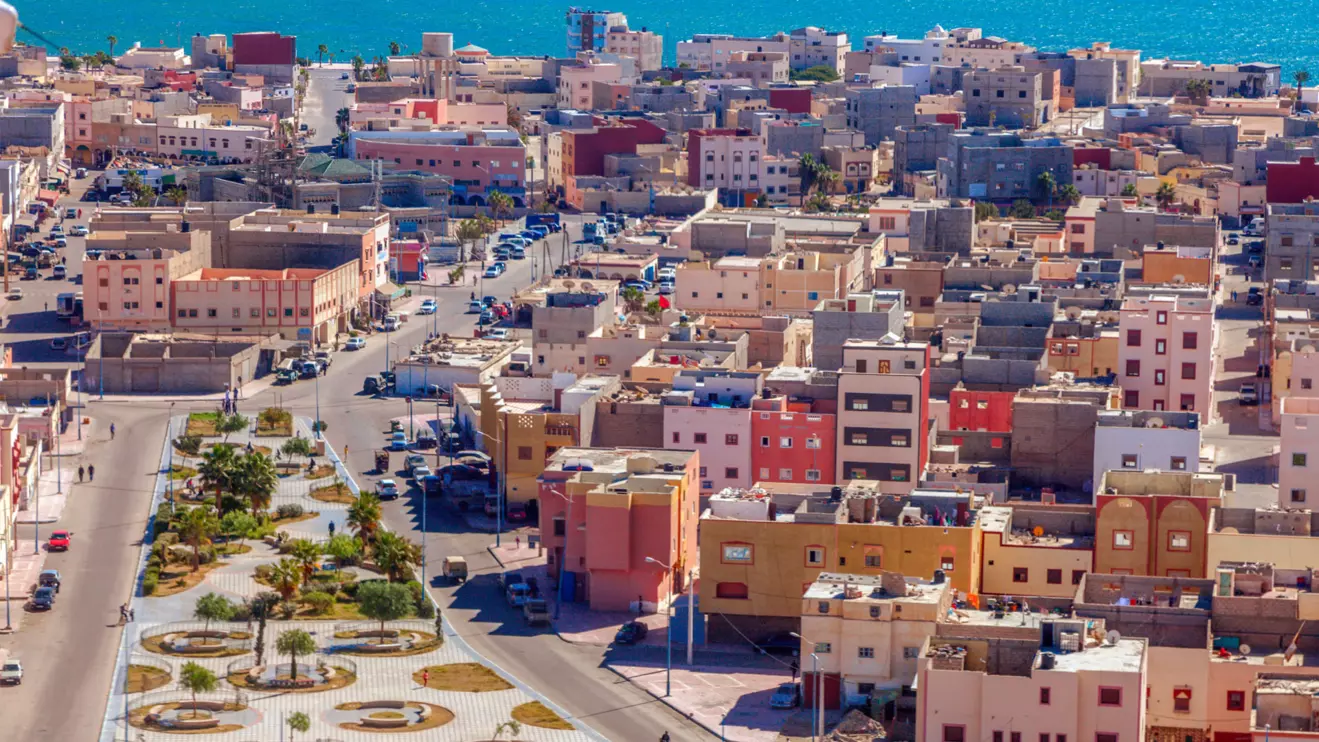
Dakhla, Western Sahara © Mena Today 

Dakhla, Western Sahara © Mena Today 

The Trump administration has announced it will begin supporting U.S. companies seeking to invest in Western Sahara, fulfilling a pledge made five years ago when Washington first recognized Morocco’s sovereignty over the disputed territory, Jeune Afrique reported Monday.

Deputy Secretary of State Christopher Landau confirmed the policy shift on September 25 after meeting Moroccan Foreign Minister Nasser Bourita in New York on the sidelines of the UN General Assembly. 

He said U.S. development agencies, including the DFC and the Export-Import Bank, would now provide loans and risk guarantees for American firms operating “throughout Morocco, including Western Sahara.”

Trump’s special adviser Massad Boulos reinforced the message, insisting that Washington would “fully support” financing U.S. projects in the region, from infrastructure to renewable energy.

The move comes amid Morocco’s $1.2 billion plan to transform Dakhla into a gateway to West Africa and multi-billion-dollar projects in green hydrogen and fertilizer production, involving U.S. company Ortus Power Resources alongside European partners.

Critics such as Western Sahara Resource Watch argue the policy lacks legal basis, as Morocco has no recognized sovereignty over the territory under international law. The Sahrawi Arab Democratic Republic (SADR), based in Algeria, continues to call for an independence referendum, a demand Rabat rejects.

Former U.S. Ambassador to Morocco Puneet Talwar said the change puts U.S. businesses on equal footing with European and Chinese competitors, adding that investments could “benefit Sahrawis” if paired with a broader political solution.

The recognition of Morocco’s sovereignty over Western Sahara in 2020 was one of Donald Trump’s most controversial foreign policy moves, tied to Rabat’s normalization with Israel under the Abraham Accords. While the Biden administration did not reverse the decision, it left the policy largely dormant—until now.

Sandrine Zimra

Sandrine Zimra

Sandrine Zimra has been a financial analyst for 25 years. Based in Geneva, she covers countries in the Middle East and travels regularly to the United Arab Emirates, Saudi Arabia, Qatar, Bahrain, Egypt, and Israel. She contributes to Mena Today with her financial reports and insights on the region.

Related

United Arab Emirates

UAE denies funnelling mercenaries into Sudan

Human Rights Watch has accused an Abu Dhabi-based security company of recruiting Colombian private military contractors and deploying them to fight alongside Sudan's Rapid Support Forces (RSF) between 2024 and 2025, adding to what the rights group describes as a growing body of evidence of Emirati military support for the paramilitary group.

Sudan

Sudan food crisis deepens as Iran war disrupts harvests

Farmers across Sudan say the hike in global fuel and fertilizer costs resulting from the Iran conflict will force them to cut back on planting this summer, restricting food production in a country where war has caused acute hunger.

Morocco

Building collapse leaves several dead in Fez

At least nine people were killed and six others injured when a four-storey building collapsed overnight in the Moroccan city of Fez, about 200 kilometres (124 miles) east of Rabat, local authorities said on Thursday.

Subscribe to our newsletter

Mena banner 4

To make this website run properly and to improve your experience, we use cookies. For more detailed information, please check our Cookie Policy.

  • Necessary cookies enable core functionality. The website cannot function properly without these cookies, and can only be disabled by changing your browser preferences.