UAE and Libya strengthen ties

1 min Philippe Naggar

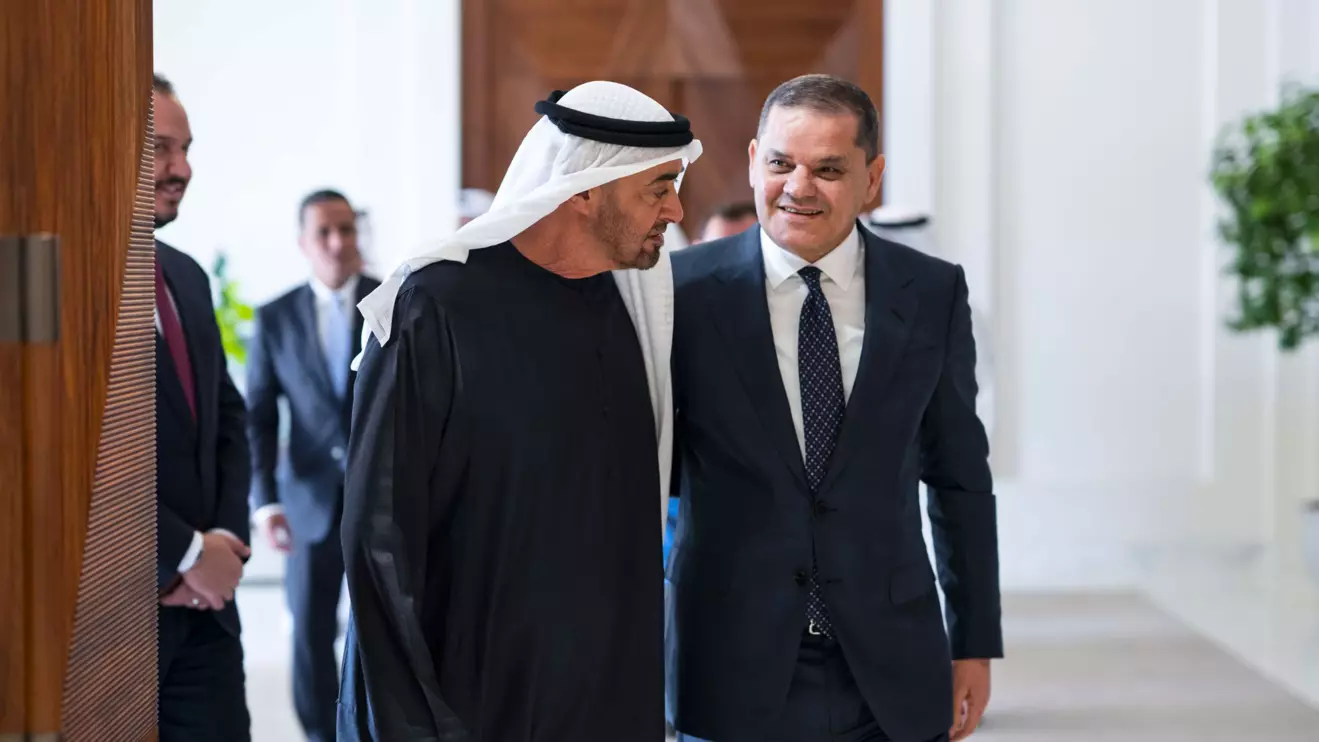
UAE President Sheikh Mohamed bin Zayed Al Nahyan (MBZ) received Libyan Prime Minister Abdul Hamid Dbeibeh, who is on a working visit to the UAE, for talks covering bilateral relations and regional developments.

MBZ and Abdul Hamid Dbeibeh © WAM

MBZ and Abdul Hamid Dbeibeh © WAM

UAE President Sheikh Mohamed bin Zayed Al Nahyan (MBZ) received Libyan Prime Minister Abdul Hamid Dbeibeh, who is on a working visit to the UAE, for talks covering bilateral relations and regional developments.

The two leaders discussed ways to strengthen cooperation between the UAE and Libya's Government of National Unity, as well as the broader regional situation, including the Middle East peace process.

The visit underscores the UAE's engagement with Libya's internationally recognised government as it seeks to consolidate its authority and attract foreign investment for reconstruction, a priority for Dbeibeh's administration as it competes for legitimacy against the rival Benghazi-based government in the country's ongoing political division.

Philippe Naggar

Philippe Naggar

Philippe Naggar is a French-Egyptian journalist. Based in Abu Dhabi, he covers news across the Middle East and the Gulf region. He previously lived for several years in Tehran, giving him a solid expertise on Iran

Related

Morocco

Israel's LORA set for Marrakesh air show debut

The Israeli site Globes reported Wednesday that the Moroccan army is considering integrating LORA missiles into the HIMARS artillery systems it is buying from the US.

Sudan

Dozens missing after Al-Zaraa mine collapse

At least 60 people were killed in a gold mine collapse on Sunday in a remote area north of the town of al-Nuhud in Sudan's West Kordofan, three local sources told Reuters on Wednesday.

Subscribe to our newsletter

Mena banner 4

To make this website run properly and to improve your experience, we use cookies. For more detailed information, please check our Cookie Policy.

  • Necessary cookies enable core functionality. The website cannot function properly without these cookies, and can only be disabled by changing your browser preferences.