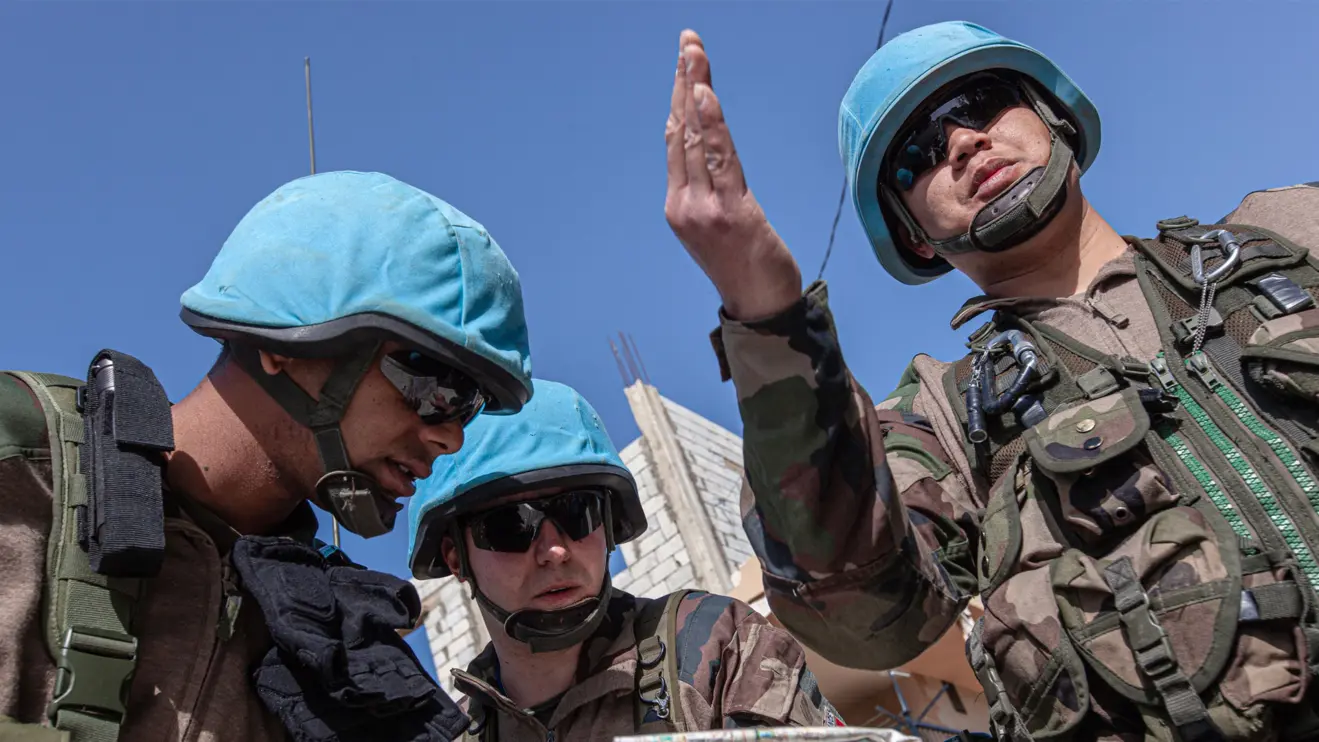
Lebanon has proposed extending the mandate of the UN Interim Force in Lebanon (UNIFIL) through its withdrawal period, President Joseph Aoun said on Friday.
The pullout is due to begin at the end of this year and run throughout 2027. Aoun said the extension would prevent a security vacuum in the south.
On the same day, Prime Minister Nawaf Salam said France was preparing a UN Security Council resolution that would allow UNIFIL to continue some of its functions after its mandate expires at the end of the year.
UNIFIL was created in March 1978 by Security Council resolutions 425 and 426, after Israel invaded south Lebanon in response to Palestinian attacks. Its mission was to confirm the withdrawal of Israeli forces, restore international peace and security, and help the Lebanese government regain authority over the south.
Its mandate was overhauled after the 2006 war between Israel and Hezbollah. Resolution 1701 boosted the force to several thousand troops and tasked it with monitoring the ceasefire and supporting the deployment of the Lebanese army.
It was also to help ensure that the area south of the Litani River was free of any armed personnel and weapons other than those of the Lebanese state and UNIFIL.
A long record of failures
On that last point, critics say the mission failed. Despite the presence of thousands of peacekeepers, Hezbollah rebuilt and expanded its military infrastructure in the south after 2006, including weapons depots, rocket launch sites and cross-border tunnels uncovered by Israel in 2018-2019.
UNIFIL's weaknesses were largely built into its mandate. The force had no authority to disarm Hezbollah or search private property without the Lebanese army.
Its patrols were repeatedly blocked, and sometimes attacked, by local residents. Israel has long accused the force of turning a blind eye. Some critics argue that its withdrawal will therefore change little on the ground, since it never curbed Hezbollah in the first place.
UNIFIL's defenders counter that the force was never designed to fight Hezbollah, and that it played a useful role in reducing incidents along the border and providing a channel of communication between Israel and Lebanon. Lebanon now fears that its departure will leave the Lebanese army alone in a fragile south.