
Saudi Arabia
GCC backs Saudi Arabia after new Houthi strikes
Yemen's Saudi-led coalition said early on Saturday it had intercepted two ballistic missiles and two drones launched by the Iran-backed Houthis towards the kingdom.

The United States and the Gulf Cooperation Council (GCC) delivered a unified and unambiguous message Thursday in Manama: Lebanon's sovereignty must be restored, armed groups outside state authority must be disarmed, and the Lebanese file must not be held hostage to Iran's regional agenda.
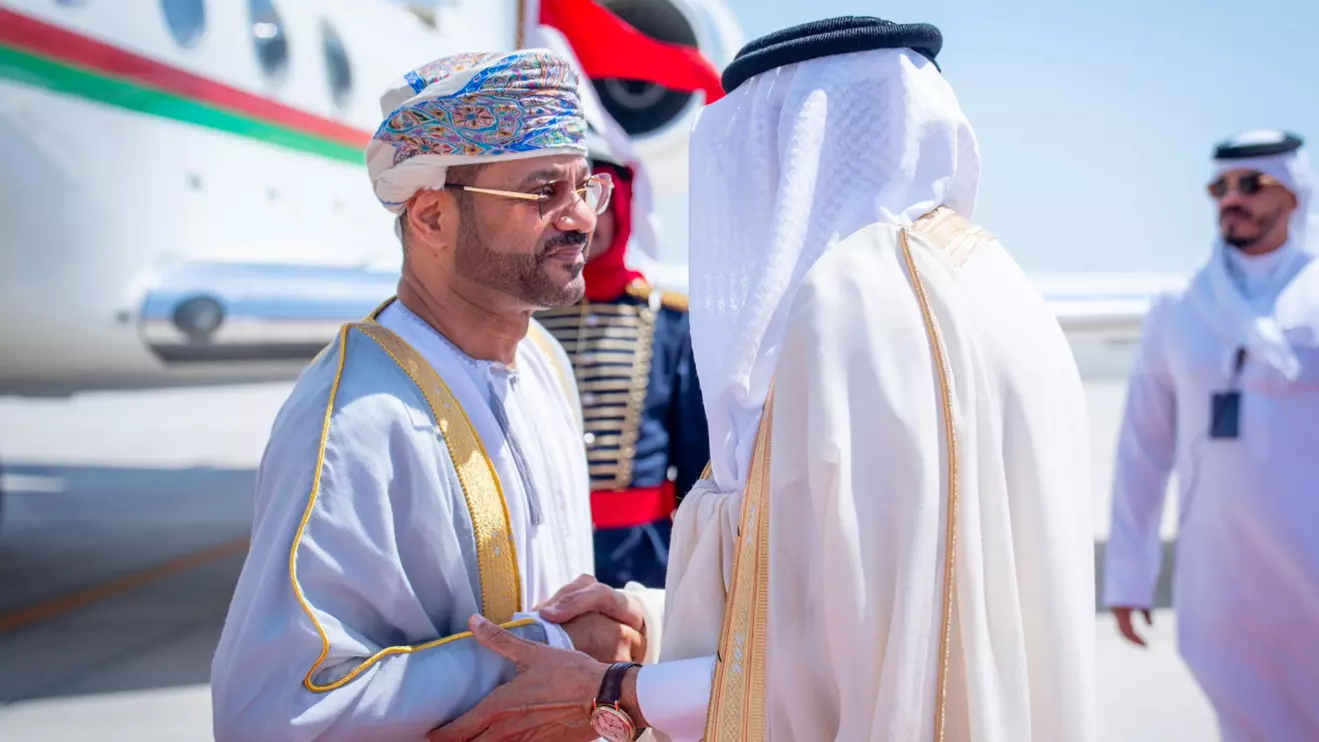
Oman’s Foreign Minister upon his arrival in Manama © X
The United States and the Gulf Cooperation Council (GCC) delivered a unified and unambiguous message Thursday in Manama: Lebanon's sovereignty must be restored, armed groups outside state authority must be disarmed, and the Lebanese file must not be held hostage to Iran's regional agenda.
The joint ministerial meeting, co-chaired by US Secretary of State Marco Rubio and Bahrain's Foreign Minister Abdullatif bin Rashid Al-Zayani, brought together the foreign ministers of all six Gulf states and GCC Secretary General Jassem Al-Budaiwi in a show of collective resolve on Lebanon.
A Direct Message to Tehran
The joint communiqué could not have been clearer on the central question: "The full sovereignty of Lebanon cannot be achieved as long as non-state armed groups retain military capabilities outside state authority." In Lebanon, there is only one such group — Hezbollah, created, funded, armed and directed by Iran.
The Gulf states' position represents a direct challenge to Tehran's strategy of keeping Hezbollah's weapons off the negotiating table by bundling the Lebanese file into its broader talks with Washington. The communiqué explicitly insisted on "preserving the negotiation process and not linking it to other conflicts" — a pointed rejection of Iran's demand to control Lebanon's diplomatic fate from the sidelines of the US-Iran Switzerland talks.
Rubio and his Gulf counterparts praised the direct bilateral negotiations between Lebanon and Israel, describing them as aimed at "creating the necessary conditions for a lasting peace and security agreement between the two countries." They called for extending Lebanese state authority across all its territory, delimiting permanent borders and strengthening the Lebanese Armed Forces.
This is precisely the approach that Hezbollah - and by extension Iran - has sought to derail, preferring that Tehran negotiate on Lebanon's behalf rather than allow Beirut to chart its own sovereign course.
The Gulf's Message Is Clear
For the GCC states, which have watched Iran use Hezbollah to destabilise Lebanon, Yemen, Iraq and Syria for decades, the Manama meeting represents a firm line in the sand. Iran's malign influence in Lebanon is not a variable to be managed through diplomatic accommodation, it is a threat to regional stability that must be confronted directly.
The message from Manama to Tehran is unambiguous: Lebanon belongs to the Lebanese, its army is the only legitimate armed force on its territory, and no foreign power - including Iran - has the right to negotiate its future on its behalf.
Yemen's Saudi-led coalition said early on Saturday it had intercepted two ballistic missiles and two drones launched by the Iran-backed Houthis towards the kingdom.
Iran on Saturday awaited a US response to its proposal to reopen the Strait of Hormuz and end fighting in the Middle East war after the Wall Street Journal reported that President Donald Trump had rejected the deal.
The military chiefs of Pakistan, Saudi Arabia and Turkey discussed enhancing intelligence sharing, military coordination and capability integration at a meeting in Riyadh on Friday, according to statements from Saudi Arabia's Defence Ministry and Pakistan's military.
To make this website run properly and to improve your experience, we use cookies. For more detailed information, please check our Cookie Policy.
Necessary cookies enable core functionality. The website cannot function properly without these cookies, and can only be disabled by changing your browser preferences.