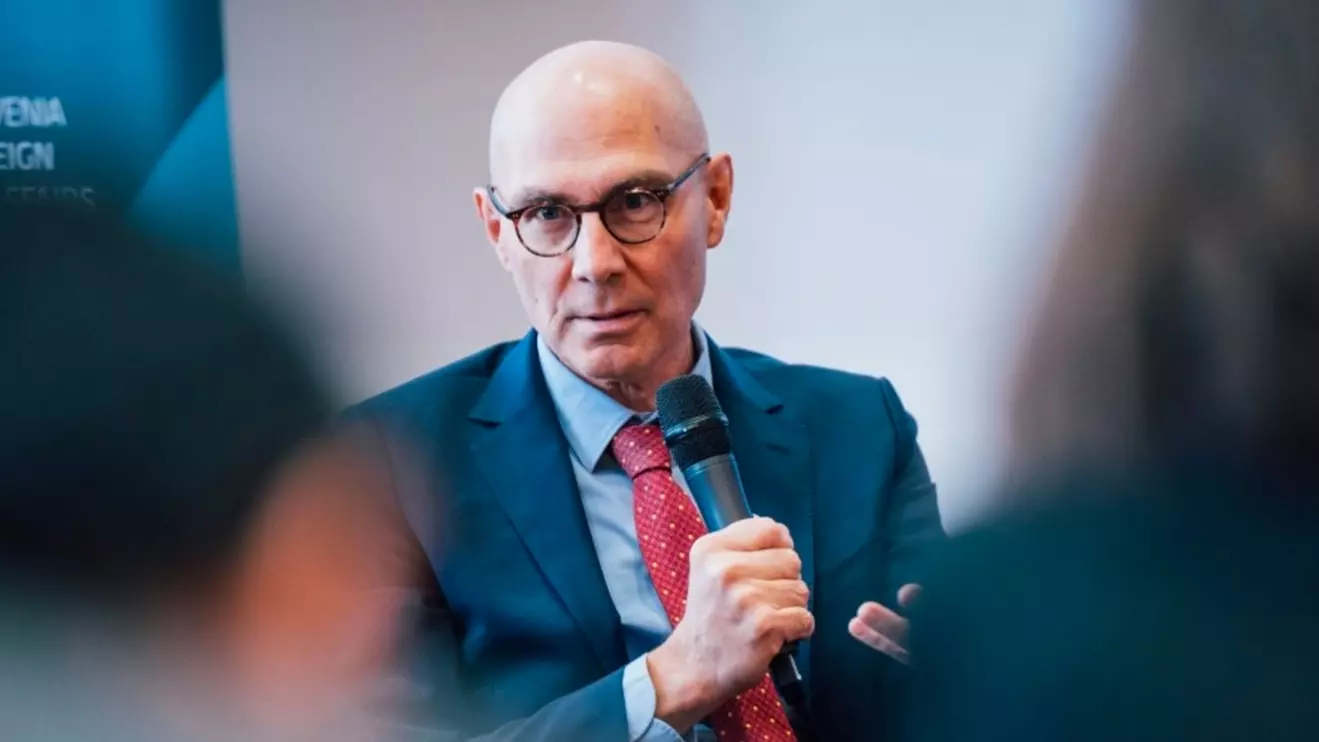
On Friday, the United Nations General Assembly handed High Commissioner for Human Rights Volker Türk a fresh four-year mandate, ignoring clear opposition from the United States, Russia, and Israel.
The vote -144 in favor, 10 against, 13 abstentions - was a predictable display of the UN’s entrenched double standards.Türk, an Austrian career diplomat, has spent his tenure as a selective critic.
He has loudly condemned Israel’s military campaign in Gaza while remaining notably softer on the Hamas terrorists who started the war by massacring civilians on October 7.
He has also taken aim at Russia over Ukraine and even called for probes into deaths in U.S. immigration custody. Challenging the major powers that actually fund and stabilize the international system appears to be his preferred style.
Before the final vote, member states rejected a Russian attempt to limit his extension to a few months. Secretary-General António Guterres had pushed hard for the full term, and the Assembly delivered. The result is another four years of an office that increasingly functions as a platform for political activism rather than impartial human-rights monitoring.
This decision comes as the Trump administration continues to cut funding and withdraw from multiple UN bodies. Washington’s frustration is understandable.
When the UN’s top human-rights official treats Israel as the primary villain while treating groups that embed among civilians and celebrate atrocities with kid gloves, the institution reveals its priorities. Türk’s record has repeatedly shown greater zeal in targeting democratic states than in confronting the world’s worst abusers.
The extension of his mandate is not a victory for human rights. It is further evidence that the United Nations has drifted into open bias, rewarding officials who lecture the West and Israel while the real architects of suffering in Gaza and elsewhere face far less scrutiny.