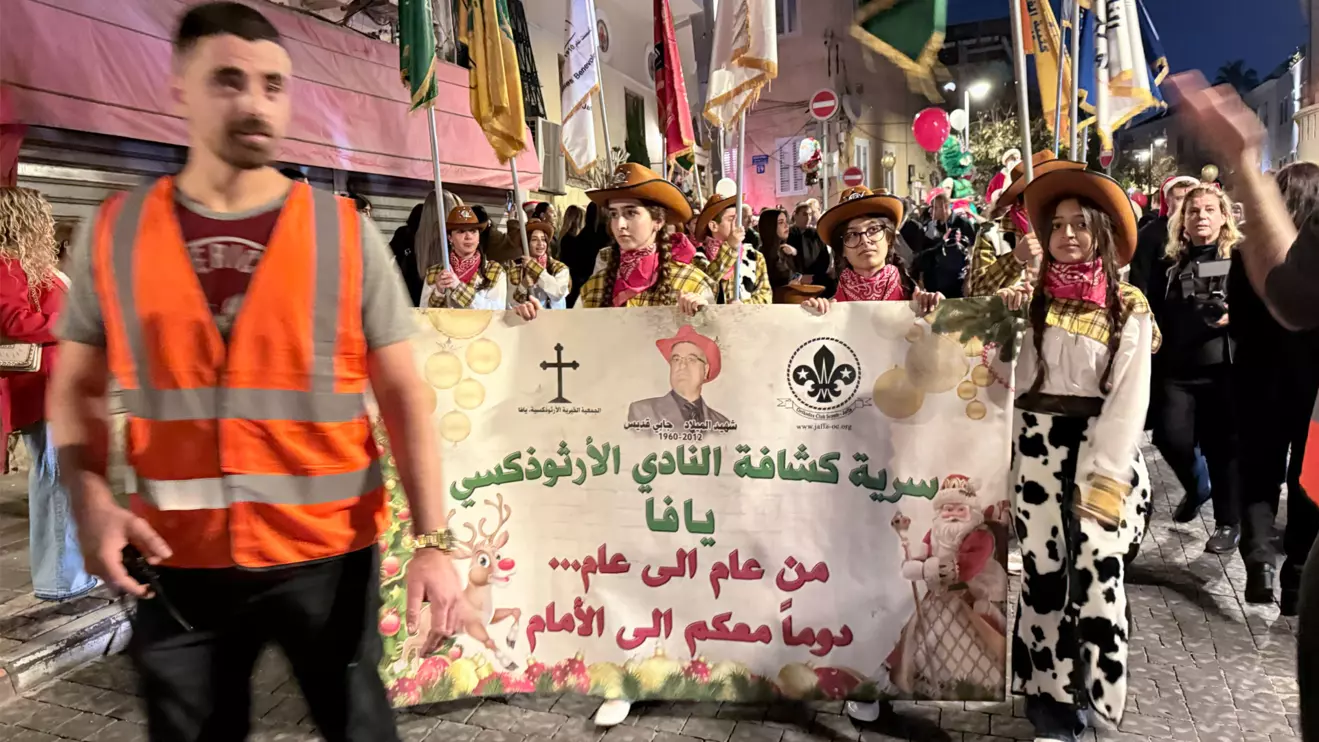
While much of the Western world has already packed away their Christmas decorations, millions of Orthodox Christians across the Middle East are celebrating the birth of Jesus Christ today, January 6th.
This date marks Christmas for churches that follow the Julian calendar, a tradition deeply rooted in the region's ancient Christian communities.
The difference in dates stems from the calendar systems used by various Christian denominations. Most Orthodox churches, including those in Jerusalem, Syria, Egypt, and parts of Lebanon, continue to observe the Julian calendar for religious celebrations. This places Christmas thirteen days after the December 25th celebration familiar to Western Christians.
In the Middle East, Orthodox Christmas holds special significance as it occurs in the land where Christianity was born. The celebration takes on profound meaning in places like Bethlehem, Jerusalem, and Nazareth, where the events of Christ's birth and life actually took place.
Traditions Across the Region
In Jerusalem, the heart of Christianity, the day begins with solemn liturgies at the Church of the Holy Sepulchre and other historic churches. The Greek Orthodox Patriarchate leads magnificent ceremonies attended by thousands of faithful, many who have traveled from across the region and beyond.
Egyptian Coptic Christians, one of the oldest Christian communities in the world, celebrate with midnight mass services that stretch into the early morning hours. Families gather after the liturgy to break their Advent fast with traditional dishes like fatta, a layered dish of bread, rice, and meat.
In Syria and Lebanon, despite years of conflict and displacement in some areas, Orthodox communities maintain their Christmas traditions with resilience. Churches are adorned with lights and icons, and the faithful sing ancient hymns in Arabic and Aramaic, languages that connect them directly to the earliest Christians.
Orthodox Christmas is preceded by a 43-day Advent fast, a period of spiritual preparation and abstinence from meat and dairy products. The breaking of this fast on Christmas makes the celebration even more joyous, as families come together for elaborate feasts.
Traditional Middle Eastern Christmas dishes vary by country but often include stuffed vine leaves, roasted lamb, ma'amoul cookies filled with dates or nuts, and ka'ak biscuits. These meals represent not just sustenance but the joy of community and the end of a long period of spiritual discipline.
For Orthodox Christians in the Middle East, celebrating Christmas in 2026 comes amid ongoing regional challenges. Dwindling Christian populations due to emigration, economic difficulties, and political instability have affected communities across the region. Yet the determination to maintain these ancient traditions remains strong.
In some areas, Orthodox Christians celebrate alongside their Muslim neighbors, who respect and sometimes participate in the festivities, reflecting the Middle East's long history of religious coexistence.
What makes Orthodox Christmas in the Middle East particularly remarkable is its direct connection to the origins of Christianity. When worshippers gather in centuries-old churches, many built on sites mentioned in the Bible, they follow traditions passed down through nearly two millennia.
The liturgies sung today in ancient languages, the incense filling historic sanctuaries, and the icons depicting biblical scenes all serve as living links to the earliest days of Christian worship. For these communities, Christmas is not just a celebration but an affirmation of identity and continuity in a rapidly changing world.
As Orthodox Christians across the Middle East mark this sacred day, they carry forward a heritage that predates most Christian traditions elsewhere in the world, keeping alive the flame of faith in the very lands where it first burned bright.