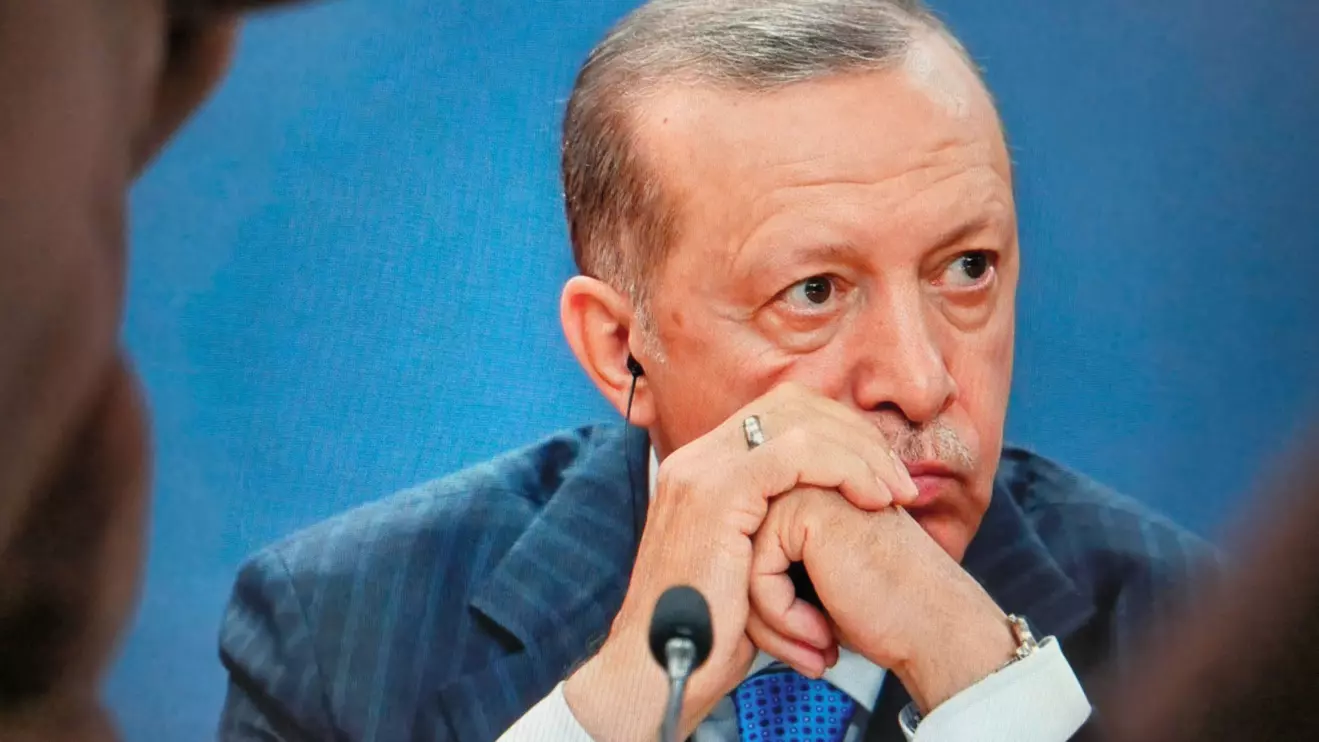
Turkish President Recep Tayyip Erdogan wasted no time condemning the U.S.-Israeli strikes on Iran, calling them a "clear violation of international law" during a Ramadan fast-breaking dinner in Ankara on Monday.
He vowed to intensify contacts at all levels to secure a ceasefire, warning that the continuation of the conflict carried "serious risks for the region and the world that nobody could handle."
Noble words. But Erdogan's true feelings about the fall of the mullahs may be considerably more ambivalent, and considerably more self-serving.
The Sultan's Opportunity
For years, Erdogan has harboured ambitions of positioning Turkey as the undisputed leader of the Muslim world. The Islamic Republic of Iran has always been his most formidable rival for that mantle, a Shia theocracy with deep regional influence, from Baghdad to Beirut.
A weakened or collapsed Iranian regime would remove the most significant obstacle to Erdogan's neo-Ottoman vision of Turkish primacy across the broader Muslim world.
The new Sultan of a post-Iran Middle East? The thought is unlikely to be far from his mind.
Yet Erdogan cannot afford to celebrate too openly, because the collapse of the Iranian regime carries significant dangers for Ankara as well.
First, the Kurdish question. A power vacuum along Turkey's eastern flank could embolden Kurdish communities straddling the Turkish-Iranian border, reinvigorating separatist movements that Ankara has spent decades trying to suppress. Instability in northwestern Iran is the last thing Turkish security services want.
Second, and perhaps more immediately pressing: Turkey holds presidential elections this year. Erdogan is expected to stand as the AKP's candidate, and a dramatic geopolitical upheaval next door, with unpredictable refugee flows, economic shockwaves and regional destabilisation, could prove deeply damaging to his electoral prospects. Voters facing uncertainty rarely reward incumbents.
The Double Game
Erdogan is thus playing a double game with characteristic skill. Publicly, he mourns for the Iranian people and calls for peace.
Privately, he watches the crumbling of a rival regime with barely concealed interest, while hoping the fallout does not reach his doorstep before polling day.
It is, in many ways, the essence of Erdogan's foreign policy: maximum positioning, minimum commitment, and an eye always fixed on the main chance.