Israel
Trump's Iran deal leaves Israel and Lebanon betrayed
Two very different scenes played out Monday as the US-Iran memorandum of understanding was signed.
U.S. President Donald Trump said on Monday a memorandum of understanding aiming to end the war in the Gulf has already been signed by the United States and Iran, drawing calls from his opponents to publish the text.
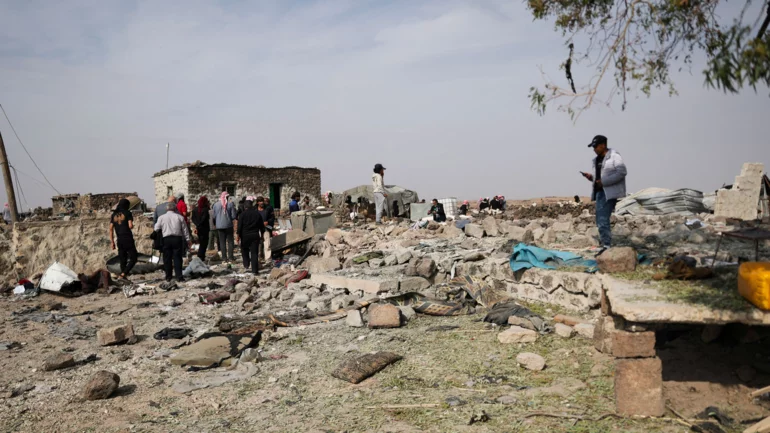
Syria's Interior Ministry said on Monday that one of its security personnel had been killed as its forces thwarted an attack by two Islamic State militants on a command headquarters of the country's internal security forces in the city of Raqqa.
Lebanese President Joseph Aoun on Monday welcomed the US-Iran memorandum of understanding, praising what he described as its respect for Lebanon's "specificity" and expressing hope that it would lead to "concrete measures putting a definitive end to the cycle of violence."
The ink on the US-Iran framework agreement was barely dry before the recriminations began, not from Tehran's enemies in Washington, but from the very allies Donald Trump was supposed to be protecting.
Foreign Minister Hakan Fidan will repeat Turkey's offer to host talks between Russia and Ukraine on a visit to Moscow this week at which he will also discuss Black Sea shipping safety and the South Caucasus, a diplomatic source said on Monday.
This is what the U.S. and Iran, along with mediator Pakistan, have said about what is in the preliminary deal they have announced to end the war.
Saudi Arabia on Monday welcomed the agreement between the United States and Iran to end military operations and begin detailed negotiations toward a permanent peace deal, while issuing a pointed reminder that the interests of regional states must not be overlooked.
Israel's Defence Minister Israel Katz declared Monday that Israeli forces would remain in Lebanon, Syria and Gaza for an indefinite period, in a pointed statement that makes no reference to the US-Iran framework agreement announced the same day.
Authorities in southern Lebanon warned people displaced by three months of war between Israel and Hezbollah against rushing home on Monday despite a U.S.-Iran deal to end the wider conflict, as Israel said it would not withdraw troops from the south.
Let us call it what it is. The framework agreement on Iran is not a peace deal. It is a capitulation dressed up in diplomatic language, and its most immediate victims are the two countries that have paid the highest price in blood and treasure to confront Iran's aggression: Israel and Lebanon.
With an agreement on a framework for a peace deal with Iran, U.S. President Donald Trump may have found a way to begin extricating himself from an unpopular war while setting global markets on a path toward easing energy prices that have spiked during the crisis.
To make this website run properly and to improve your experience, we use cookies. For more detailed information, please check our Cookie Policy.
Necessary cookies enable core functionality. The website cannot function properly without these cookies, and can only be disabled by changing your browser preferences.