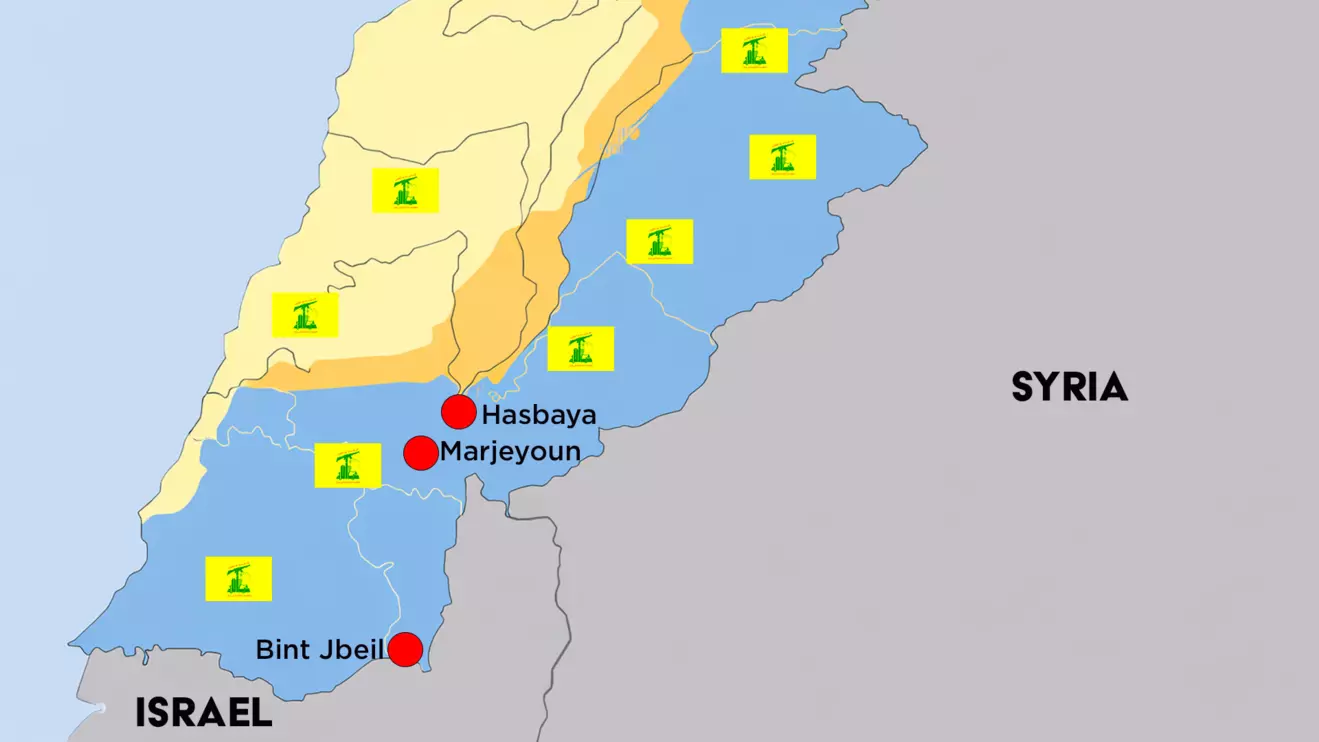
In the hills and valleys of southern Lebanon, in the districts of Bint Jbeil, Marjeyoun and Hasbaya, something unexpected is happening.
As war rages around them, many residents of the villages along the Israeli border are refusing to leave. And their reasons reveal a side of southern Lebanon that rarely makes the international headlines.
These villages have a particular character that sets them apart from the broader narrative of southern Lebanon.
Their populations are predominantly Christian, Sunni and Druze- communities that have long existed in an uneasy coexistence with the Shia militias of Hezbollah and Amal that have dominated the south for more than a quarter of a century.
For 26 years, since Israel's withdrawal from Lebanon in 2000, these residents have lived under Hezbollah's effective control of the region, not by choice, but by geography.
They have survived by minimising contact with the militiamen, avoiding confrontation, keeping their heads down and their opinions private. Hezbollah's presence was a reality they endured, not an identity they embraced.
The Israeli military has provided guarantees of protection to these communities, with one significant caveat: security can only be assured as long as Shia militiamen do not infiltrate their villages. It is a conditional promise, but for many residents, it is enough to stay.
Their calculation is a striking one. These are people who harbour no particular hostility toward Israel, and who see the current military campaign not as an occupation to be resisted but as a potentially historic opportunity, the chance to see Hezbollah's fighters expelled from the south permanently, and with them, the Iranian influence that has shaped every aspect of life in the region for a generation.
The South They Want Back
It is a perspective that rarely surfaces in international coverage of the conflict, which tends to frame southern Lebanon as uniformly resistant to Israeli military presence. The reality on the ground is considerably more complex.
For the Christians of Marjeyoun, the Sunnis of Hasbaya and the Druze communities scattered across these border districts, the dream is not complicated: a south Lebanon where the state's authority runs to the border, where militias answer to no foreign power, and where communities can live without the shadow of armed men who owe their loyalty to Tehran rather than to Beirut.
They have waited 26 years for that reality. Some of them are beginning to wonder whether this war, devastating as it is, might finally deliver it.