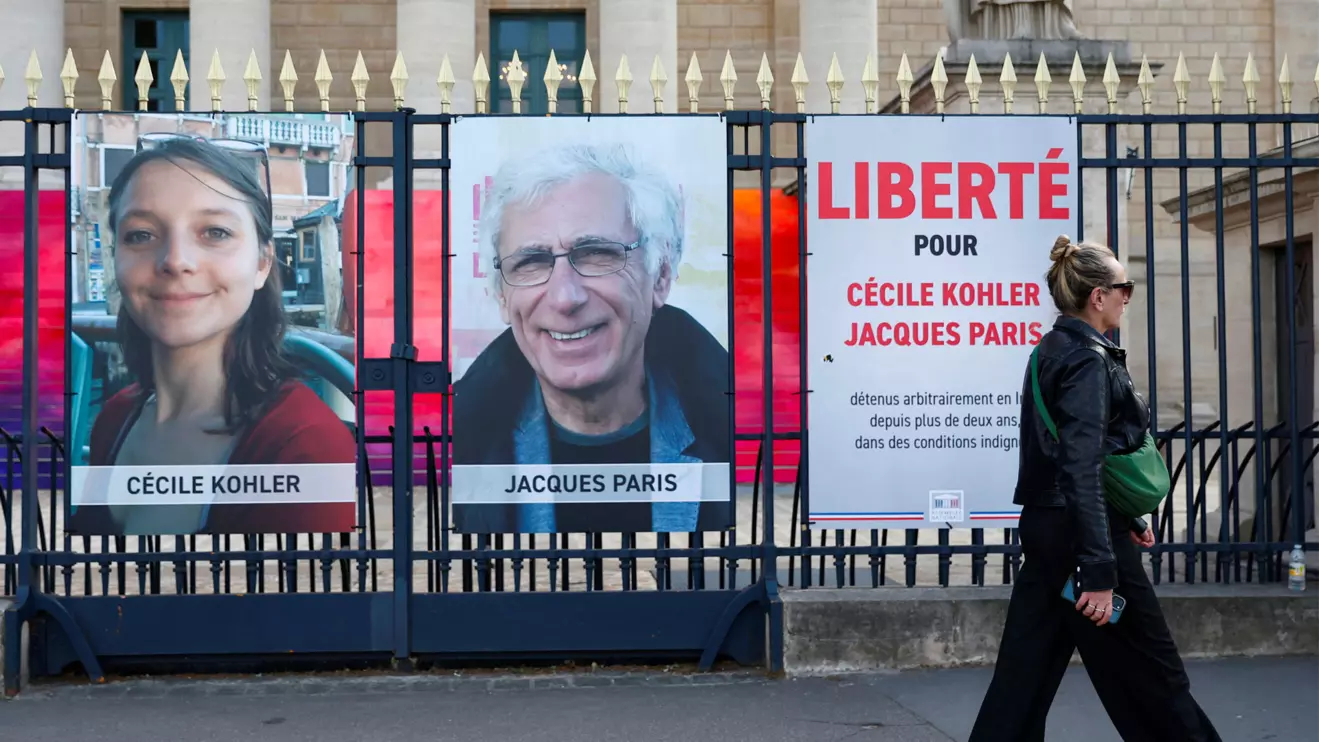
French nationals Cécile Kohler and Jacques Paris are free. President Emmanuel Macron announced Tuesday that the two former detainees are "on their way to French territory" after three and a half years held in Iran, first imprisoned, then placed under house arrest at the French embassy in Tehran.
"This is a relief for all of us and obviously for their families," Macron wrote on X, thanking Omani authorities for their mediation efforts and French state services for their "relentless" work toward the pair's release.
According to sources close to France's foreign minister, Kohler and Paris left Iran at dawn Tuesday under diplomatic escort alongside the French ambassador, and were last reported in Azerbaijan.
While Oman's mediating role has been widely acknowledged, the more significant fact is simpler: Tehran gave the green light. And the timing is not accidental.
Two reasons stand out. First, Iran appears to be rewarding Macron for what critics describe as a conciliatory stance toward Tehran since the outbreak of the regional conflict. Second, the release fits a pattern, dividing Europeans, peeling France away from a more hawkish Western consensus on Iran.
The liberation of two French citizens is, of course, welcome. But it inevitably invites scrutiny of the diplomatic game Macron has been playing.
His foreign policy inconsistencies are well documented, and this episode will do little to silence those who argue that France's approach to Iran has been more accommodating than principled.
For the ayatollahs and their allies, the release is not a concession, it is a calculated move. The question is whether Paris fully understands the price it may have quietly agreed to pay.