
Turkey
France face Turkey in first Nations League test
A new chapter in French football history opens Friday in Turkey's Nations League, marking Zinedine Zidane's debut as France's head coach, a major challenge for one of the sport's true icons.

At a time when global tensions are already dangerously high, Turkish President Recep Tayyip Erdogan took the stage at the Organisation of Islamic Cooperation’s foreign ministers’ summit in Istanbul to accuse Israel of sabotaging U.S.-Iran nuclear talks and shunning diplomacy.
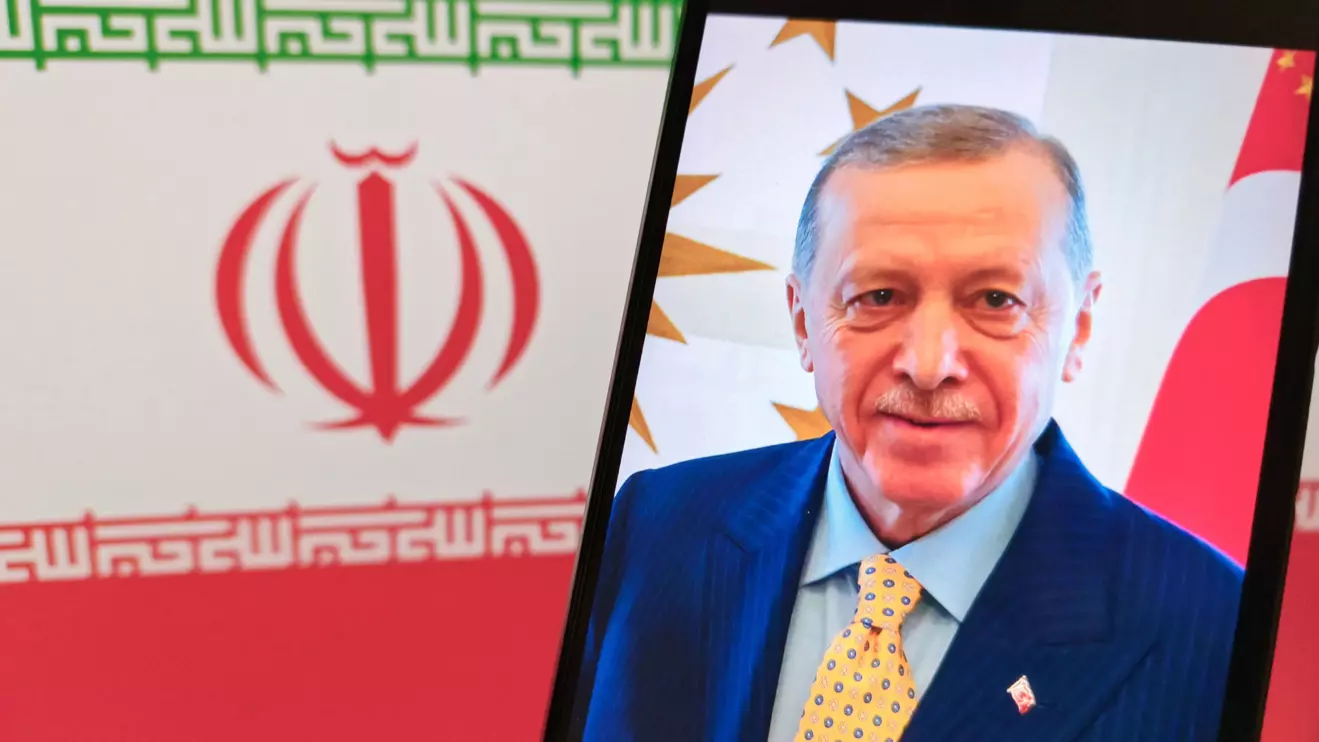
Turkish President Recep Tayyip Erdogan © Mena Today
At a time when global tensions are already dangerously high, Turkish President Recep Tayyip Erdogan took the stage at the Organisation of Islamic Cooperation’s foreign ministers’ summit in Istanbul to accuse Israel of sabotaging U.S.-Iran nuclear talks and shunning diplomacy.
Yet for a leader whose own democratic record is riddled with authoritarianism, censorship, and alignment with pariah states, Erdogan’s sermon on dialogue and peace rings hollow.
While calling for restraint and diplomacy, Erdogan’s government continues to clamp down on civil liberties, jail political opponents, and suppress independent media. Turkey has consistently ranked among the worst countries for press freedom, with journalists routinely arrested under vague anti-terror laws.
The judiciary lacks independence, dissent is criminalized, and elections are marred by irregularities. The president, ruling by decree under a heavily centralized system, has turned Turkey into a textbook example of democratic backsliding.
Beyond its borders, Erdogan’s government has cozied up to regimes and groups considered international outcasts. From warm ties with Iran and Russia to support for Hamas and other Islamist factions, Ankara’s foreign policy frequently contradicts its professed commitment to peace.
Its actions in Syria, Libya, and the Caucasus have stoked instability rather than resolving it.
Against this backdrop, Erdogan’s attempt to position himself as a moral authority on Middle East diplomacy is not only ironic — it is disingenuous.
Accusing Israel of undermining peace talks while ignoring Tehran’s own role in regional provocations is selective outrage at best.
Moreover, lecturing others on avoiding wider conflict while fanning flames through inflammatory rhetoric undermines any credibility Turkey might still claim on the world stage.
The reality is simple: peace in the region requires serious, credible actors. And Erdogan, who has made a habit of weaponizing foreign policy for domestic political gain, is far from being one.
A new chapter in French football history opens Friday in Turkey's Nations League, marking Zinedine Zidane's debut as France's head coach, a major challenge for one of the sport's true icons.
The UAE has suspended all flights operated by Iranian airlines to and from the country from Thursday until further notice, its General Civil Aviation Authority (GCAA) said, citing the US ban targeting Iranian carriers' access to airports worldwide.
Saudi Arabia, Turkey and Pakistan will hold an urgent, high-level meeting under a joint defence pact to discuss ways to support the kingdom amid attacks by Yemen's Houthis, while Saudi's top religious authority told troops to be ready to lay down their lives to fight their Iran-aligned enemy.

To make this website run properly and to improve your experience, we use cookies. For more detailed information, please check our Cookie Policy.
Necessary cookies enable core functionality. The website cannot function properly without these cookies, and can only be disabled by changing your browser preferences.