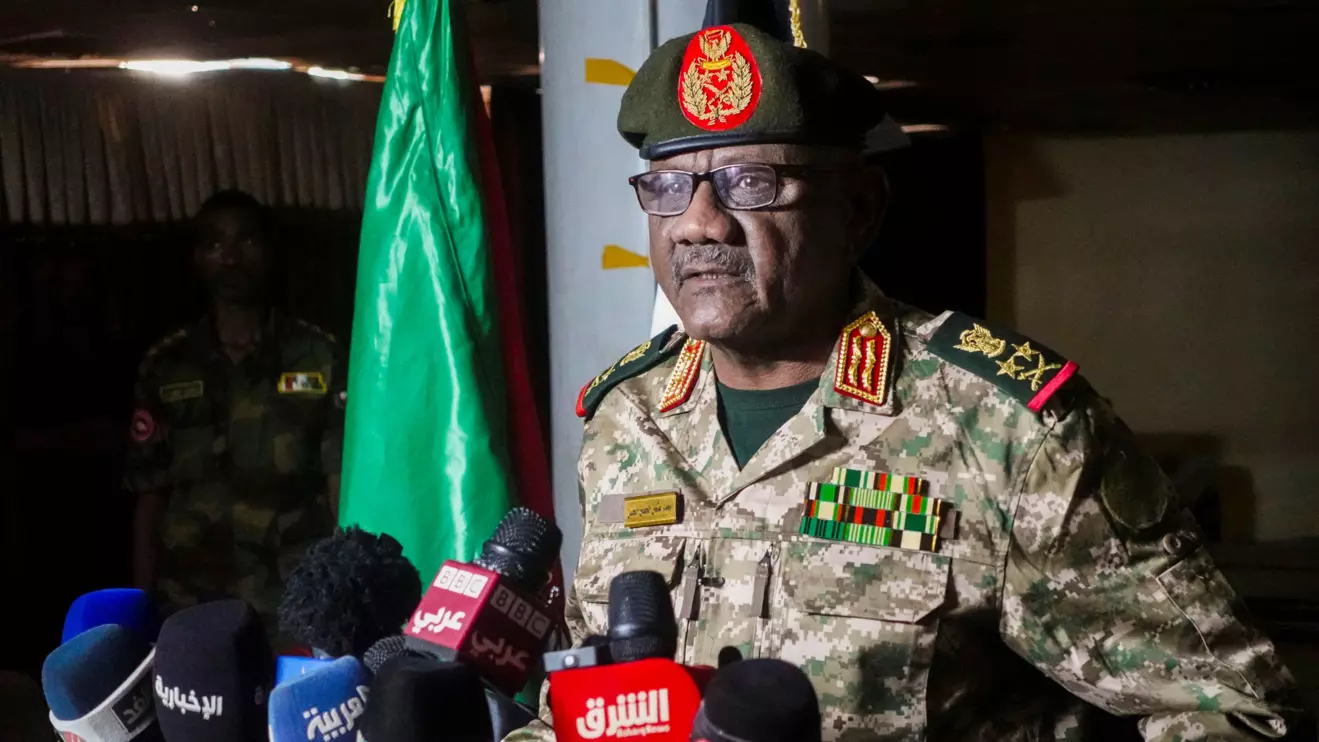
After a week of whirlwind gains for the Sudanese army and allies in the capital Khartoum, leaders hailed a turning point in the civil war, speaking to reporters from inside the army's main headquarters that had been besieged since April 2023.
The recapture of the al-Jaili refinery in northern Bahri last week, along with swathes of the city across the Nile from Khartoum, set the stage for the breaking the siege of the army General Command on Friday, and for the army to finally solidify positive momentum in the almost two-year war with the paramilitary Rapid Support Forces.
Civilians could be seen by a Reuters witness cheering in the streets in Bahri and elsewhere, while soldiers surveyed the horizon from blown out windows at the central Khartoum base and celebrated as they roamed its grounds, at peace after a lengthy RSF onslaught.
"Inch by inch, we'll go from here to al-Geneina, God willing," said one soldier on Sunday, referring to the country's westernmost city, one of the first to fall to the RSF early in the war, and where the RSF has been determined by the United States to have committed genocide.
An army leader described it as a turning point.
"From here, the armed forces will move forward to cleanse every remaining inch of our homeland, and from this point, we will see the return of all Sudanese from displacement, allowing them to resume their normal lives in their homeland with security, stability, and, God willing, peace," said army chief of staff General Mohamed Othaman al-Hussein.
The war has displaced more than 12 million people, while plunging half the population into hunger, for which both the RSF and army are blamed.
DRONE ATTACK ON HOSPITAL
The RSF controls most of the Darfur region and wide swathes of the Kordofan region, both to the west of Khartoum. The army has in recent months retaken several parts of central Sudan and remains in control of the North and East.
The RSF denies the army's gains and said on Monday it was deploying forces in the Sharg el-Nil district of Bahri. It has continued its assault on al-Fashir, the last holdout state capital in Darfur, and over the weekend dozens were killed in a drone attack on the city's last remaining hospital. The RSF denied responsibility and blamed the army.
Analysts say the army may wait to recapture the rest of Khartoum, where the RSF remains widely deployed, before engaging in negotiations.
The RSF has said it would support the formation of its own government, while army leaders have rejected the inclusion of the RSF in the Sudanese state, sparking fears of a formal partition of the country.
But another military leader from the Joint Forces, a collection of formal rebel groups fighting alongside the army, indicated that they would continue to fight for the west of the country.
"God willing, now that we have broken the siege on the General Command, you will hear about victories by the Joint Forces alongside our brothers in the army, regaining our bases in al-Daein, Nyala, al-Fashir, and Geneina [Darfur state capitals], " said Colonel Mohamed Hasaballah.