Egypt
Turkey’s maritime gambit: offering Egypt waters it doesn’t own
Turkey says it is ready to sign a maritime boundary deal with Egypt in the eastern Mediterranean, offering Cairo extra waters at Greece’s expense.

Archaeologists in Turkey have discovered traces of human excrement in a 1,900-year-old glass vial used to hold perfumes or elixirs, which they believe is the first physical evidence that the Romans used faeces medicinally.
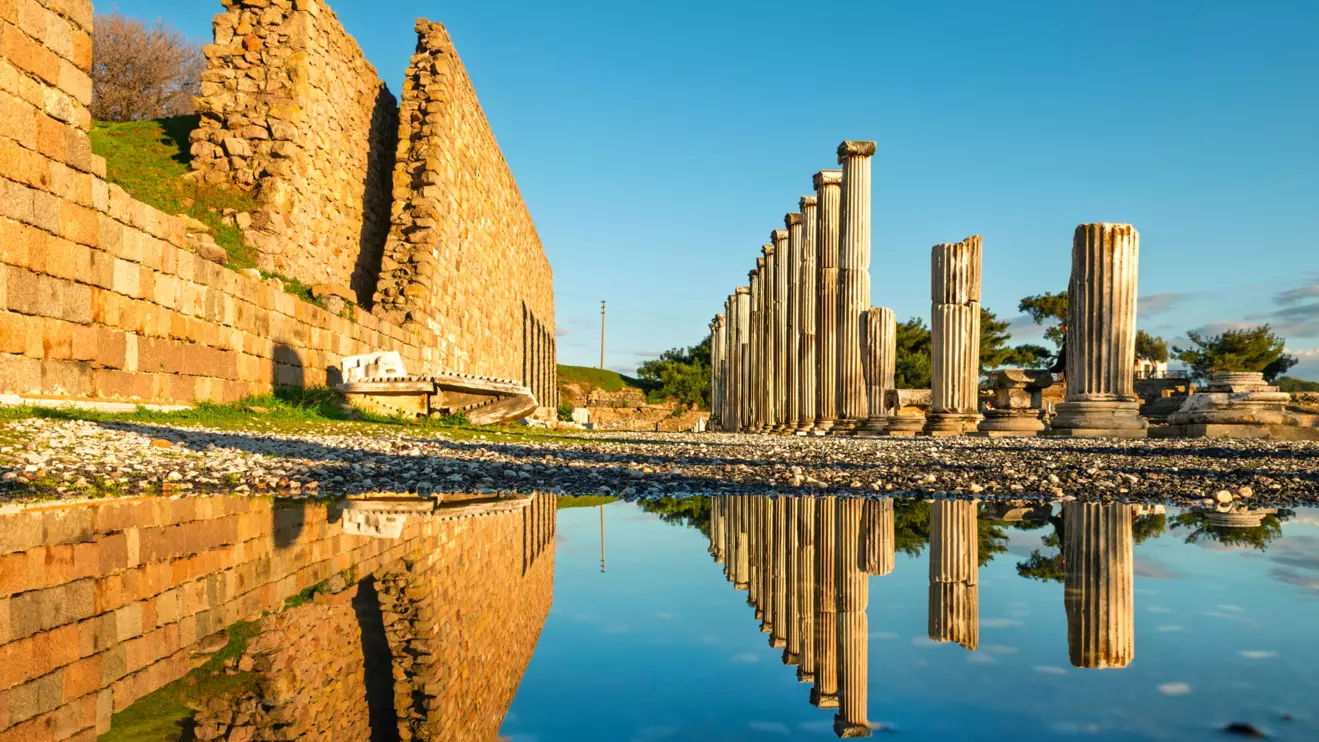
View of ancient city Pergamon, the capital of the Kingdom of Pergamon in 281–133 BC under the Attalid dynasty who transformed it into one of the major cultural centres of the Greek world, in Bergama district of Izmir, Turkey © Mena Today
Archaeologists in Turkey have discovered traces of human excrement in a 1,900-year-old glass vial used to hold perfumes or elixirs, which they believe is the first physical evidence that the Romans used faeces medicinally.
Previously, the practice of applying excrement to the skin to fight infections and inflammation was known only from ancient Roman texts.
Cenker Atila, an archaeologist specialising in ancient perfumes at Turkey's Sivas Republic University, was working with colleagues to identify the contents of hundreds of vials held in Bergama Museum, close to the ruins of the ancient city of Pergamon in Turkey's western province of Izmir.
Pharmacologist Ilker Demirbolat ran a chemical analysis on the contents of one vial, finding human faeces and thyme oil.
The long-necked bottle or unguentarium was recovered from looters, so experts can't be sure where it was excavated.
However, Pergamon was home to a renowned hospital and to the ancient physician Galen, who documented the use of excrement in medicine. The bottle's design also suggests it comes from the area.
"We found a medicine that has survived from ancient times to the present day," Atila said, "we found excrement while expecting perfume."
Demirbolat said Roman physicians described how the medicine could cause revulsion, and recommended mixing it with something that smelled nice, hence the presence of thyme oil.
By Ali Kucukgocmen
Turkey says it is ready to sign a maritime boundary deal with Egypt in the eastern Mediterranean, offering Cairo extra waters at Greece’s expense.
Turkish Foreign Minister Hakan Fidan cautioned on Friday against any renewed attack on Iran, saying such a move would exacerbate tensions and further expand the conflict there, adding that diplomacy and dialogue were the only way to end the war.
Ukrainian President Volodymyr Zelenskiy said on Friday that peace negotiators from Ukraine, Russia and the United States had agreed to meet at a technical level in the first half of November in Abu Dhabi, adding that he hoped a meeting of the countries' leaders would follow.

To make this website run properly and to improve your experience, we use cookies. For more detailed information, please check our Cookie Policy.
Necessary cookies enable core functionality. The website cannot function properly without these cookies, and can only be disabled by changing your browser preferences.