Israel
Critics blast Macron's UN address as opportunistic and misleading
Opportunism, falsehoods, unjustified attacks: French President Emmanuel Macron's latest speech to the United Nations has drawn sharp criticism.

Israeli Foreign Minister Israel Katz expressed strong discontent with UN Secretary-General Antonio Guterres on Friday, following Guterres’ lack of explicit support for the elimination of Yahya Sinwar, the Hamas leader, and his refusal to label Hamas a terrorist organization after the October 7th massacre.
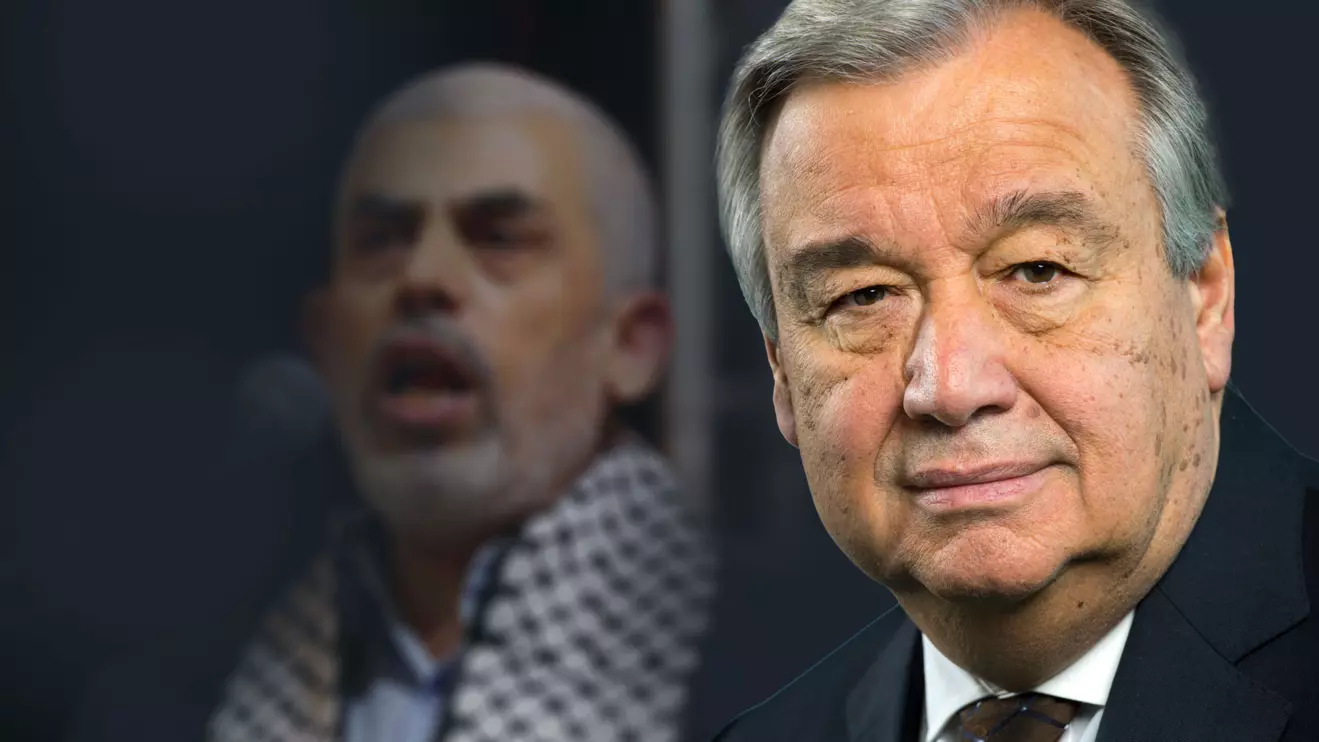
Antonio Guterres © Mena Today
Israeli Foreign Minister Israel Katz expressed strong discontent with UN Secretary-General Antonio Guterres on Friday, following Guterres’ lack of explicit support for the elimination of Yahya Sinwar, the Hamas leader, and his refusal to label Hamas a terrorist organization after the October 7th massacre.
In a post on X (formerly Twitter), the Foreign Minister accused Guterres of leading an "extreme anti-Israel and anti-Jewish agenda" and declared that Israel would continue to designate him as persona non grata, preventing his entry into the country.
The ongoing criticism stems from what Israel perceives as Guterres' selective compassion in dealing with terrorism, particularly when it comes to Israel’s security and the threat posed by Hamas.
Critics of Guterres argue that his position reflects an alignment with the Global South, where many nations in the UN are sympathetic to anti-Israel sentiments and, in some cases, aligned with regimes like Iran or Russia.
Despite these political pressures, Israel insists that as the leader of the United Nations, Guterres must maintain a strong and unbiased stance against all forms of terrorism. By failing to unequivocally condemn Hamas, especially after significant acts of violence, Guterres is perceived as not fulfilling his moral responsibility in the global fight against terrorism.
While some analysts attempt to exonerate Guterres by attributing his actions to the majority positions within the UN, many Israeli officials emphasize that moral leadership on issues of terror should transcend political pressure, particularly when innocent lives are at stake.
The criticism highlights the broader tensions within the UN, where the balance of power often skews towards countries that are less sympathetic to Israel. For Israel, a fair and consistent international approach to terrorism is essential, and Guterres’ perceived failure in this regard has led to deep frustration within the Israeli government.
As this diplomatic rift deepens, it remains to be seen how Guterres will navigate these criticisms and whether he will respond to the growing calls for a more explicit condemnation of terrorist organizations like Hamas.
By Michel Bustani
Opportunism, falsehoods, unjustified attacks: French President Emmanuel Macron's latest speech to the United Nations has drawn sharp criticism.
Turkish President Tayyip Erdogan told the United Nations General Assembly on Tuesday the U.N had become unable to fulfill its duty of preserving peace and called for reform of the Security Council.
Saudi Arabia has restarted operations at its East-West Pipeline and could resume exports from the Red Sea port of Yanbu later on Tuesday, three sources briefed on the matter said.

To make this website run properly and to improve your experience, we use cookies. For more detailed information, please check our Cookie Policy.
Necessary cookies enable core functionality. The website cannot function properly without these cookies, and can only be disabled by changing your browser preferences.