Behind the shutdown: Al Jazeera's alleged bias sparks Israeli action

1 min Mena Today

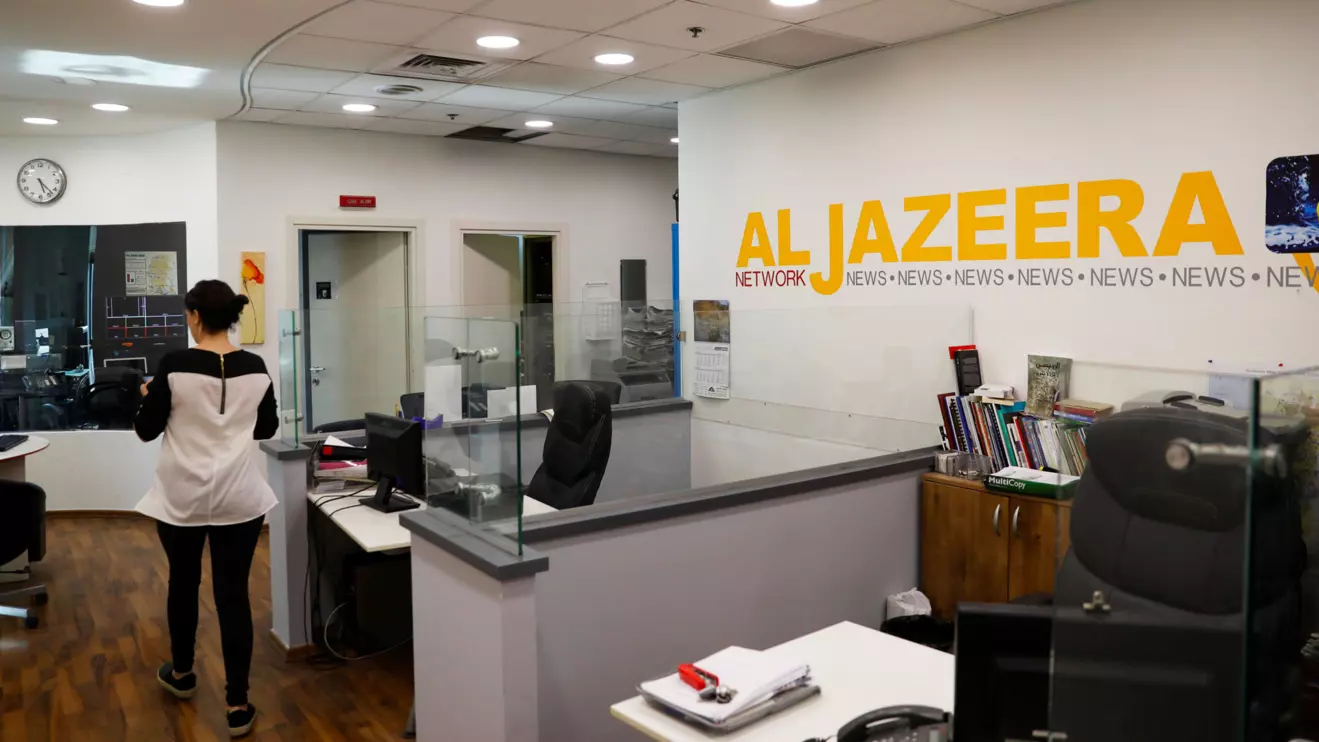
The head of Al Jazeera's operations in Israel and the Palestinian territories, Walid Omary, has criticized the Israeli government's recent decision to close down the station's local offices, labeling it as "dangerous" and politically motivated.

An employee walks inside the Al-Jazeera office in Jerusalem, June 13, 2017. Reuters/Ronen Zvulun

An employee walks inside the Al-Jazeera office in Jerusalem, June 13, 2017. Reuters/Ronen Zvulun

The head of Al Jazeera's operations in Israel and the Palestinian territories, Walid Omary, has criticized the Israeli government's recent decision to close down the station's local offices, labeling it as "dangerous" and politically motivated.

This move has sparked significant controversy given Al Jazeera's contentious role in the region.

Al Jazeera, owned by Qatar, has often been accused of partisanship, particularly in its coverage of various groups in the Middle East. Critics argue that the network has long supported factions like Hamas, Islamic Jihad, Hezbollah, the Muslim Brotherhood, and the Houthis, which are involved in regional conflicts.

The station's coverage in Israel has been a point of contention. Accusations range from unbalanced reporting to the frequent broadcast of misinformation that critics claim fuels anti-Israel sentiment. Such practices, according to detractors, have not only biased the informational landscape but also stoked hatred across the Arab world and beyond through its English-language broadcasts.

In response to the closure, Al Jazeera's legal team, led by Walid Omary, is preparing to challenge the decision, possibly through a court appeal.

By Marcel Khoury in Jerusalem 

Related

Israel

UK steps up pressure on settlements with fresh sanctions

Britain announced on Tuesday it would impose sanctions on eight Israeli construction companies involved in building settlements in the occupied West Bank, as part of its effort to protect the idea of a two-state solution. 

Iran

War and gas shortages test Iranians’ patience

Iran shows no sign of making concessions in the war with the US, but its warnings to citizens of gas shortages this winter are the latest sign of its own vulnerabilities in the conflict, with its ports blockaded and infrastructure hammered by US strikes.

Subscribe to our newsletter

Mena banner 4

To make this website run properly and to improve your experience, we use cookies. For more detailed information, please check our Cookie Policy.

  • Necessary cookies enable core functionality. The website cannot function properly without these cookies, and can only be disabled by changing your browser preferences.