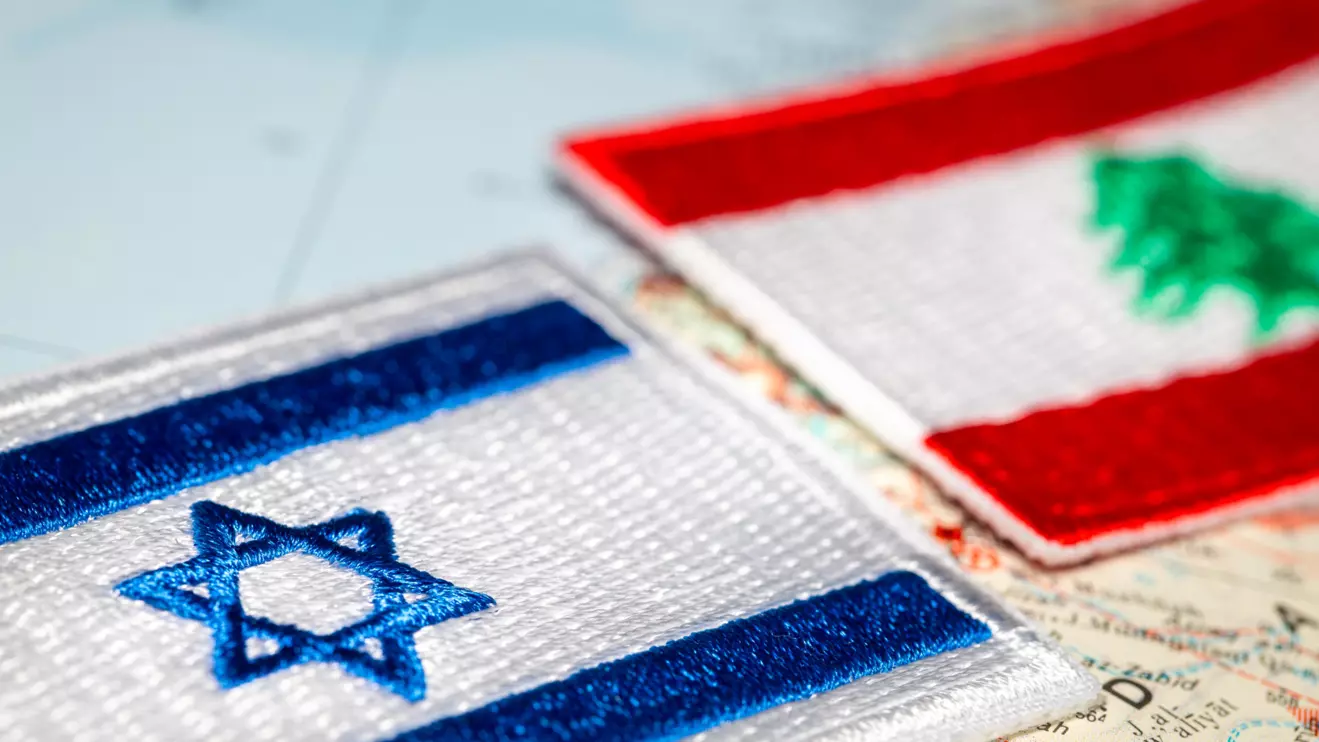
A third round of direct Lebanon-Israel negotiations opens Thursday in Washington, as the United States continues to push both parties toward a comprehensive peace and security agreement.
The talks, now elevated to full government delegation level after two earlier rounds at ambassadorial level, carry genuine momentum.
And here is the striking reality: there are no fundamental obstacles between Beirut and Jerusalem.
Lebanon wants its sovereignty restored, its borders delimited, its reconstruction financed and its state institutions respected.
Israel wants security on its northern border, a demilitarised buffer zone and the removal of a military threat that has menaced its civilian population for two decades. These are not irreconcilable demands. In the hands of two sovereign governments negotiating in good faith, they are eminently solvable.
The one problem that isn't in the room
The obstacle to peace does not sit at the negotiating table in Washington. It sits in Tehran.
Hezbollah, the Iran-backed Shia militia that dragged Lebanon into war on 2 March by firing rockets at Israel without any mandate from the Lebanese government, has no interest in a peace agreement. Its existence, its funding, its political influence and its military power all depend on the perpetuation of conflict. A Lebanon at peace with Israel is a Lebanon where Hezbollah's armed wing has no justification.
And Hezbollah does not decide for itself. The question of disarmament, explicitly required by the US State Department as a condition for comprehensive peace, is decided in Tehran, not in Beirut's southern suburbs.
Iran's calculation
The Iranian regime's position is clear, even if unstated. Severely weakened by months of US-Israeli strikes, navigating a leadership crisis following the death of Ali Khamenei, and facing an economy in near-collapse, Tehran still views Hezbollah as its most valuable strategic asset in the Levant, a forward deterrent against Israel and a lever of influence over Lebanese politics that it has no intention of surrendering.
Disarming Hezbollah would mean surrendering that asset entirely. For a regime that has spent four decades and billions of dollars building it, that is not a concession it is prepared to make — ceasefire or no ceasefire, Washington talks or no Washington talks.
The Washington negotiations can produce meaningful progress on border delimitation, security arrangements, ceasefire consolidation and the framework for Lebanese reconstruction.
They can build the architecture of a peace agreement. What they cannot do - at least not yet - is resolve the fundamental question of Hezbollah's weapons, because that answer does not come from Beirut.
It comes from a regime in Tehran that, for now, has decided the answer is no.