Saudi Arabia denounced Israeli attacks in northern Gaza as genocide on Thursday, telling foreign investors that some bilateral agreements it has been negotiating with Washington are "not that tied" to normalisation of its relations with Israel.
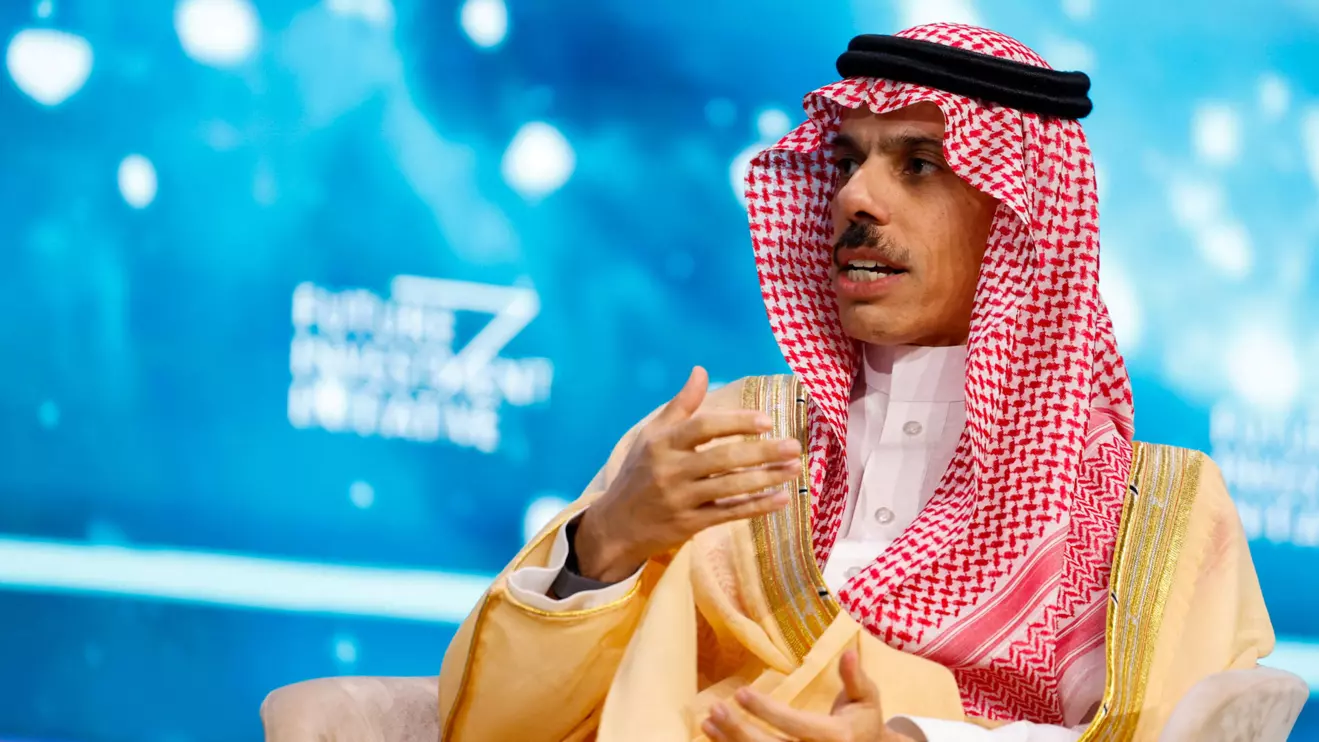
Speaking on stage at an investment conference in Riyadh, Saudi Foreign Minister Prince Faisal bin Farhan Al Saud said Israeli actions in northern Gaza could only be described as a form a genocide that was feeding a cycle of violence.
He reiterated the kingdom's position that it would not recognise Israel without a Palestinian state, adding on that proposed step, Saudi Arabia is "quite happy to wait until the situation is amenable," before moving ahead with normalisation.
"We look at just what's happening now in north (Gaza) where we have a complete blockade of any access for humanitarian goods coupled with a continued military assault without any real pathway for civilians to find shelter, to find safe zones, that can only be described as a form of genocide," he said.
"It is certainly against humanitarian law, international humanitarian law, and is feeding a continuing cycle of violence."
In Jerusalem, there was no immediate response from Prime Minister Benjamin Netanyahu's office to a request for comment.
Israel says it has continued food deliveries into Gaza and blames the United Nations for failing to feed Gazans.
Prince Faisal added that potential U.S.-Saudi agreements about trade and artificial intelligence are "not tied to any third parties" and "can progress probably quite quickly."
"Some of the more significant defence cooperation agreements are much more complicated. We would certainly welcome an opportunity to finish them before the (end of the Biden) administration's term, but that's reliant on other factors outside of our control," he said.
"The other work streams are not that connected, and some of them are progressing quite quickly, and we hope to see moving forward."
SECURITY COMMITMENTS
Saudi Arabia and the U.S. are looking into a set of agreements on nuclear energy, security and defence cooperation, which were originally all part of a wider normalisation deal with Riyadh and Israel.
U.S. President Joe Biden’s aides originally envisioned, in three-way negotiations before the Oct. 7 attack, for Saudi Arabia to gain U.S. security commitments and U.S. nuclear cooperation in exchange for normalising ties with Israel.
U.S. Secretary of State Antony Blinken had said in May that Washington and Riyadh were close to concluding a set of agreements but cautioned that for normalisation to proceed there must be calm in Gaza and a path to Palestinian statehood.
Fears of the Middle East conflict further widening peaked earlier this month after Tehran's missile attack on Israel on Oct. 1.
Israel responded by striking military sites in Iran on Saturday but stopped short of attacking nuclear or oil facilities.
Gulf states had sought urgent de-escalation, fearing they could be caught in the crosshairs of a widening conflict.
Top oil exporter Saudi Arabia has had a political rapprochement with Tehran in recent years, which has helped ease regional tensions, but relations remain difficult.
“I think our relations (with Iran) are moving in the right direction, but of course, they are complicated by the issues of regional dynamics," Prince Faisal said.