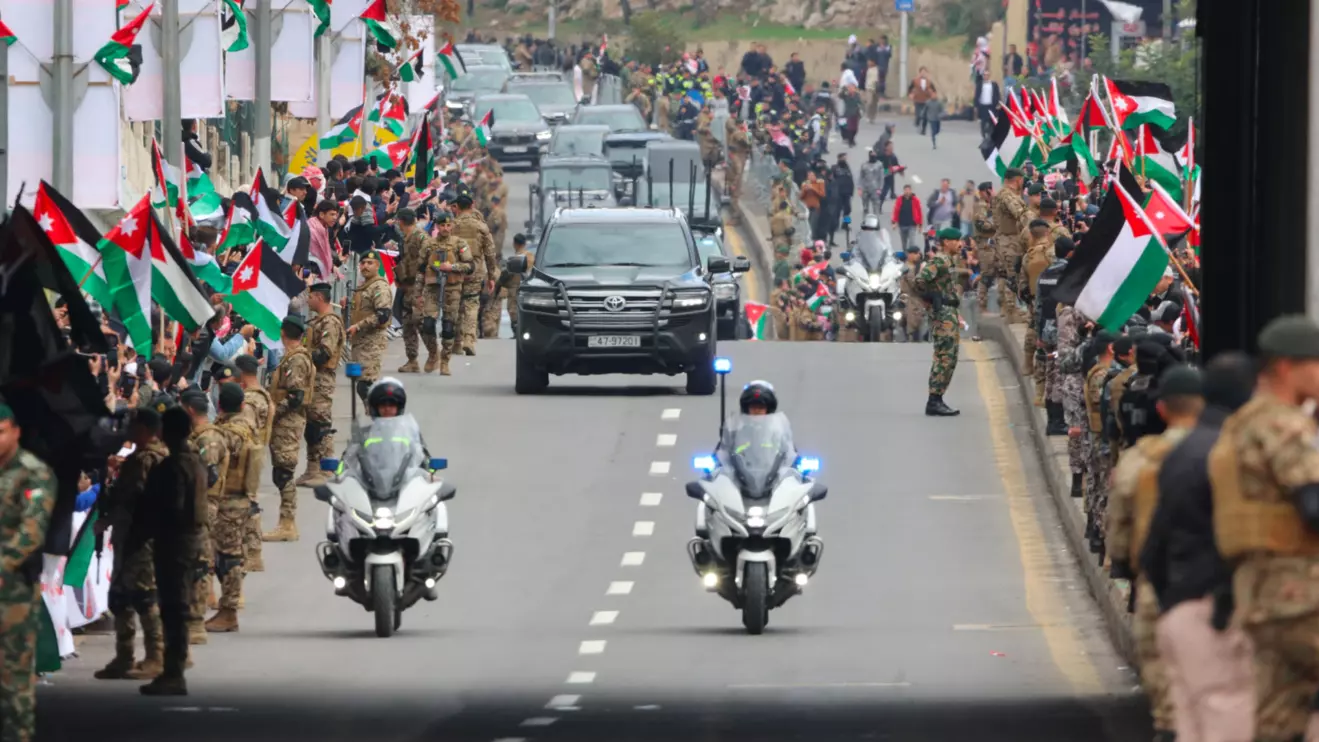
Tens of thousands of Jordanians gathered on Thursday along the road leading to Amman's Marka Airport to welcome King Abdullah upon his return from the United States.
The large demonstration was a show of support for the Jordanian monarch, who has firmly opposed any displacement of Palestinians from Gaza.
During his meeting with U.S. President Donald Trump in Washington on Tuesday, King Abdullah reiterated Jordan’s rejection of any plan to relocate Gaza’s 2.4 million residents.
Trump has been advocating for a controversial proposal to take control of the war-ravaged enclave, rebuild it, and develop its economy—once it has been emptied of its population. The U.S. president suggested that the displaced Palestinians could be relocated to Jordan and Egypt, but both countries have outright rejected the idea.
Jordan’s refusal to accept additional Palestinian refugees stems from its unique demographic situation. With an estimated 60% of its population of Palestinian origin, an influx of refugees from Gaza could significantly impact the country’s stability.
The monarchy is deeply aware of the risks such an arrangement could pose, both socially and politically.
Historical precedent also plays a role in Jordan’s firm stance. The country still remembers the events of Black September in 1970, when tensions between the Jordanian government and Palestinian factions led to violent clashes.
The conflict, which resulted in thousands of casualties, was triggered by the Palestine Liberation Organization's (PLO) attempt to challenge the authority of King Hussein, Abdullah’s father. The government fears that history could repeat itself if a new wave of refugees destabilizes the kingdom.
For King Abdullah, opposing Trump’s plan is not just a diplomatic position—it is a political necessity. The Jordanian leadership views the proposal as a direct threat to its national security and sovereignty.