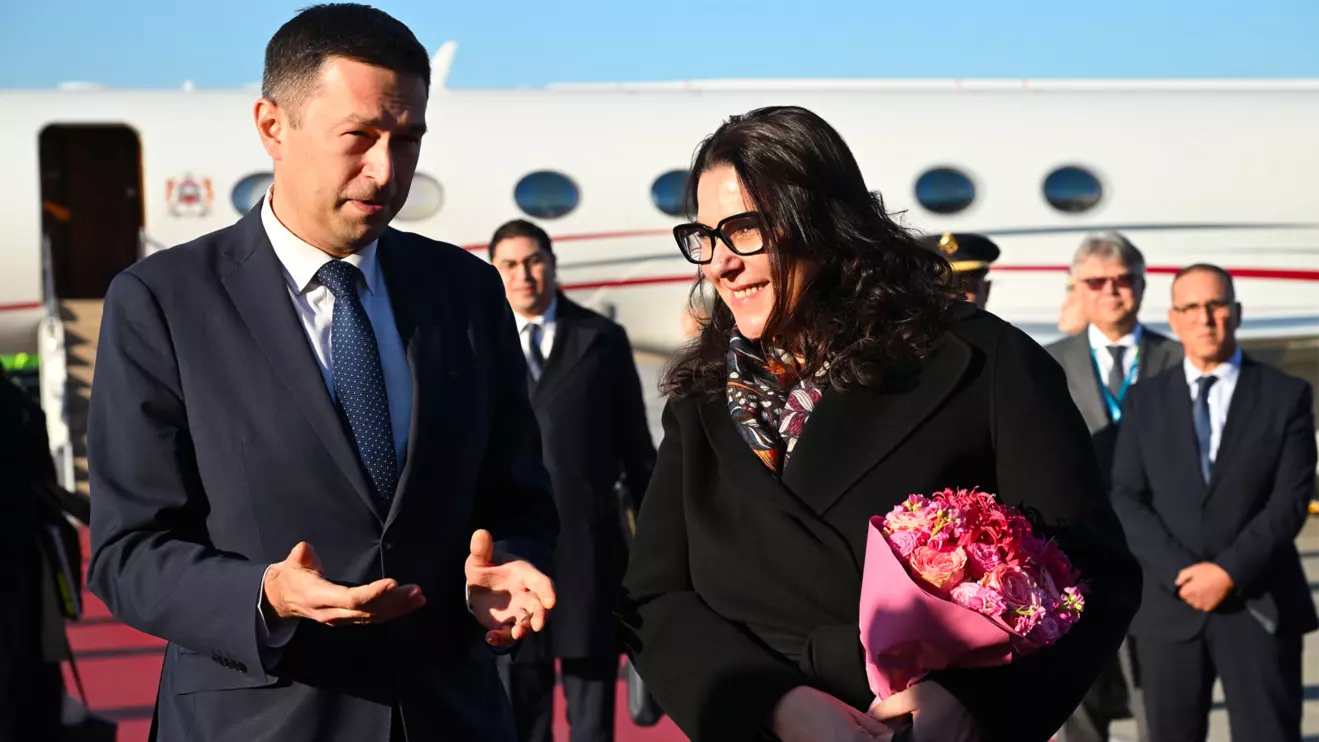
Egyptian President Abdel Fattah el-Sisi and Moroccan Prime Minister Fatima Ezzahra El Mansouri are attending the Russia-Africa summit in Moscow on Wednesday and Thursday.
Their presence, however, signals pragmatic engagement rather than alignment with the Kremlin.
Unlike several West and Central African states, particularly the military-led governments of the Sahel that have turned decisively toward Moscow, Cairo and Rabat are keeping their distance from Russia’s geopolitical agenda. Both maintain close ties with the United States and Europe, and neither intends to sacrifice those partnerships.
Their objective in Moscow is more modest: to listen, to talk, and to explore business opportunities.
Business first
For Egypt, the economic stakes are significant. Russia’s state nuclear company Rosatom is building the country’s first nuclear power plant at El Dabaa, and Moscow is developing an industrial zone in the Suez Canal Economic Zone. Egypt is also one of the world’s largest importers of Russian wheat.
Morocco, for its part, has longstanding trade ties with Russia, notably in agriculture and fisheries, and imports Russian energy products and grain.
For both countries, attending the summit is part of a broader strategy of diversification: engaging every major power without becoming dependent on any of them. In a world increasingly divided between rival blocs, Cairo and Rabat want to keep all doors open.
Moscow, keen to showcase broad African support, can count their presence as a diplomatic win. But it would be a mistake to read it as allegiance. For Egypt and Morocco, the Russia-Africa summit is a marketplace, not a pledge.