For years, the Iran debate has been trapped in a lazy binary: deal or war, diplomacy or regime change, restraint or strike.
That framing is comfortable, and it’s wrong. The real contest is psychological and structural: can the United States break Iran’s most powerful weapon, which isn’t a missile or a centrifuge, but time.
Iran has mastered the politics of delay. It stretches negotiations until coalitions fray, enforcement loosens, and the world adapts to danger as if danger were a permanent weather pattern. Tehran doesn’t need to “win” talks. It only needs talks to continue long enough for pressure to soften and for the international community to accept “managed risk” as the new normal.
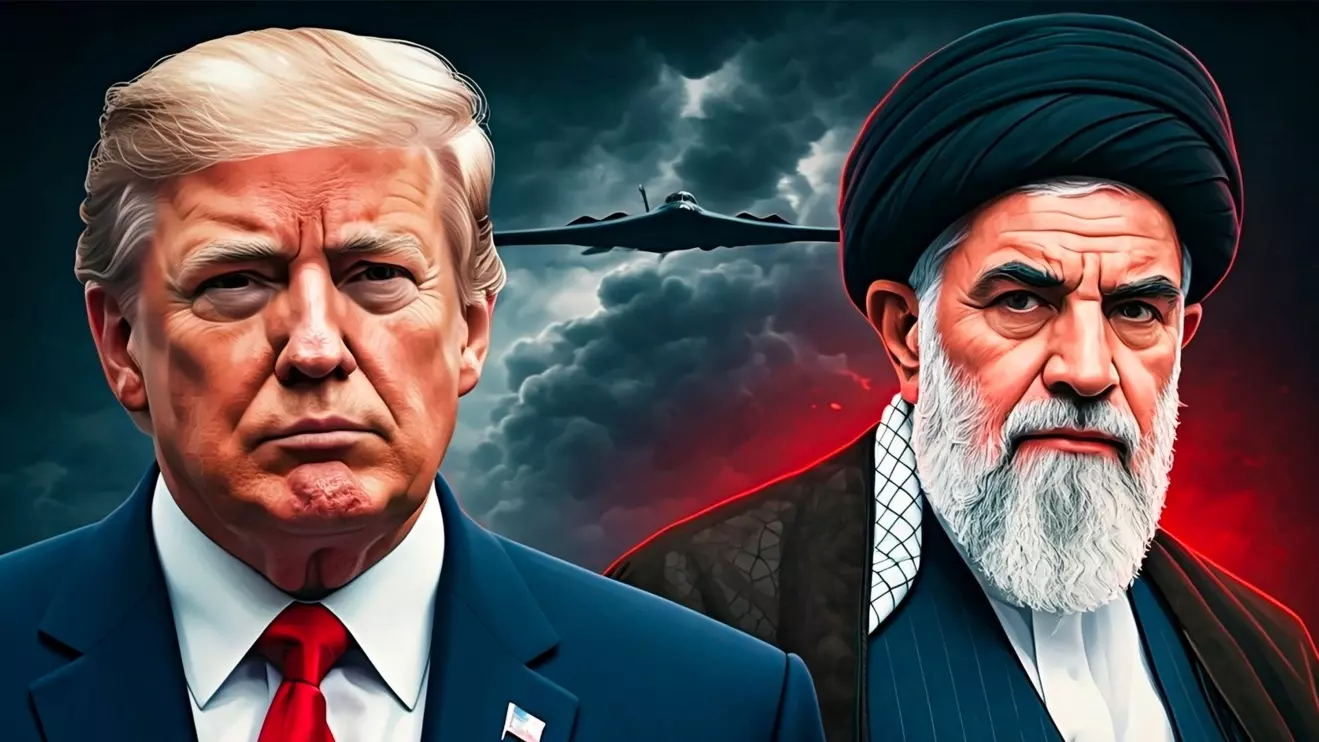
That is where Donald Trump’s unpredictability becomes an asset, not because unpredictability is magic, but because it strikes at the regime’s core operating method.
Iran feeds on pattern recognition: it probes, delays, and bets that the other side will eventually choose process over consequences. A predictable West is Tehran’s favorite opponent. A West that can’t be easily modeled forces the regime to price in danger every day, not only when deadlines arrive.
In modern diplomacy, predictability is a tax; uncertainty, used with discipline, becomes leverage. The postwar era has rarely seen a United States president able to weaponize that kind of controlled volatility like a chess strategy: fixed objectives, shifting tactics, and a constant sense that the next move might be decisive.
But there’s a difference between volatility and strategy. Chaos is not leverage. Disciplined unpredictability is. It works when it is selective, purposeful, and paired with a clear spine.
The art is to be unpredictable about tactics, not about objectives.
The objective must stay fixed: no nuclear breakout, no slow-motion blackmail, no endless talks that quietly coexist with acceleration on the ground. When objectives are fixed and tactics are uncertain, the regime loses its favorite tool, which is waiting you out.
This is why Iran keeps demanding negotiations “without threats” and tries to narrow the agenda to the nuclear file alone. It is not a philosophical argument.
It is a request to remove coercion first, so the regime can breathe, regroup, and bargain from safety. Tehran’s red lines tell you what it values most: the systems that protect it at home and project power abroad. When it refuses constraints in those areas, it is not negotiating a resolution. It is negotiating a pause.
The cold reality is that a serious resolution with a regime like this is never built on trust. It is built on structure: verification with teeth, sequencing that rewards actions rather than promises, and consequences that trigger automatically when lines are crossed. Diplomatic language does not restrain a security state. Only enforceable constraints do.
And that brings us to the part most commentary avoids because it sounds too blunt: the goal is not simply to punish the regime. It is to make the regime’s survival strategy stop working.
That is why the smartest pressure strategy is not simply punishment. It is pressure with ladders: consequences for those who continue repression and escalation, and credible off-ramps for those who step aside—technocrats, mid-level commanders, procurement people, financiers, administrators.
The regime survives by selling a single lie to everyone inside it: there is no exit, and if it falls, you fall with it. A system held together by fear collapses when enough people decide that fear is no longer the safest option.
The message must be blunt and credible: those who drive violence and escalation should expect accountability
To the men and women in the middle of the machine—the ones who sign papers, move money, manage logistics, write “routine” reports that become repression in practice, here is the truth the leadership will never say out loud: you are not the ideology. You are the infrastructure.
And infrastructure can choose to stop carrying poison. Every regime that looks invincible eventually discovers the same weakness: it cannot function if thousands of ordinary careerists quietly decide they no longer want to be the human glue of cruelty.
This is where the ladder matters. The world often speaks to Iran as if the only audience is the Supreme Leader and his inner circle.
That is a mistake. The real target is everyone below the throne: people who are not martyrs, not fanatics, but professionals protecting families, savings, and futures.
The message must be blunt and credible: those who drive violence and escalation should expect accountability, and those who distance themselves from crimes early should not assume they are doomed by association. The leadership will not save you when the weather turns. It will scapegoat you.
The protests inside Iran, and the regime’s reflex to blame foreign actors for internal unrest, reveal what truly terrifies Tehran. It is not speeches in Washington.
It is the possibility that domestic anger and external pressure synchronize into a single destabilizing wave. When that happens, the regime’s nightmare is not a single dramatic event. It is a defection cascade: the moment when people who have been pretending to believe suddenly stop pretending.
Here is the sentence that should haunt every mid-level loyalist more than any foreign threat: the regime’s collapse, if it comes, will not be announced on television, it will begin when insiders decide their personal future is safer outside the regime than inside it. Not heroism. Not slogans. A calculation.
Now zoom out. All in all, Trump is playing a Yalta Conference game—not literally redrawing borders, but resetting the rules of power that will define the Middle East for a generation.
He’s trying to collapse separate files, Iran’s nuclear program, sanctions enforcement, regional normalization, defense guarantees, energy leverage, and arms sales, into a single integrated bargain where everyone pays something, everyone gets something, and the holdouts get squeezed.
In that frame, the question is no longer “deal or no deal with Iran,” but whether Iran is allowed to become a permanent threshold nuclear power; whether Israel is fully embedded as a regional pillar or kept as a besieged exception; whether proxy warfare remains a viable business model; and whether the Gulf’s security order is underwritten by Washington or outsourced to a messier, multipolar reality shaped by Russia and China.
Yalta worked because the settlement was enforceable. This one will only hold if the region believes the consequences are real.
If Trump’s new order looks disciplined and backed by follow-through, it can freeze rivals into caution and push allies into alignment. If it looks like improvisation, it won’t produce stability. It will produce a frantic scramble for independent deterrents and a region that tests every red line at once.
If Trump gets it right, he writes the region’s next decade in ink; if he gets it wrong, he lights it with gasoline.