Syria
Syria's skies are open for business
For over a decade, Syrian airspace was a no-fly zone that airlines wouldn't touch. Now it's one of the busiest corridors in the Middle East.
The Syrian army began shelling Kurdish-held neighborhoods in northern Aleppo on Wednesday, following the expiration of a deadline given to residents to evacuate the area.
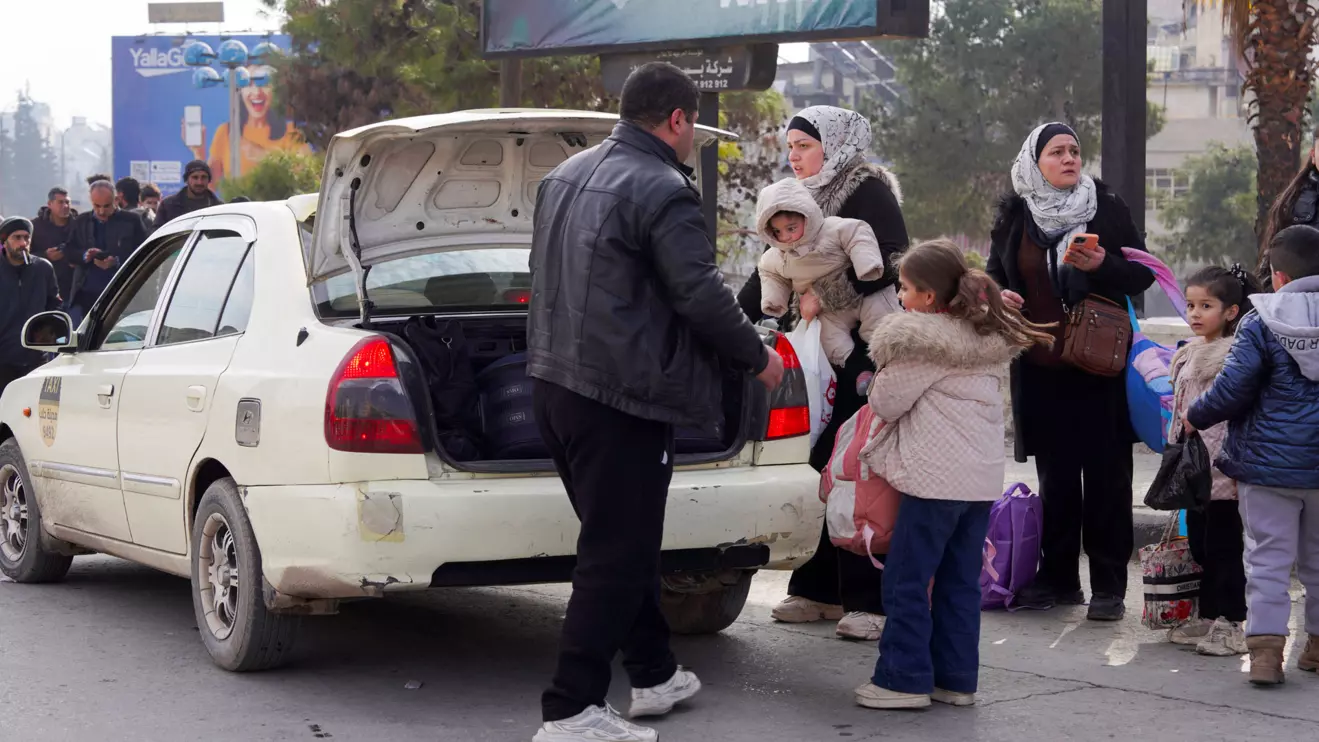
A group of civilians carry bags and belongings as they flee following renewed clashes between the Syrian army and the Syrian Democratic Forces (SDF), in Aleppo, Syria, January 7, 2026. Reuters/Karam al-Masri
The Syrian army began shelling Kurdish-held neighborhoods in northern Aleppo on Wednesday, following the expiration of a deadline given to residents to evacuate the area.
Syrian armed forces had previously declared that these two districts, controlled by Kurdish forces, would be designated as a "military zone" effective Wednesday.
The bombardment marks a significant escalation in tensions between Damascus and Kurdish-controlled territories in northern Syria. The artillery strikes come after authorities issued evacuation orders to civilians in the targeted neighborhoods, though the exact timeframe given to residents remains unclear.
The Kurdish-held districts have long been a point of contention in Syria's complex conflict, with multiple factions vying for control over strategic territories in and around Aleppo, one of the country's largest cities.
The decision to classify these neighborhoods as military zones signals the Syrian government's intent to reassert control over areas that have remained outside its direct authority throughout much of the ongoing conflict.
As artillery fire pounds the Kurdish quarters, concerns are mounting about the fate of civilians who may have been unable or unwilling to flee their homes before the deadline expired.
The situation remains fluid, with the potential for further military operations as Damascus seeks to consolidate its territorial gains in northern Syria.
For over a decade, Syrian airspace was a no-fly zone that airlines wouldn't touch. Now it's one of the busiest corridors in the Middle East.
Israeli and Lebanese ambassadors met Tuesday at the State Department for a fourth round of direct talks, even as fighting between Israel and Hezbollah continued unabated on the ground.
Benjamin Netanyahu is under criticism at home after U.S. President Donald Trump declared Israel would halt plans to attack Iran ally Hezbollah in Beirut, highlighting pressure the Israeli leader faces ahead of an election polls show him losing.
To make this website run properly and to improve your experience, we use cookies. For more detailed information, please check our Cookie Policy.
Necessary cookies enable core functionality. The website cannot function properly without these cookies, and can only be disabled by changing your browser preferences.