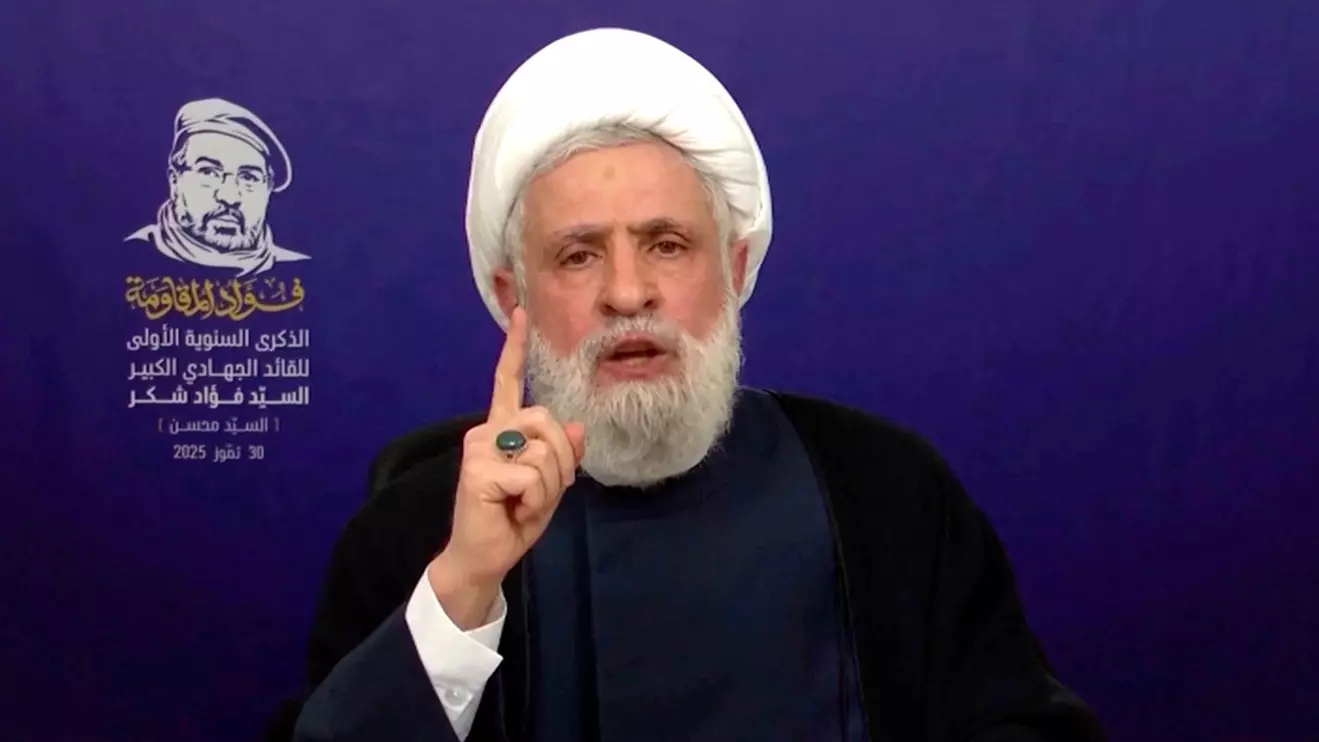
The head of Hezbollah, Naim Qassem, said on Friday that the group reserves the right to respond to Israel’s killing of its top military commander, while leaving open the possibility of a future conflict.
His televised remarks came amid rising concerns in Lebanon that Israel could intensify strikes to pressure Hezbollah into disarming, something the group has consistently rejected.
Those fears grew after Israel killed Haytham Ali Tabtabai, Hezbollah’s senior military commander, in an airstrike on Beirut’s southern suburbs on November 23.
Qassem said Hezbollah would decide the timing and nature of any retaliation, insisting that Israeli threats of a broader air campaign “have no impact.” He added, “Is a war later possible? Yes, it is possible. And the possibility of no war is also there.”
Despite the rhetoric, diplomatic sources and regional analysts note that the chances of a full scale conflict between Israel and Hezbollah remain very low in the current context. Both sides face strong internal and external pressure to avoid escalation.
Israel is cautious about opening a new major front, while Hezbollah has signaled repeatedly that it wishes to avoid a war that would further strain Lebanon’s already fragile situation.
Qassem himself stopped short of signaling any imminent confrontation, instead urging Lebanon to prepare a national plan based on the “army and the people,” a phrasing analysts see as maintaining political posture rather than announcing a shift toward war.
Qassem also expressed hope that Pope Leo’s upcoming visit to Lebanon could help foster peace and contribute to ending what he described as Israeli aggression.
Lebanon is under increasing pressure from Israel and the United States to accelerate efforts to disarm Hezbollah and other armed groups.
Immediately after Qassem’s speech, Israeli military spokesperson Avichay Adraee said on X that the Lebanese army’s attempts to seize Hezbollah weapons in the south were “inadequate,” claiming the group continues to operate covertly to maintain its arsenal.
Hezbollah maintains that it will not disarm as long as Israel continues its strikes on Lebanese territory and occupies disputed points in the country’s south.
While the situation remains tense, the overall assessment from diplomatic actors is that neither side is seeking a full scale confrontation, and the likelihood of such a war erupting remains very low for now. Both Israel and Hezbollah appear locked in a cycle of controlled escalation rather than heading toward a new open conflict.