Iran
Liberation is not a slogan. It is a set of decisions
Seven months into this war, the Islamic Republic is in the tightest corner of its forty-seven years. That is not cheerleading; it is arithmetic.

The fall of Nicolás Maduro is not only a moment of relief for the people of Venezuela. It is a strategic defeat for terrorism, organized crime, and the shadow networks that thrived under his rule.
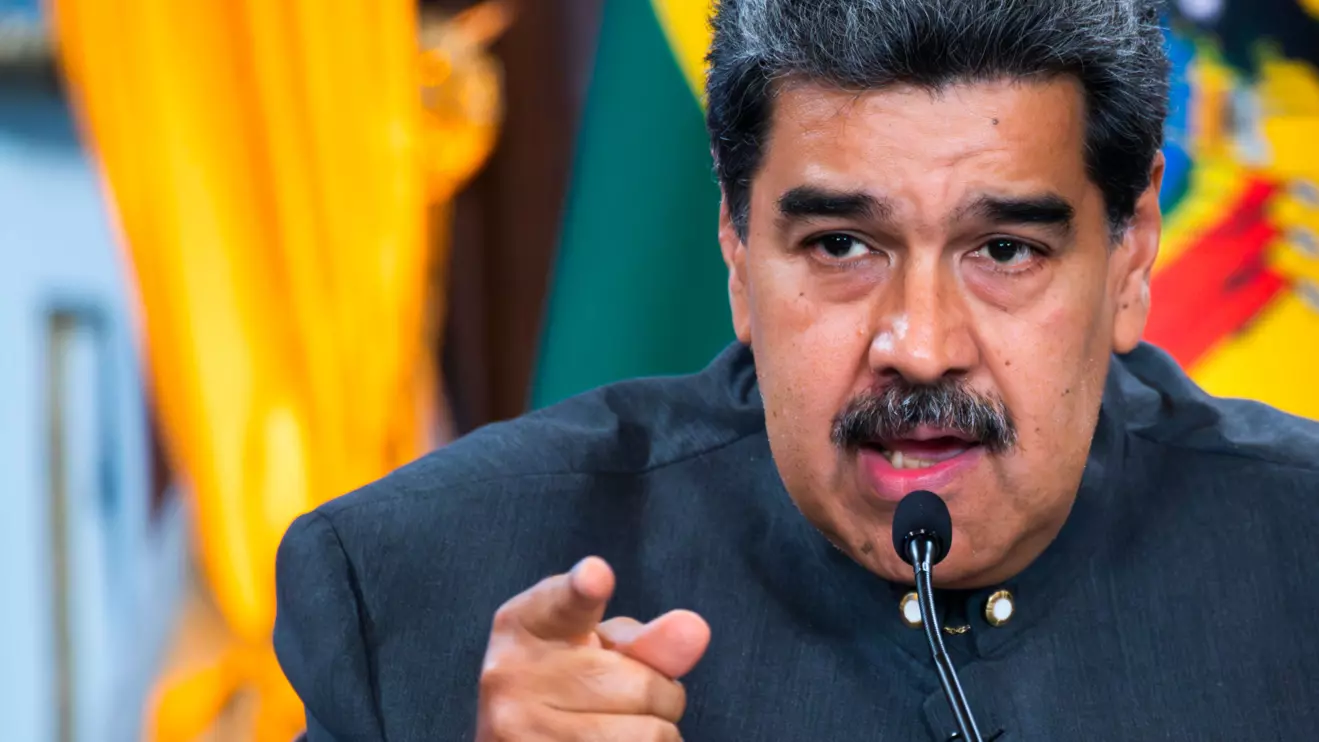
Nicolás Maduro © Mena Today
The fall of Nicolás Maduro is not only a moment of relief for the people of Venezuela. It is a strategic defeat for terrorism, organized crime, and the shadow networks that thrived under his rule.
For years, Venezuela stopped functioning as a normal state. Under Maduro, it became a permissive hub where power was traded for survival and sovereignty was rented out to the highest bidder.
That vacuum did not remain empty. It was filled by drug traffickers, sanctioned actors, and terrorist organizations looking for cover, routes, and cash.
Among the biggest beneficiaries was Hezbollah. The group quietly built a dense financial network in Venezuela, relying on drug trafficking and illicit commercial schemes to launder money and fund its operations far beyond Latin America. This was not incidental. It was enabled. A state that no longer enforces rules becomes a gift to those who live outside them.
Iran also exploited this collapse. With Maduro’s cooperation, Tehran expanded its footprint in the region, using Venezuela as a platform to bypass sanctions, move assets, and project influence. What emerged was not partnership but mutual opportunism: a failing regime selling access in exchange for political and logistical lifelines.
That is why Maduro’s arrest marks a triple victory. A victory for Venezuelans long crushed by repression and shortages. A victory for regional stability. And a victory for those fighting terrorism and narco-trafficking.
The reaction tells its own story. Hezbollah, Hamas, and Palestinian Islamic Jihad rushed to condemn the U.S. intervention. Tehran followed suit. Their outrage is not moral. It is operational. They are losing a safe harbor, a financial artery, and a state willing to look the other way.
When terrorist organizations protest the fall of a leader, it is rarely because democracy has suffered. It is because business has.
Maduro’s Venezuela was not neutral. It was an enabler. Its collapse disrupts networks that depend on weak states and predictable corruption. Files open. Guarantees vanish. Facilitators panic. Silence breaks.
This is why the moment matters beyond Caracas. It sends a clear message: alliances built on criminal permissiveness are fragile, and regimes that trade sovereignty for survival eventually pay the price.
Maduro is gone. The damage he enabled will take time to undo. But for terror financiers and drug traffickers who treated Venezuela as a safe zone, the era of comfort is over. And that, unmistakably, is good news.
Seven months into this war, the Islamic Republic is in the tightest corner of its forty-seven years. That is not cheerleading; it is arithmetic.
Israel goes to the polls on October 27 in what may be its most consequential election in years - the first since October 7, the wars with Hamas and Hezbollah, and the seven-month conflict with Iran.
The new year began with a scandal. A documentary built on the testimony of twenty-four anonymous Israeli soldiers and intelligence officers won a prize in Venice and set off a fury at home. The chief of staff has ordered a legal hunt for the sources; the culture minister speaks of treason.

To make this website run properly and to improve your experience, we use cookies. For more detailed information, please check our Cookie Policy.
Necessary cookies enable core functionality. The website cannot function properly without these cookies, and can only be disabled by changing your browser preferences.