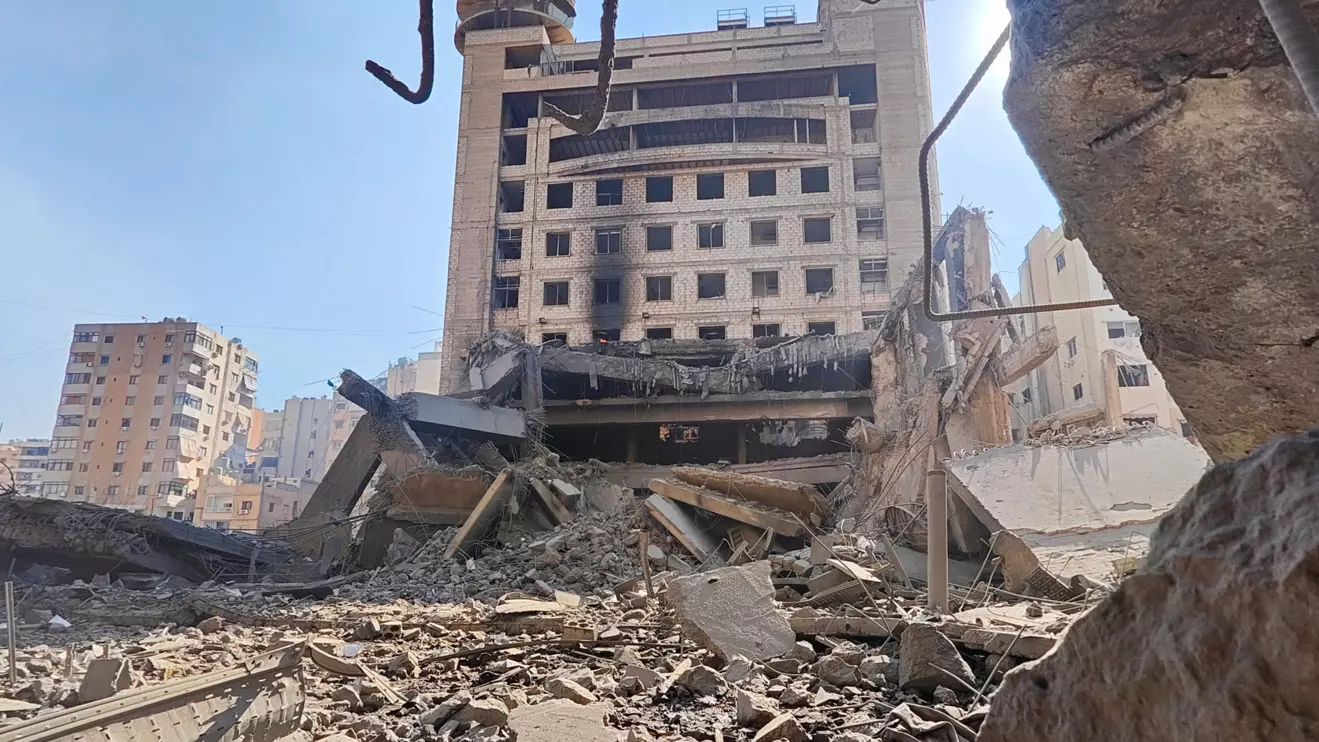
Israeli forces have destroyed the Beirut headquarters of Al Manar television and its affiliated radio station in strikes targeting the southern suburbs of the Lebanese capital. For those who believe in genuine press freedom, the reaction should not be mourning, it should be relief.
Al Manar and its radio arm have never been media outlets in any meaningful sense of the word. They are, and have always been, the propaganda arm of Hezbollah, a designated terrorist organisation backed and funded by the Islamic Republic of Iran.
Their staff are not journalists. They are militants who happen to operate cameras and broadcast equipment instead of weapons. The distinction, in practice, is negligible.
For decades, these outlets have pumped a relentless stream of incitement, hatred and calls for violence into Lebanese homes and beyond. Their primary targets have been Israel and the United States, portrayed not as political adversaries but as existential enemies deserving of annihilation.
A Threat to All Lebanese
But the poison spread by Al Manar has never been limited to external enemies. Lebanon's own communities, Christian, Sunni and Druze, have long been subjected to the outlet's sectarian messaging, subtle and not so subtle pressure, and the ever-present reminder of what happens to those who defy Hezbollah's grip on the country.
Al Manar was not a voice for Lebanon. It was a weapon pointed at Lebanon, and at anyone who dared to imagine a different future for the country.
For years, Western governments and international media watchdogs tied themselves in knots over Al Manar, wringing their hands about press freedom while a terrorist organisation used broadcast infrastructure to incite murder with industrial efficiency.
The United States designated Al Manar a terrorist entity as far back as 2006. The European Union followed. Yet the transmitters kept broadcasting.
Israel has now done what international institutions debated endlessly but never resolved: it has shut down a machine built not to inform, but to kill.
A Legitimate Military Target
Under international humanitarian law, infrastructure that serves a direct military purpose is a legitimate target. Al Manar coordinated messaging with Hezbollah's military operations, broadcast operational propaganda, and served as a tool of psychological warfare against civilian populations. It was command and control dressed in the clothing of broadcasting.
Its destruction is not a blow against free expression. It is the removal of a weapon from the battlefield, one that has caused immeasurable harm to Lebanese society, to regional stability, and to the basic principle that media should serve truth, not terror.
The cameras of Al Manar have gone dark. For Lebanon, and for the region, that is not a tragedy. It is long overdue.