Turkey
Partnership yes. Membership no
Turkey's crackdown on LGBT groups, the opposition and the media is pushing it further from European Union membership, EU Enlargement Commissioner Marta Kos said on Friday during an official visit.

On Tuesday, Lebanese Prime Minister Najib Mikati met with his Spanish counterpart Pedro Sanchez and the President of the European Council, Charles Michel, in Jordan on the sidelines of a conference focused on aid to Gaza.
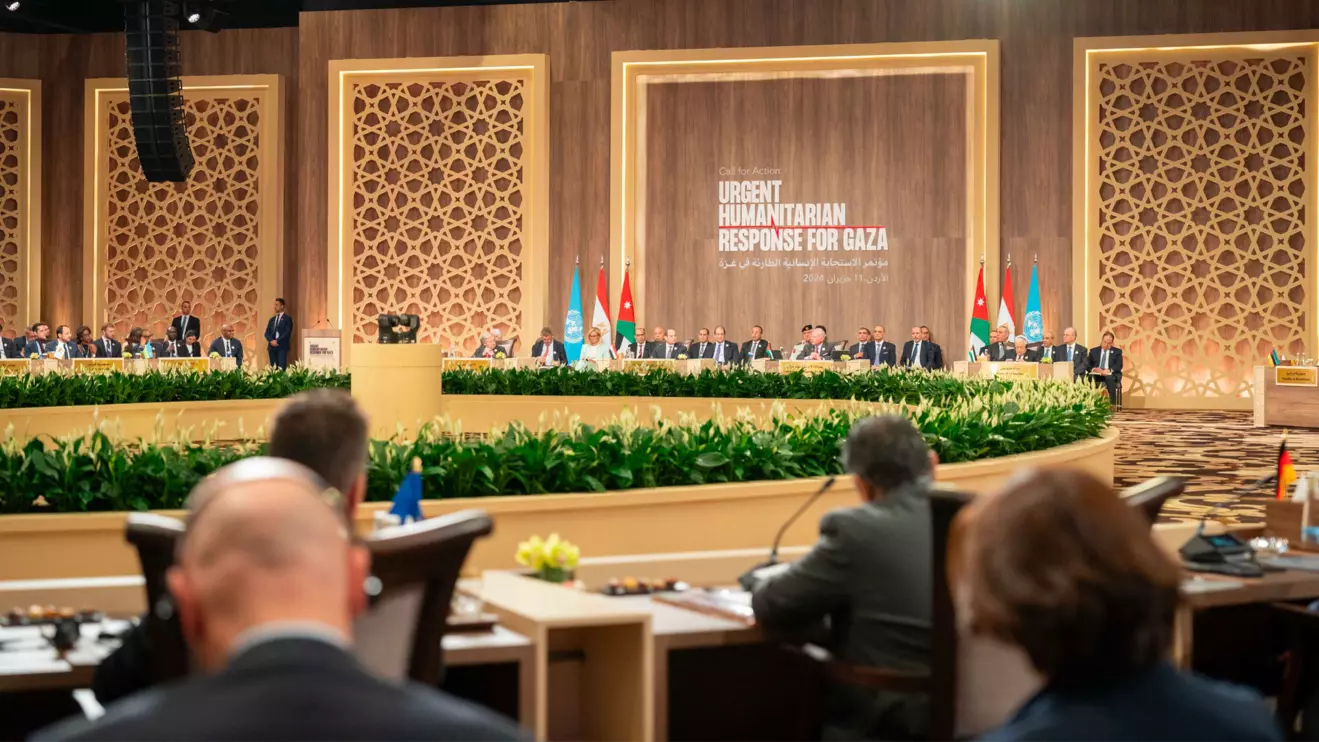
Conference on aid to Gaza currently being held in Jordan
On Tuesday, Lebanese Prime Minister Najib Mikati met with his Spanish counterpart Pedro Sanchez and the President of the European Council, Charles Michel, in Jordan on the sidelines of a conference focused on aid to Gaza.
During the meeting, Prime Minister Mikati expressed his gratitude to the Spanish government for its "continuous support to Lebanon in all areas, particularly through Spain's active participation in the United Nations Interim Force in Lebanon (UNIFIL)."
He also congratulated Prime Minister Sanchez on Spain’s decision to "officially recognize the State of Palestine following its vote at the United Nations in favor of full membership for the State of Palestine."
Pedro Sanchez is known for his strong pro-Palestinian stance, one of the few European leaders to hold such a position. His government’s decision to recognize Palestine underscores Spain's commitment to Palestinian statehood and reflects a broader advocacy for Palestinian rights within the international community.
However, during the conversation, Sanchez did not address the daily attacks by Hezbollah on Israeli territory. This omission highlights a significant gap in Spain's diplomatic approach, as Hezbollah's actions remain a critical issue in the regional conflict.
The Spanish diplomatic corps is perceived to have limited influence in broader Middle Eastern geopolitics. Pedro Sanchez's partisan stance on the Israeli-Palestinian conflict is seen as potentially undermining Spain's diplomatic effectiveness, particularly in fostering balanced and comprehensive peace initiatives.
By Antoine Khoury
Turkey's crackdown on LGBT groups, the opposition and the media is pushing it further from European Union membership, EU Enlargement Commissioner Marta Kos said on Friday during an official visit.
Saudi Arabia's civil aviation authority said on Friday that three Saudi nationals were killed and several people were injured in two attacks on King Khalid International Airport in Riyadh on Thursday.
Benjamin Netanyahu's military secretary on October 7, 2023, has accused the prime minister of passing up chances to bring hostages home alive in order to protect his coalition. Netanyahu rejects the claim.

To make this website run properly and to improve your experience, we use cookies. For more detailed information, please check our Cookie Policy.
Necessary cookies enable core functionality. The website cannot function properly without these cookies, and can only be disabled by changing your browser preferences.