Egyptologists in Paris have announced the remarkable discovery of 225 funerary statuettes in a royal tomb in the necropolis of Tanis, Egypt.
The revelation was made Friday during a press conference held by the French Mission of the Tanis Excavations.
“Finding statuettes still in place inside a royal tomb has not happened in Tanis since 1946 and, to my knowledge, has never occurred in the Valley of the Kings except for Tutankhamun’s tomb in 1922,” said Frédéric Payraudeau, head of the mission and researcher at the École Pratique des Hautes Études (Université PSL).
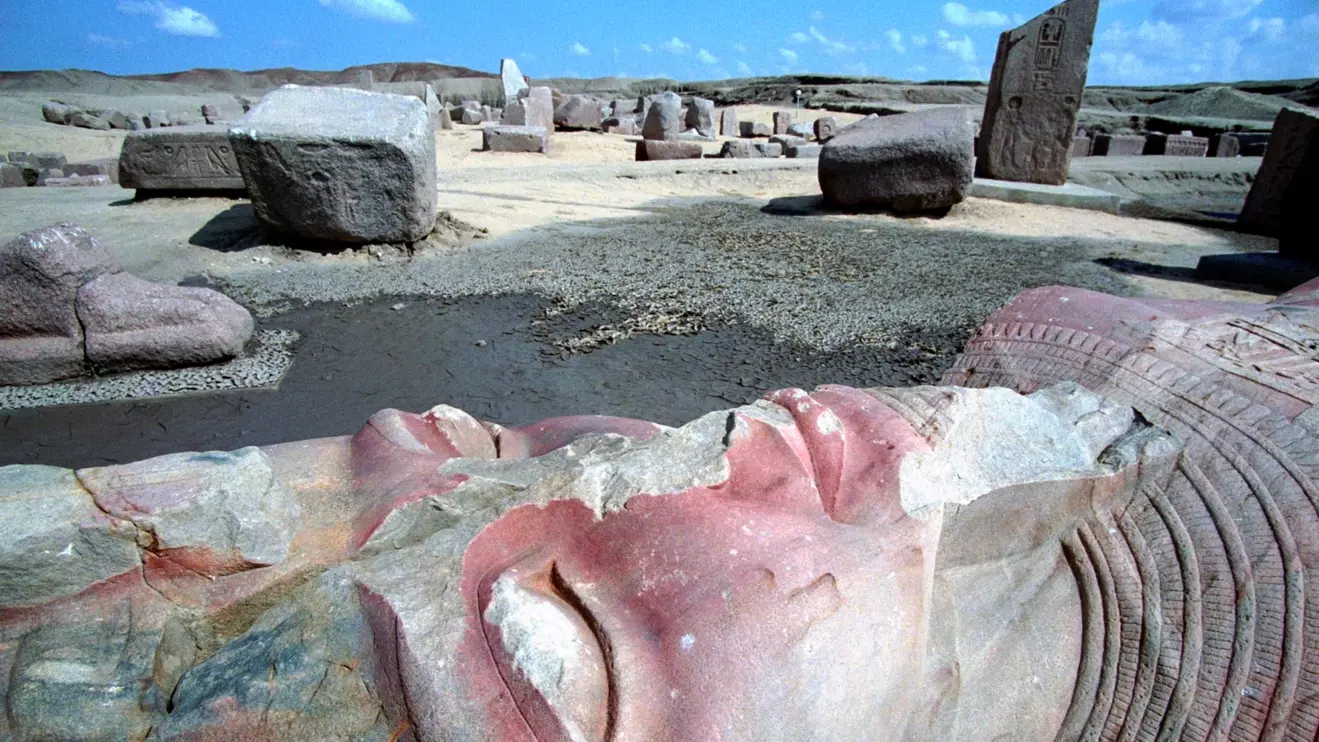
Located in the Nile Delta and identified in 1722, Tanis served as the capital of the kings of the 21st Dynasty around 1050–1030 BCE. It is also the origin of the famous granite sphinx exhibited at the Louvre.
In early October, the team spent ten days carefully extracting the green faience statuettes, which had been placed beside an uninscribed sarcophagus.
They were arranged “in a star pattern along the sides of a trapezoidal pit and in horizontal rows at the bottom.” Known as ushabtis, these figurines were intended to serve the deceased in the afterlife. Notably, several represent team leaders, and more than half depict women, an uncommon feature according to Payraudeau.
A royal cartouche painted on the statuettes has solved a long-standing question about the identity of the tomb’s occupant: Pharaoh Sheshonq III (830–791 BCE).
The statuettes will undergo further study before being transferred to an Egyptian museum.