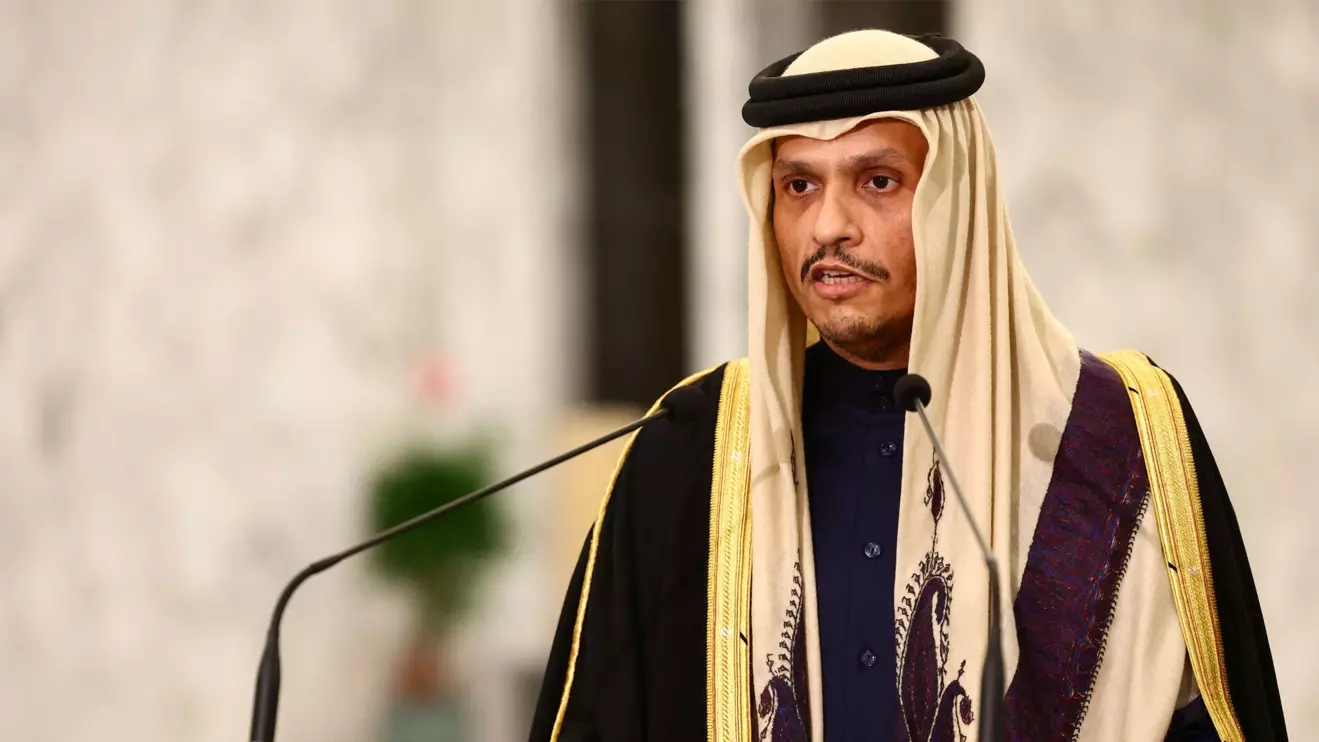
The recent meeting in Tehran between Qatar’s Prime Minister Sheikh Mohammed bin Abdulrahman al‑Thani and senior Iranian official Ali Larijani once again highlights Doha’s ambiguous positioning in Middle Eastern geopolitics.
While Qatar presents itself as a mediator committed to de-escalation, its close engagement with Tehran continues to raise doubts among its regional partners.
According to Qatar’s foreign ministry, the talks focused on reducing tensions in the region. Such language fits Doha’s long-standing diplomatic narrative: that of a small state using dialogue and mediation to maintain stability.
Yet behind this rhetoric lies a more controversial reality. Qatar has maintained deep political, economic, and diplomatic ties with Iran at a time when Tehran is widely accused of fueling regional instability through proxy groups, missile programs, and aggressive foreign policy.
For many in the Gulf, Qatar’s posture is not neutral but indulgent. Saudi Arabia, the United Arab Emirates, and Bahrain have long criticized Doha for what they see as a pattern of double-dealing: publicly aligning with Gulf Cooperation Council partners while privately maintaining strategic cooperation with Tehran.
These tensions were a major factor behind the 2017 diplomatic rift, when Qatar was accused of undermining collective Gulf security.
Qatar argues that engagement with Iran is a matter of pragmatism, driven by geography and shared energy interests, particularly the joint exploitation of the world’s largest gas field. However, critics counter that pragmatism has too often crossed into political accommodation.
By hosting Iranian officials, coordinating diplomatically with Tehran, and avoiding direct criticism of its actions, Doha risks legitimizing a regime that many Arab states view as destabilizing and expansionist.
This lack of clarity has consequences. It erodes trust among Gulf allies and weakens the idea of a unified regional front in the face of shared security challenges. Mediation is only credible when the mediator is seen as impartial.
Qatar’s sustained closeness to Iran makes such impartiality difficult to believe, especially when Tehran is itself a central source of regional tension.
Ultimately, Qatar’s foreign policy reflects a broader strategy of hedging, balancing relationships with competing powers to maximize its autonomy and influence.
While this approach has brought Doha diplomatic visibility, it has also left it exposed to accusations of inconsistency and opportunism.
As regional tensions remain high, Qatar will continue to face a fundamental question: can it truly act as a neutral broker while remaining so closely aligned with one of the region’s most polarizing actors?