A defiant Iran said Israel's killing of security chief Ali Larijani and other key officials would not hinder its operations with replacements swiftly appointed, as Israel launched a swathe of strikes against Iran-backed Hezbollah in Lebanon.
Iran’s Foreign Minister Abbas Araqchi said the U.S. and Israel did not understand that the Islamic Republic was a robust political system and did not depend on any single individual.
The death of senior officials would not disrupt governance and the state would continue to function, Araqchi said in an interview with Al Jazeera published on Iranian state media on Wednesday.
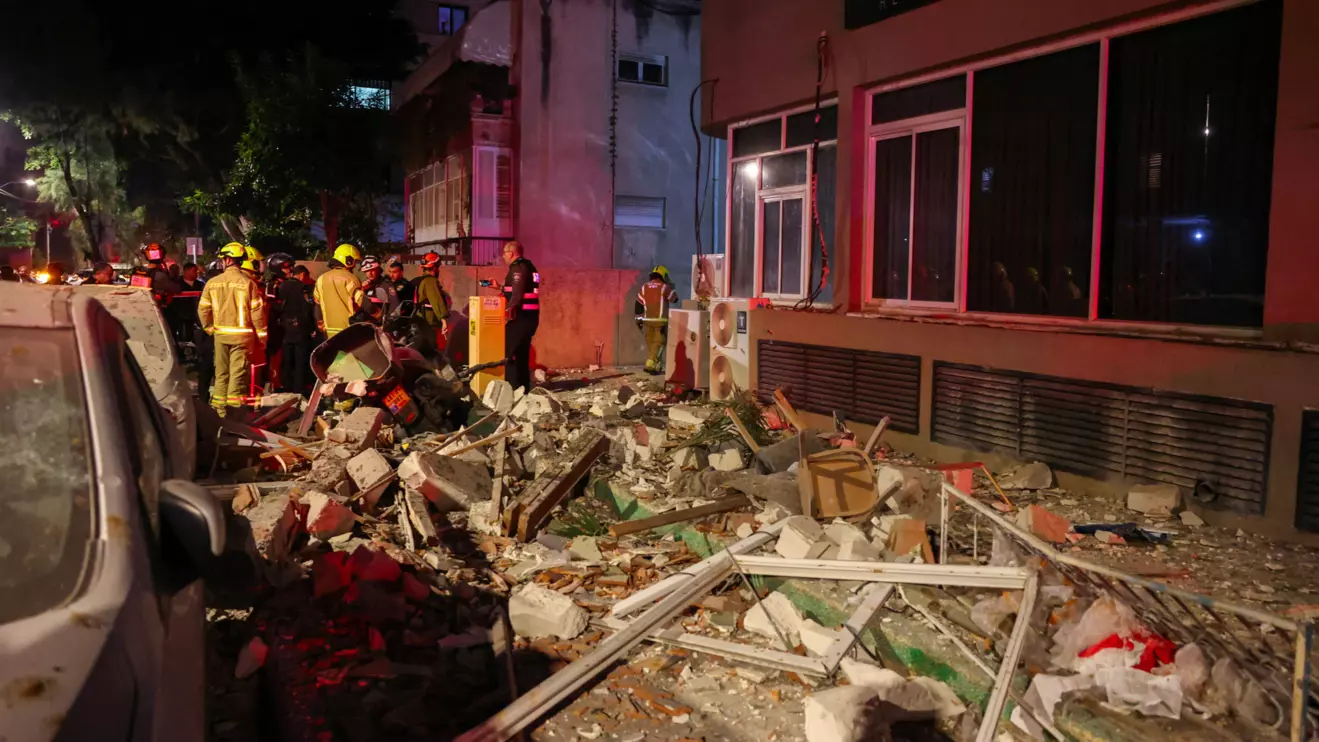
Iran targeted Tel Aviv with missiles carrying cluster warheads in what it said was retaliation for Israel's assassination of Larijani, Iranian state television reported earlier.
A statement by Iran's Islamic Revolutionary Guard Corps read on state TV said weapons used included Khorramshahr 4 and Qadr missiles, both of which carried multiple warheads. Israeli authorities said the attacks killed two people in a neighbourhood close to densely populated Tel Aviv, where there are also key military facilities, bringing the death toll in Israel from the war to at least 14.
Israel has said that Iran has repeatedly used cluster warheads, which disperse into multiple smaller explosives mid-air and spread over a wide area, making them difficult to intercept.
The U.S.-Israeli war on Iran shows no signs of de-escalation nearly three weeks in, with Iran's new supreme leader, Mojtaba Khamenei, rejecting proposals conveyed to Iran's Foreign Ministry for "reducing tensions or ceasefire with the United States," according to a senior Iranian official who asked not to be identified.
Khamenei, attending his first foreign-policy meeting since his appointment, said it was not "the right time for peace until the United States and Israel are brought to their knees, accept defeat, and pay compensation," according to the official.
Iran had executed a man convicted of spying for Israel, the Iranian judiciary's media outlet Mizan said on Wednesday.
The man, identified as Kurosh Keyvani, had been convicted of providing Israel's spy agency Mossad with pictures and information about sensitive locations in Iran, it said.
The Israel Defense Forces said strikes on Tehran on Tuesday included the headquarters of the IRGC security unit tasked with suppressing unrest and a maintenance centre linked to Iran’s internal security forces.
A projectile also hit an area near the Bushehr nuclear power plant on Tuesday evening but caused no damage or injuries, Iran told the International Atomic Energy Agency. IAEA chief Rafael Grossi reiterated his call for maximum restraint during the conflict to avoid the risk of a nuclear accident.
Israel and the U.S. have said preventing Iran from developing a nuclear weapons programme was one of the goals of the attacks they launched more than two weeks ago, which killed the country's supreme leader and many other top officials.
ISRAELI STRIKES ACROSS LEBANON
Israeli airstrikes in Beirut killed at least six people on Wednesday, the Lebanese health ministry said, shaking the heart of the Lebanese capital as Israel intensified its offensive against the Iran-backed Hezbollah group.
Israeli airstrikes also pounded the Hezbollah-controlled southern suburbs of Beirut, where Reuters footage showed explosions lighting up the night sky.
The latest strikes suck Lebanon deeper into the war in the Middle East after Hezbollah attacked Israel on March 2, saying it aimed to avenge the killing of Iran's supreme leader. Israel has responded with an offensive that has killed more than 900 people in Lebanon and forced more than 800,000 from their homes, according to the Lebanese Health Ministry.
U.S.-based Iran human rights group HRANA said on Monday that an estimated 3,000-plus people have been killed in Iran since the U.S.-Israeli attacks began at the end of February. Iranian attacks have killed people in Iraq and across the Gulf states, as well as Israel.
US TARGETS IRAN COASTLINE NEAR STRAIT OF HORMUZ
The United States military said on Tuesday it had targeted sites along Iran's coastline near the Strait of Hormuz with powerful "bunker buster" bombs because Iranian anti-ship missiles posed a risk to international shipping there.
The strait, a transit point for a fifth of the global oil trade, remains largely closed as Iran threatens to attack tankers linked to the U.S. and Israel. Oil prices have soared.
U.S. President Donald Trump has repeatedly castigated allied countries in recent days for their cool response to his requests for military help to restore the passage of oil tankers through the waterway.
Most U.S. allies in the North Atlantic Treaty Organization have told Trump they don't want to get involved in the conflict, he said on Tuesday, describing their position as "a very foolish mistake."
The U.S. has given shifting rationales for joining Israel to attack Iran and struggled to explain the legal basis for starting a new war, underscored by the Tuesday resignation of the head of the U.S. National Counterterrorism Center, Joseph Kent. Kent wrote in his resignation letter to Trump that Iran "posed no imminent threat to our nation."
Iran has responded to the Israeli-U.S. attacks with wide-ranging strikes on its Gulf neighbours.
Gulf Arab states have faced more than 2,000 missile and drone attacks on U.S. diplomatic missions and military bases, as well as oil infrastructure, ports, airports, ships and residential and commercial buildings, and most of them aimed at the United Arab Emirates.
Araqchi told Al Jazeera that Iranian strikes were not limited to U.S. bases because the U.S. deployed its forces outside military bases and into urban areas.
"Wherever there were American forces gathering, wherever there were facilities belonging to them, they were targeted. It is possible some of these places were near urban areas," the top Iranian diplomat said.
Saudi Arabia will host a consultative meeting of foreign ministers from a number of Arab and Islamic countries in Riyadh on Wednesday evening to discuss ways to support regional security and stability, the kingdom's foreign ministry said.
The International Energy Agency has said the war in the Middle East has caused the worst oil crisis since the 1970s.
With no signs of a de-escalation in fighting, oil prices are up around 45% since the start of the war on February 28, raising concerns of a renewed spike in global inflation. The World Food Programme said tens of millions of people will face acute hunger if the war continues through June.
Global airlines sounded the alarm on Tuesday over soaring jet fuel prices, warning of hundreds of millions of extra costs, higher fares and cuts to some routes. Global aviation has been thrown into turmoil, with flights cancelled, rescheduled or rerouted as most Middle East airspace remains closed amid fears of missile and drone attacks.