The United States and Iran are reportedly edging toward a Memorandum of Understanding that could, in stages, bring an end to their conflict.
The outlines being discussed, reopening the Strait of Hormuz, dismantling Tehran's nuclear programme, restricting ballistic missile production, are, if real and verifiable, legitimate objectives worth pursuing.
But one element of the emerging framework should set off alarm bells in every capital from Beirut to Jerusalem: the reported inclusion of Lebanon in the package deal.
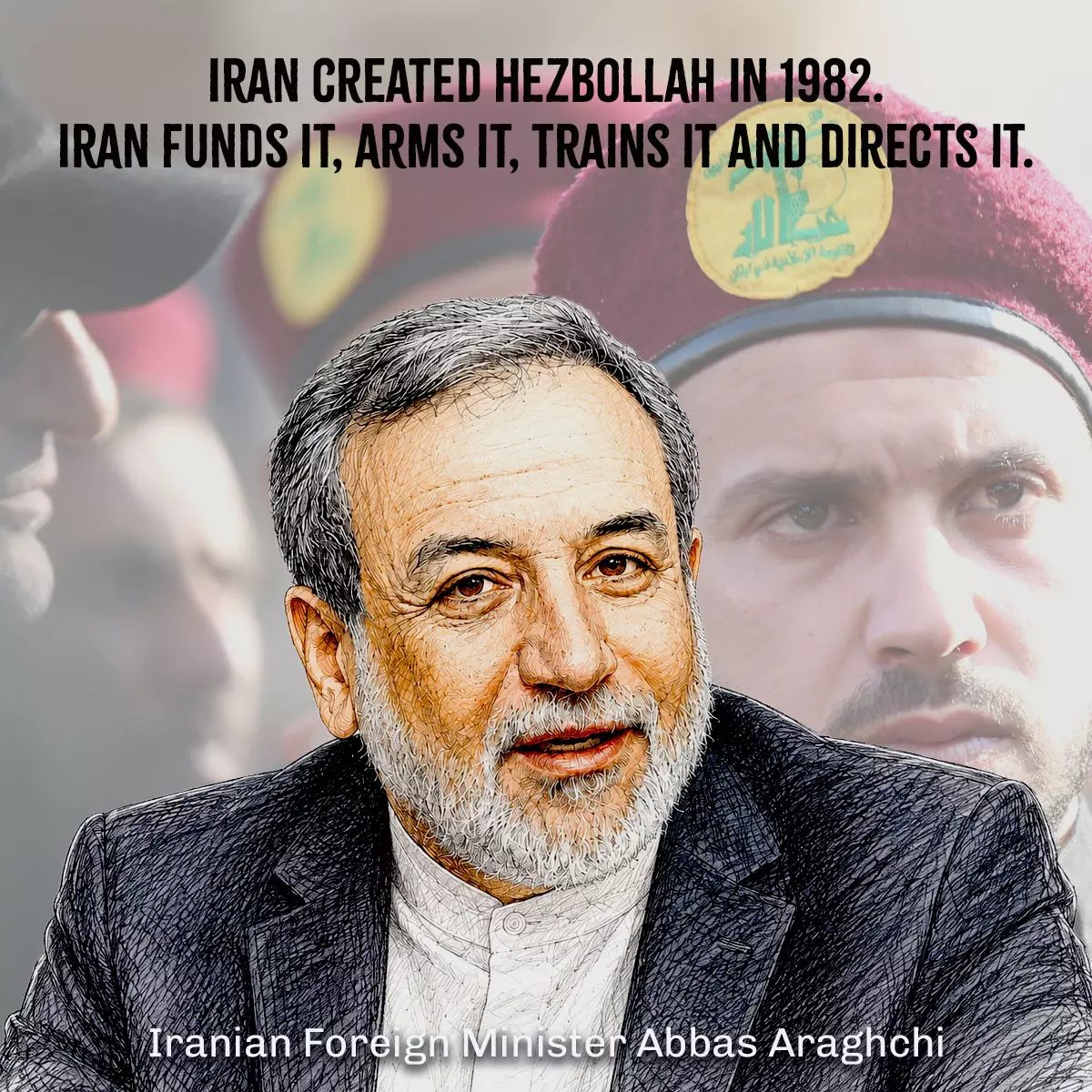
Tehran has consistently insisted that any agreement with Washington must address Lebanon. The reason is not difficult to understand. Iran created Hezbollah in 1982, has armed, trained and funded it ever since, and has used it to maintain a stranglehold over Lebanese politics, security and sovereignty for over four decades.
Including Lebanon in a US-Iran deal would effectively legitimise that grip, granting Tehran the right to negotiate on behalf of a country it has spent decades destroying.
Lebanon is not Iran. It is a sovereign state with its own government, its own army and its own people, people who have paid an enormous price for Iran's proxy war on their soil.
Direct Talks Already Underway
What makes the reported framework even more troubling is that direct negotiations between Beirut and Jerusalem have been underway for weeks, precisely to find mechanisms to neutralise Hezbollah's military wing and lay the groundwork for a peace agreement.
Those talks represent the right approach: Lebanese sovereignty, Lebanese decisions, Lebanese ownership of the outcome.
Folding Lebanon into a Washington-Tehran package deal would bypass that process entirely, and send a clear message to Lebanon's leadership that their country remains, as Prime Minister Nawaf Salam himself recently put it, a mere "pawn" in Iran's hands.
A Red Line for Israel
For Israel, the inclusion of Lebanon in an Iran deal is simply unacceptable. The whole point of the military campaign against Hezbollah has been to dismantle the militia's military infrastructure and ensure it can never again threaten Israeli civilians from Lebanese territory. Any agreement that leaves Hezbollah intact - or worse, legitimised through a diplomatic framework- would render that campaign meaningless.
If Donald Trump accepts Iran's demand to bundle Lebanon into the overall deal, it would be one of the most irresponsible diplomatic decisions in recent memory. It would reward Tehran for decades of destabilisation, undermine Lebanon's fragile sovereignty, embolden Hezbollah, and hand Iran a strategic victory it has not earned on the battlefield.
The message to Washington must be unambiguous: Lebanon deserves its own future, negotiated by its own leaders, not traded away in a corridor in Oman or Qatar as part of a package designed to satisfy the Islamic Republic.
Some red lines exist for good reason. This is one of them.