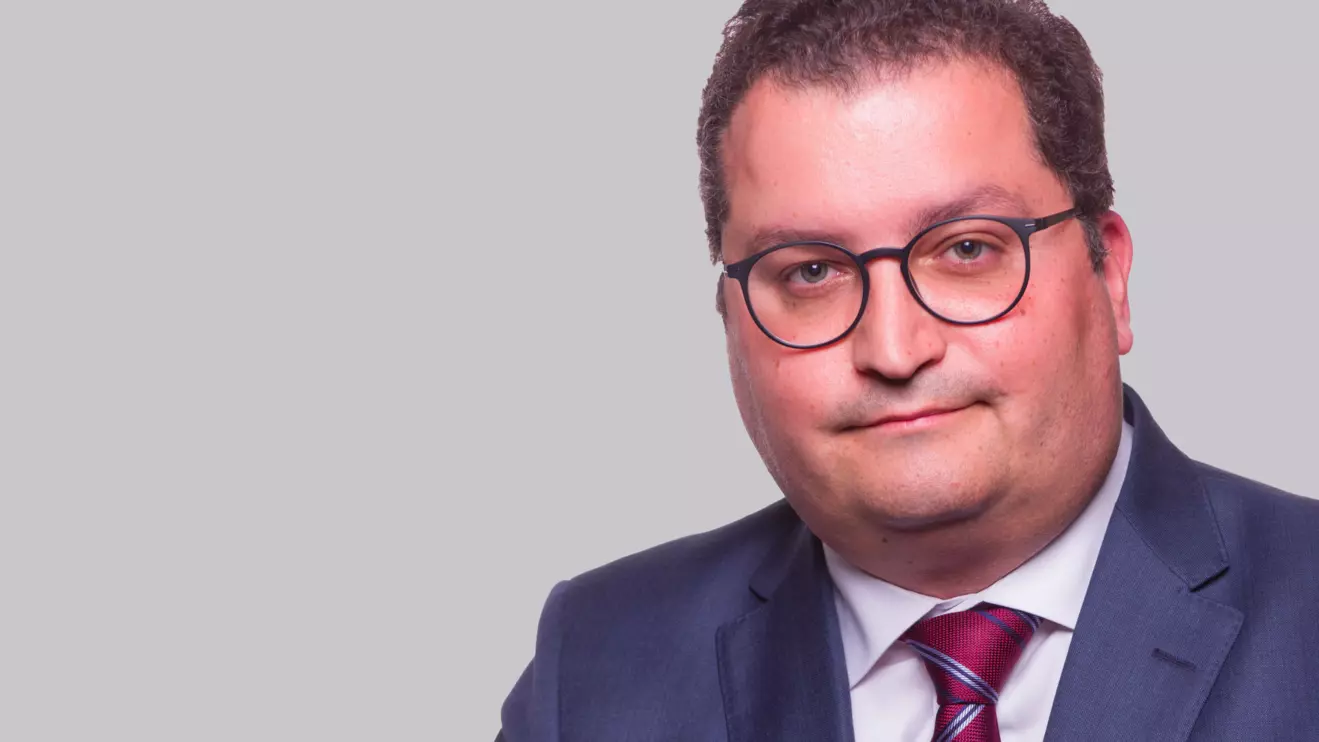
Economist Joaquim Miranda Sarmento was named Portugal's new finance minister on Thursday as President Marcelo Rebelo de Sousa approved the formation of a centre-right minority government.
The Democratic Alliance (AD) coalition won a general election on March 10 by a slim margin over the outgoing Socialists, falling far short of securing a working majority in a fragmented parliament.
The new government is led by Prime Minister-designate Luis Montenegro, from the Social Democratic Party (PSD), part of the AD.
With a doctorate in finance from Tilburg University in the Netherlands, Miranda Sarmento, 45, is a professor at the ISEG-Lisbon School of Economics and Management and has recently been a leading economic policy advisor to Montenegro.
After working in the finance ministry for a decade, Miranda Sarmento advised then President Anibal Cavaco Silva in 2012-16, and has led the parliamentary bench of Montenegro's PSD since July 2022.
There will be 17 ministers serving under Montenegro, including European Parliament member Paulo Rangel as foreign minister.
Pedro Duarte was appointed parliamentary affairs minister and his role will be to negotiate with other parties in parliament.
After several reshuffles, the previous Socialist government had 17 ministers, nine of which were women. Montenegro's line-up includes seven women.
Known for being careful with his words, Miranda Sarmento told Noticias Magazine in July that it was in his nature to be "analytical, thoughtful, realistic".
He is an advocate of balanced budgets and public debt reduction through policies that promote productivity and economic growth, including tax cuts for families and companies.
Under Socialist rule since 2015, Portugal's economy grew at solid annual rates above 2%, and posted budget surpluses of late, using the cash to slash public debt and winning praise from Brussels and investors, who do not expect the new government to abandon fiscal prudence.
However, Montenegro's government will have to deal with a crippling housing crisis, low wages, sagging healthcare and corruption in Western Europe's poorest nation.
Miranda Sarmento has heavily criticised the Socialists over the last eight years, describing the 2023 surplus as a "trap" as it resulted "from too many taxes, low public investment and collapsing public services"
By Sergio Goncalves and Catarina Demony