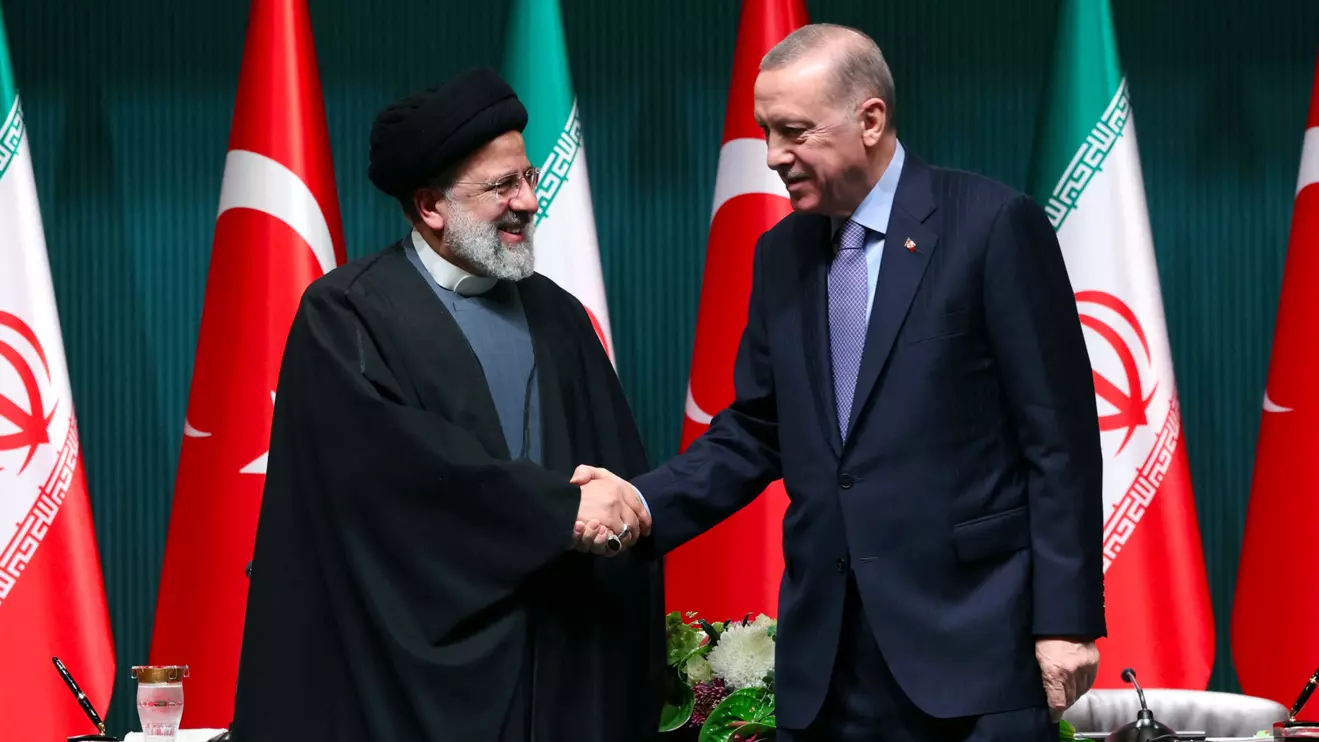
Turkey is considering opening new border crossings with eastern neighbour Iran, President Tayyip Erdogan said late on Wednesday after talks with his Iranian counterpart, as they seek to revive sagging economic relations.
Erdogan, speaking at a Turkish-Iranian business council meeting alongside Iran's President Ebrahim Raisi, blamed international sanctions on Tehran and the COVID pandemic for a decline in trade volumes.
Trade between Turkey and Iran peaked in 2012 at nearly $22 billion but has since fallen. It stood at $7.4 billion in 2023, according to Turkish Trade Minister Omer Bolat, down from around $10 billion a year earlier.
"The issue of opening new border gates with Iran is also on our agenda. Efforts to establish trade centres in border (areas) to increasing the economic development of our border provinces continue," he said.
Turkey, a NATO ally, and Iran currently have four border crossings between them. One of those gates, between the Gurbulak-Bazergan regions, has been under construction since 2021.
"While we have left behind the pandemic, the restrictive effect of sanctions lingers," Erdogan said, adding that Turkey would not cut its economic ties with Iran because of the international measures.
"In the current state, sanctions are causing problems in our business ties with Iran, especially issues caused by the banking system," Erdogan said.
Full implementation of a preferential trade agreement between Ankara and Tehran is the best way to improve commercial ties, he added.
Erdogan said he expected Raisi's support in ensuring that obstacles to Turkish firms' operations in Iran, such as fuel price issues and frequency limits for airlines, were resolved, adding that Ankara would then encourage companies to invest more in Iran with a "win-win understanding".
Iran's economy has been crippled by the sanctions, imposed over its nuclear programme. Tehran denies Western assertions that it aims to build a nuclear weapon.
Turkey, which has also been hit with U.S. sanctions for acquiring Russian defence systems, opposes what it calls unilateral economic sanctions as a policy.
Reporting by Tuvan Gumrukcu