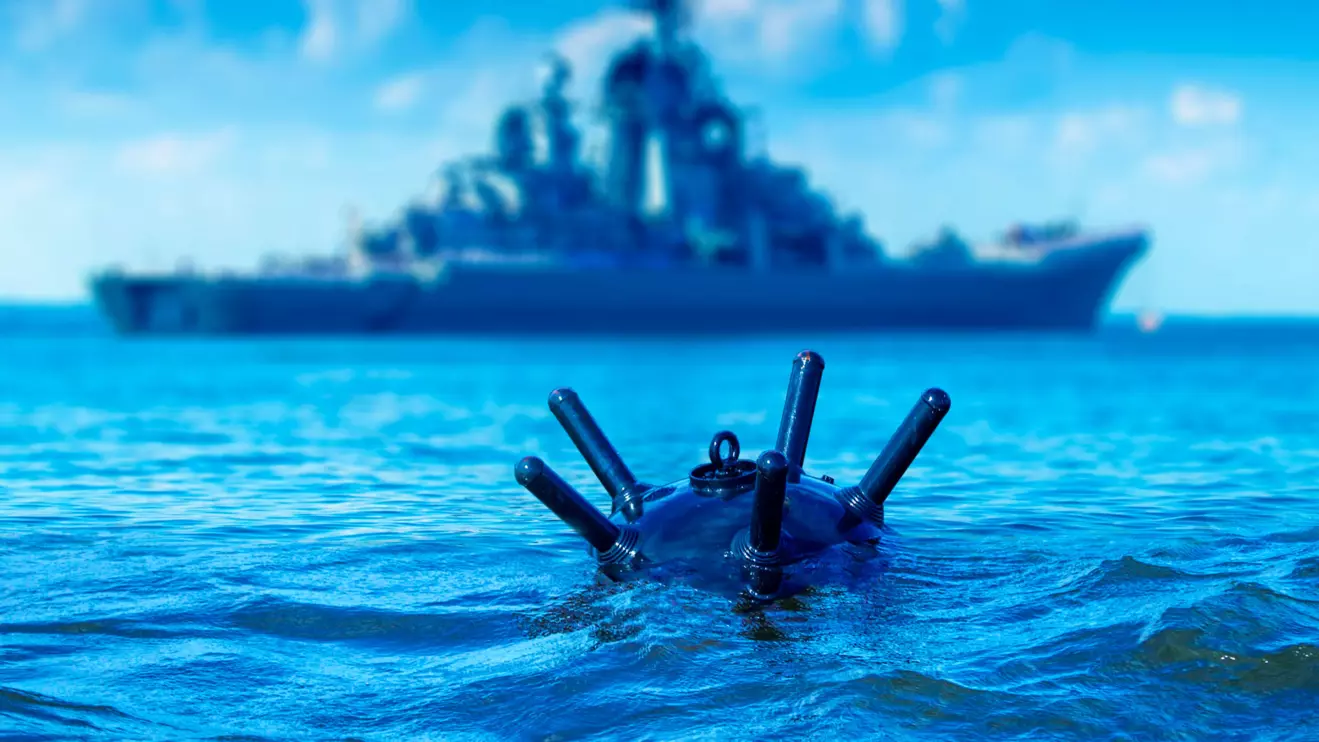
The European Union has proposed that the bloc's Aspides naval mission take "the primary role" in clearing mines in the Strait of Hormuz "when conditions allow" as part of a Franco-British-led initiative, according to a document seen by Reuters.
The European External Action Service wrote in a note dated May 26 and sent to member states that "the situation requires the Union to provide a meaningful contribution" to a coalition led by France and Britain "to be materialised once conditions allow and separated from the belligerents".
Changing the Aspides mission's mandate would require unanimity, and it remains unclear if the EU’s 27 member countries would back such a change. The mission was established in 2024 to protect ships from attacks by Yemen’s Houthi rebel group in the Red Sea.
'IMMENSE' CONSEQUENCES OF DE FACTO CLOSURE OF STRAIT
Around a fifth of the world's oil and liquefied natural gas supplies pass through the Strait of Hormuz, a key waterway that effectively closed after the U.S. and Israel launched strikes on Iran.
Hostilities flared again on Wednesday as Iranian attacks on Kuwait damaged its airport and injured dozens while the U.S. military carried out strikes near the Strait of Hormuz, with diplomacy to halt the war showing little sign of progress.
The de facto closure of the Strait of Hormuz has "immense shared consequences for the region and Europe, with Iran selectively allowing passage," the EU's diplomatic arm wrote in its note.
France and Britain have taken the lead in putting together a coalition of countries that could help ensure safe transit through the Strait once the situation there stabilises or the conflict is resolved.
It is unclear if Iran has placed mines in the waterway.
REINFORCING CAPABILITIES
The EU's diplomatic service said that a European contribution would serve "to showcase EU-wide ownership and responsibility in addressing a situation affecting all Member States" and "vis-a-vis NATO Allies".
An Aspides role would also "allow all Member States to financially support, via the Operation’s common costs, those willing and able to contribute," it wrote.