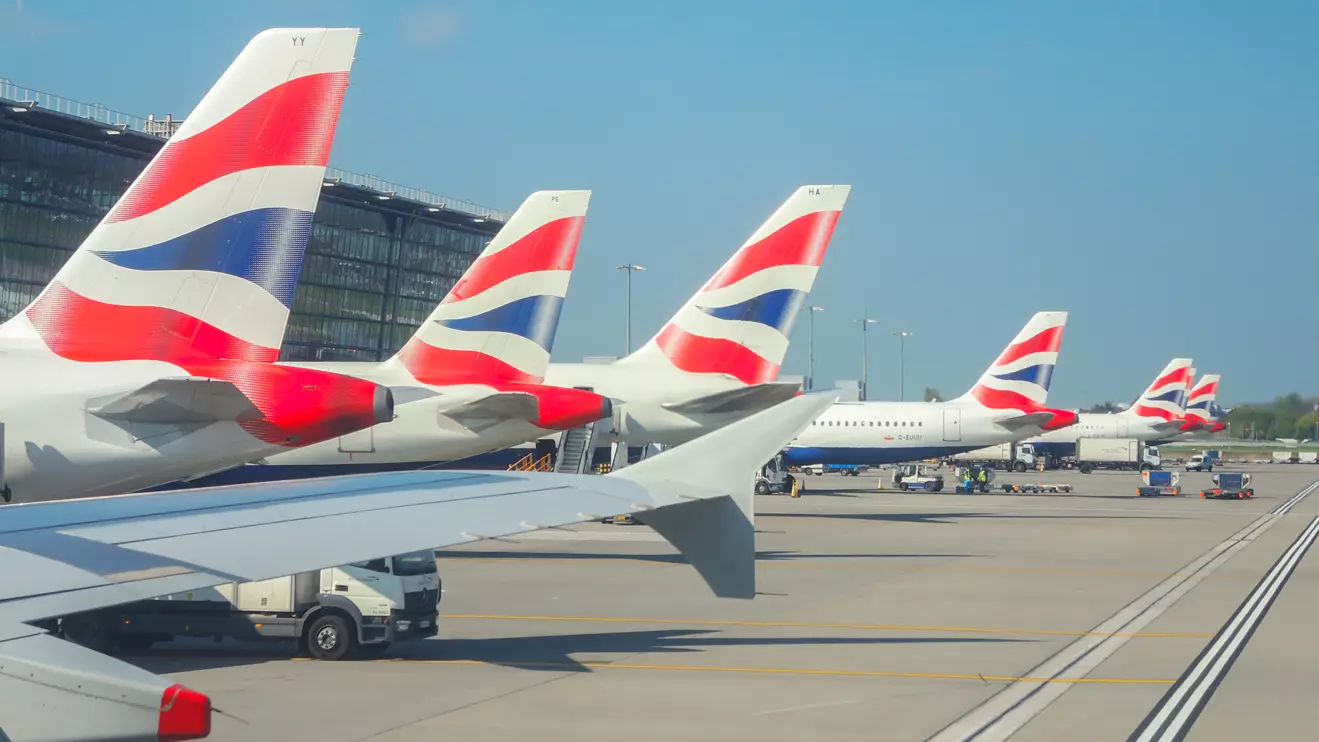
European airlines like Wizz Air, Lufthansa and British Airways dodged Iraqi and Iranian airspace on Thursday, according to flight tracking websites, opting instead for routes over Afghanistan and central Asia in an effort to mitigate risks associated with ongoing geopolitical turmoil in Iran and the Middle East.
Iran closed, then reopened its airspace after nearly five hours on Wednesday amid concerns about possible military action between the U.S. and Iran that forced airlines to cancel, reroute or delay flights.
Despite the airspace reopening, many carriers, including Singapore Airlines and TUI, continued to use alternative routes, according to FlightRadar24, as experts warned the risk of further instability was still present.
"We recommend refraining from booking flights that transit the area at this time and for the next seven days, after which the situation will be reevaluated," said Eric Schouten, director of security intelligence and aviation advisory firm Dyami.
"Continuous monitoring of regional developments is recommended, as sudden airspace closures and flight disruptions are likely."
In the last two years, many Western airlines have changed their routings in the Middle East, with several flying over Afghanistan more often despite ongoing Taliban rule, in an effort to avoid other more turbulent conflict zones.
Earlier on Wednesday, Germany issued a new directive cautioning the country's airlines against entering Iranian airspace, shortly after Lufthansa rejigged its flight operations across the Middle East amid escalating tensions in the region.
"We avoid Iraqi and Iranian airspaces, therefore some westbound flights from Dubai and Abu Dhabi airports will have to make (refuelling and crew change) stops in Larnaca, Cyprus or Thessaloniki, Greece," a Wizz Air spokesperson said on Thursday.
A spokesperson for British Airways owner IAG said all British Airways flights to Bahrain were cancelled up to and including January 16.
"KLM is currently avoiding Iranian airspace as a precaution—a route we already rarely use. Last night's closure of Iranian airspace therefore had no effect on our operations," a KLM spokesperson said.
Finnair has stopped flying through Iraqi airspace, travelling to Doha and Dubai over Saudi Arabia instead, which would slightly increase the flight times, the company said in a statement. The carrier had already been avoiding Iranian, Syrian and Israeli airspace for security reasons.
Carriers like Ryanair have moved routes away from the Middle East in recent months and others including Air France have long avoided Iranian airspace.