Iran
One country votes. The other executes
On the eve of Israel’s general election, Iran said on Monday that the outcome would make no difference to the Islamic Republic. The remarks echo the regime’s long-standing rhetoric toward Israel.

Yemen's Iran-aligned Houthis attacked Saudi Arabia this week from Iraqi territory in coordination with Iraqi armed groups, according to assessments by Saudi Arabia and regional partners, reflecting growing coordination among Iran-aligned militias, two officials in the region said.
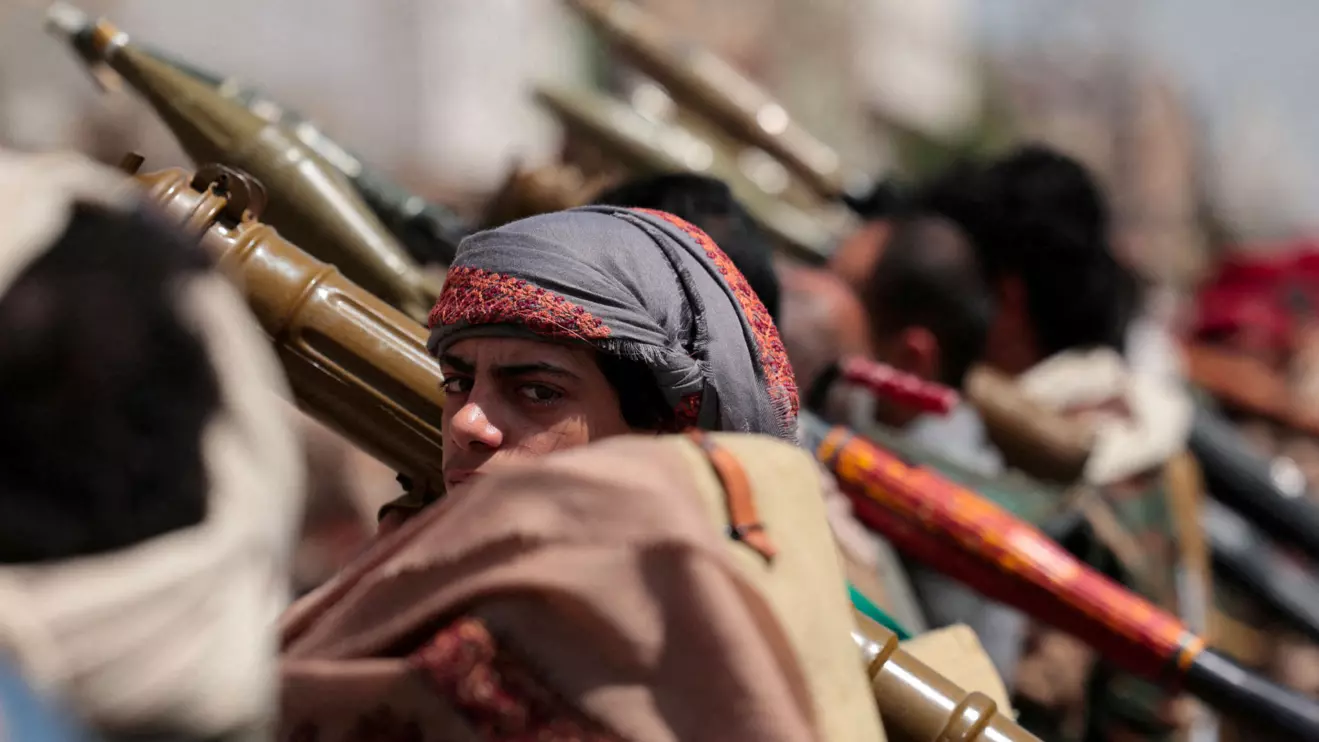
A Houthi follower looks on, during a pro-Iran demonstration, as the U.S.-Israel conflict with Iran continues, in Sanaa, Yemen April 6, 2026. Reuters/Khaled Abdullah
Yemen's Iran-aligned Houthis attacked Saudi Arabia this week from Iraqi territory in coordination with Iraqi armed groups, according to assessments by Saudi Arabia and regional partners, reflecting growing coordination among Iran-aligned militias, two officials in the region said.
The assessments, which differ from official accounts, indicate that members of Iran's so-called Axis of Resistance have deepened their ties and ability to inflict damage to U.S. allies in the region despite years of U.S and Israeli strikes on them from Lebanon to Iran after Hamas' 2023 attack on Israel.
The attacks included strikes on oil facilities in Saudi Arabia's eastern province, the kingdom's main crude hub.
Saudi Arabia carried out joint airstrikes with the United States on Iraqi sites on Wednesday that it said were linked to the attacks, officially blaming Iraqi armed groups aligned with Iran. Yemen's Houthis have said they carried out the attacks. Iraq has said it is investigating.
The officials in the region who said some of the attacks were carried out from Iraqi territory jointly by the Iraqi groups and the Houthis, added that it was under the supervision of Iran's Islamic Revolutionary Guard Corps.
After the Saudi-U.S. strikes on Wednesday, Iran-aligned media mourned members of the IRGC, Iraqi fighters and at least one Houthi.
"There is now direct training and coordination between members of the Axis of Resistance themselves, not just between them and Iran," said Farea al-Muslimi, a research fellow at the Chatham House think tank's Middle East and North Africa program.
The attacks also show the increasingly important role Iraq is playing as a node in that axis after the fall of Bashar al-Assad in Syria and the severe weakening of Hezbollah in Lebanon, analysts said.
The Saudi, Iranian and Iraqi governments did not respond to requests for comment, nor did the Houthis, who have said their attacks on Saudi Arabia are in response to Saudi attacks in Yemen and aim to break a "siege" imposed by the kingdom. Saudi Arabia has denied imposing a siege, noting the arrival of dozens of ships to Houthi-controlled ports this year.
HOUTHIS AND IRAQI GROUPS HAVE A HISTORY OF TIES
Cooperation between the Houthis and Iraqi armed groups loyal to Iran has been longstanding, particularly with Kataib Hezbollah, the most heavily-armed and well-organized of the Iraqi factions.
In 2024, Houthi leader Abdul Malik al-Houthi announced the existence of a joint operations room between the Houthis and Iraqi factions, and later that year the two groups announced their first joint operation targeting Israel.
The Houthis also have had a fixed presence in Iraq, including offices and a formal representative, Ahmed al-Sharafi, who has held publicized meetings with Iran-aligned Iraqi Shi'ite parties and armed factions in the country.
Red and green posters bearing the Houthi "Sarkha" - its slogan "God is greatest, death to America, death to Israel, curse the Jews, victory to Islam," have hung in parts of Baghdad for years.
Analysts say Iraq is useful for the Houthis and other Iran-aligned groups in the region due to its large geography and vast open spaces that make it easy to hide in and to launch covert attacks from.
Iraq's more than 800-km (500-mile) border with Saudi Arabia is difficult to police, making it an ideal launch pad for attacks across Saudi Arabia and other Gulf states.
Hundreds of attacks on Kuwait, Saudi Arabia and the United Arab Emirates have been blamed by officials from those states on groups operating in Iraq. They include an attack by two drones in March on the U.S. embassy in Riyadh and a strike in May at the UAE's Barakah nuclear power plant.
Iraq has repeatedly said it would investigate claims of attacks from its territory on Arab neighbours but critics say it has shown little ability to address them, harming its relations and credibility with Gulf neighbours.
Prime Minister Ali al-Zaidi cancelled a visit planned for Thursday to Saudi Arabia to meet with Crown Prince Mohammed bin Salman after Saudi strikes on Iraq following the attacks on the kingdom.
Zaidi has set out an ambitious plan to bring all arms under state control by the end of September despite opposition from some armed factions.
By Timour Azhari and Mohammed Ghobari
On the eve of Israel’s general election, Iran said on Monday that the outcome would make no difference to the Islamic Republic. The remarks echo the regime’s long-standing rhetoric toward Israel.
Top officials from Mecca Pact countries Saudi Arabia, Turkey and Pakistan are to meet Iran's leaders in Tehran on Monday in their first high-level contact since the kingdom became a pressure point in the wider Iran conflict.
Attacks by Yemen's Iran-aligned Houthis have nearly emptied the skies over Riyadh this month, aviation data showed on Monday, with cancellations grounding almost nine out of every 10 scheduled flights at the Saudi capital's airport.
To make this website run properly and to improve your experience, we use cookies. For more detailed information, please check our Cookie Policy.
Necessary cookies enable core functionality. The website cannot function properly without these cookies, and can only be disabled by changing your browser preferences.