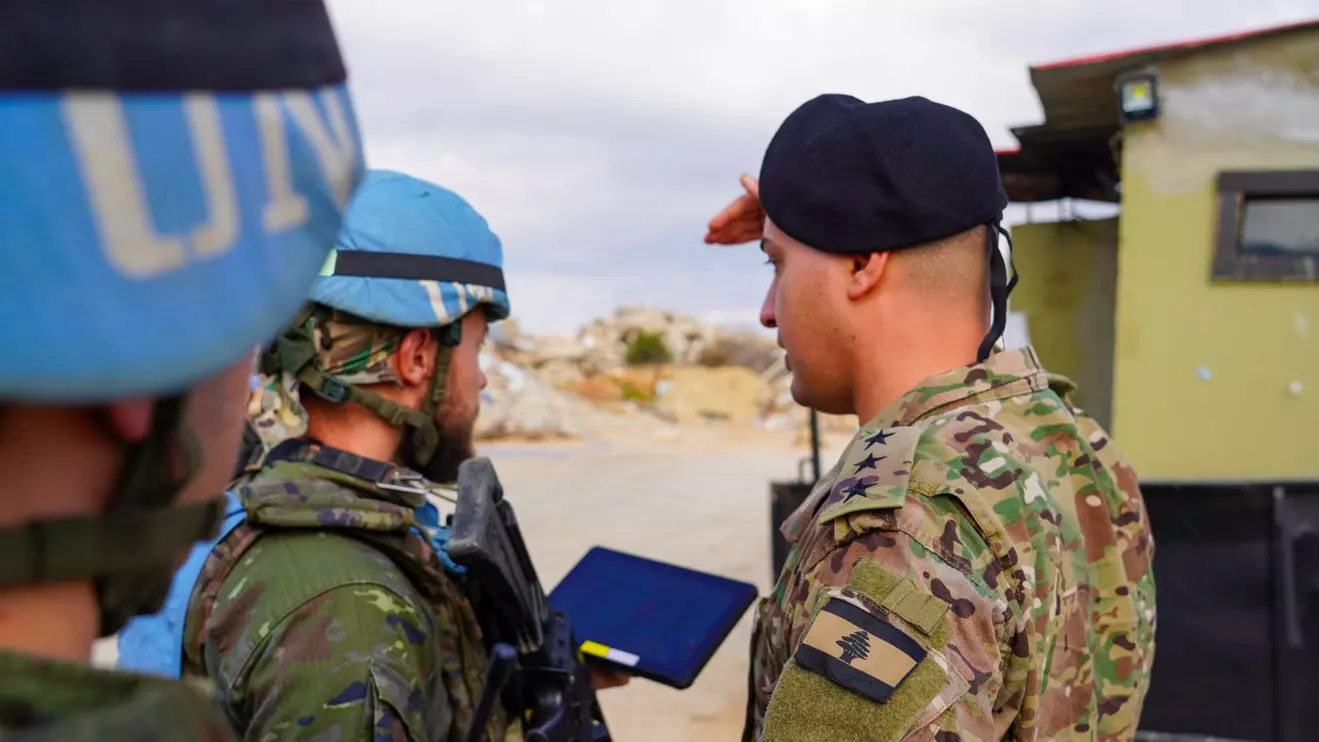
The United Nations Interim Force in Lebanon (UNIFIL) announced Sunday it had come under fire on three separate occasions while Blue Helmet troops were conducting patrols around their bases in Yater, Qalaouiye (Bint Jbeil) and Deir Kifa (Tyre).
The shots, according to UNIFIL, came from "unofficial armed groups », a thinly veiled reference to Hezbollah, which has redeployed in force across South Lebanon as its conflict with the Israeli military intensifies.
UNIFIL was created in 1978. Nearly five decades later, it is still described as an "interim" force, and still unable to prevent armed groups from operating freely in the very territory it was mandated to secure.
The force's mandate, repeatedly renewed by the UN Security Council, tasks it with confirming the withdrawal of Israeli forces, restoring peace and helping the Lebanese government re-establish authority in the south. By every measurable standard, that mandate has failed.
Hezbollah built an entire military infrastructure - tunnels, weapons depots, rocket launch sites, command centers - under UNIFIL's watch. Not metaphorically. Literally under their bases and patrol routes.
A Pattern of Impotence
The timeline of UNIFIL's failures is long and damning. In 2006, Hezbollah launched a full-scale war against Israel from South Lebanon - a region UNIFIL had been patrolling for 28 years. After the war, UN Resolution 1701 expanded UNIFIL's force and mandate. Hezbollah simply rebuilt its arsenal - larger, more sophisticated and more deeply embedded than before.
By 2024, Hezbollah had amassed an estimated 150,000 rockets and missiles in South Lebanon. UNIFIL saw it happening. UNIFIL reported it. UNIFIL did nothing to stop it.
And now, in 2026, as Israel dismantles what it can of Hezbollah's military infrastructure, UNIFIL is once again taking fire - from the same armed groups it was deployed to keep out of the area.
UNIFIL's congenital failure is not accidental. It is structural. A peacekeeping force deployed without enforcement powers, operating under rules of engagement that prevent meaningful intervention, staffed by nations with conflicting interests and political agendas - cannot and will not disarm a determined terrorist organization backed by a regional power.
UNIFIL cannot search vehicles. Cannot enter private property. Cannot confront armed men unless directly attacked. And even when directly attacked — as Sunday's incident demonstrates — its response is a press release.
UNIFIL has served one consistent purpose since 1978: to give the international community the appearance of action while ensuring that nothing actually changes on the ground.
Hezbollah understood this from day one. Iran understood it. And they built their entire South Lebanon strategy around UNIFIL's guaranteed inability to interfere.
Five decades. Billions of dollars. Thousands of troops. And Hezbollah is still firing at Blue Helmets on patrol.
The word "interim" was never meant to last this long. Neither was the failure.