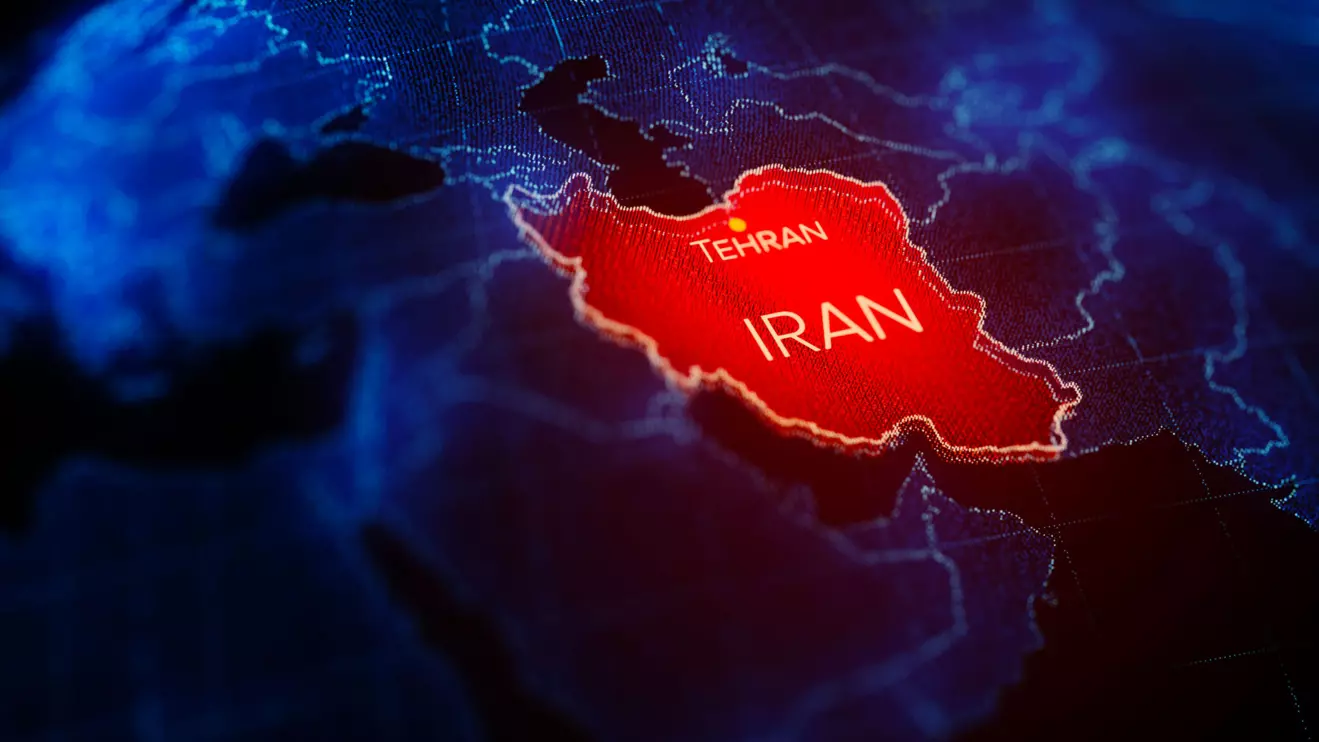
For more than four decades, the United States has struggled to develop a coherent strategy toward the Islamic Republic of Iran.
Administrations of both parties have alternated between engagement and coercion, sanctions and diplomacy, threats and outreach.
Yet despite tactical shifts, a deeper strategic misreading persists. Washington continues to approach Tehran as though it were a conventional state that will eventually bend under sufficient pressure.
It is not.
The most vivid illustration of this dynamic emerged under former President Donald Trump. His administration applied what it described as “maximum pressure”: sweeping sanctions, regional military buildup, and the demonstrated willingness to use force. At the same time, Trump repeatedly signaled openness to negotiation.
This dual-track approach—formidable force paired with diplomatic outreach—was designed to compel Tehran to accept new terms.
But the result, as of today, appears deceptive. Iran did not capitulate. It absorbed the pressure, adjusted, and continued negotiating without surrendering core strategic positions.
Now, with tensions again rising and military options publicly discussed, the risk of escalation feels immediate. Yet the underlying misunderstanding remains unchanged.
The problem is not insufficient force. It is insufficient understanding.
The Islamic Republic does not negotiate as Western policymakers expect. Its leadership operates from a survivalist doctrine forged in revolution and war.
Since 1979, the regime’s legitimacy has rested on resistance to foreign domination. The Iran-Iraq War entrenched a worldview centered on endurance under siege. For Tehran, visible capitulation would not simply be a policy shift; it would be an existential humiliation capable of destabilizing the regime internally.
American strategy often assumes economic pain produces political concession. In Iran’s case, economic hardship is tolerated so long as the regime preserves dignity and cohesion. What Washington sees as rational cost-benefit calculation, Tehran sees as a test of will.
This divergence is reinforced by something deeper: the enduring bazaar mentality embedded in Iranian political culture.
The bazaar is not merely a marketplace; it is a centuries-old institution of negotiation. In its logic, time is leverage. First offers are symbolic. Walking away is tactical. Public dignity must be preserved at all costs. The party that shows impatience loses advantage.
American diplomacy, constrained by election cycles and media scrutiny, seeks measurable outcomes. Iranian negotiators think in decades. They assume that Washington’s urgency will eventually yield flexibility. Thus, prolonged talks are not evidence of weakness but of stamina.
Trump’s strategy - credible force combined with negotiation - was formidable. The strike on Qassem Soleimani demonstrated willingness to escalate. Sanctions were severe. Military deployments were real. But from Tehran’s perspective, the approach confirmed rather than contradicted its siege narrative. Pressure validated the regime’s claim that it was under relentless foreign assault.
At the same time, negotiation offered breathing space. Tehran could engage diplomatically without conceding strategically. It could wait for political change in Washington. It could deepen ties with Russia and China, mitigating isolation. It could manage internal dissent through repression while framing hardship as the price of sovereignty.
This is not irrationality. It is regime logic.
Today, as military options are again discussed and warnings of possible strikes circulate, observers ask whether an attack is imminent.
The more important question is what such an attack would achieve. Limited strikes might demonstrate resolve. They might temporarily degrade capabilities. But unless they fundamentally alter the regime’s perception of survival, they are unlikely to produce surrender.
Indeed, they may reinforce elite cohesion. External threats historically consolidate hardliners and marginalize reformist elements. When survival appears at stake, internal divisions narrow.
The United States often misinterprets Iranian paranoia as exaggeration. Yet from Tehran’s perspective, suspicion is grounded in history: foreign intervention in 1953, years of sanctions, regional encirclement, cyber operations, and targeted killings.
Whether justified or not, this historical memory shapes policy. Concessions are scrutinized not only for material cost but for symbolic vulnerability.
This is why humiliation is more dangerous to the regime than inflation. Economic distress can be endured; perceived surrender cannot.
None of this suggests that Tehran is invulnerable. Iran faces demographic pressures, economic stagnation, and recurring public unrest.
But authoritarian systems rarely collapse from external pressure alone. They fracture when elite unity breaks down. As long as the security apparatus remains cohesive and convinced that surrender equals annihilation, external coercion alone will not produce transformation.
What, then, is required?
First, strategic patience that matches Tehran’s own. Second, deterrence that is credible but not theatrically humiliating. Third, an abandonment of the illusion that negotiation itself signals moderation. Iranian diplomacy is often tactical. Movement is not necessarily change.
Finally, Washington must internalize a basic cultural reality: in the bazaar, the side that loses patience loses leverage.
Trump demonstrated that formidable force can shift tactical calculations.
But force without cultural and psychological insight risks producing stalemate rather than resolution. The Islamic Republic does not respond to pressure as a conventional state seeking integration. It responds as a revolutionary regime equating endurance with legitimacy.
If escalation comes, it will not be because pressure was absent. It will be because pressure was applied without fully understanding how Tehran perceives strength, humiliation, and survival.
Until Washington aligns its strategy with that reality, it will continue to mistake negotiation for progress, threats for leverage, and resilience for weakness.
And Tehran will continue to do what it has done for centuries: bargain, endure, and refuse to surrender.