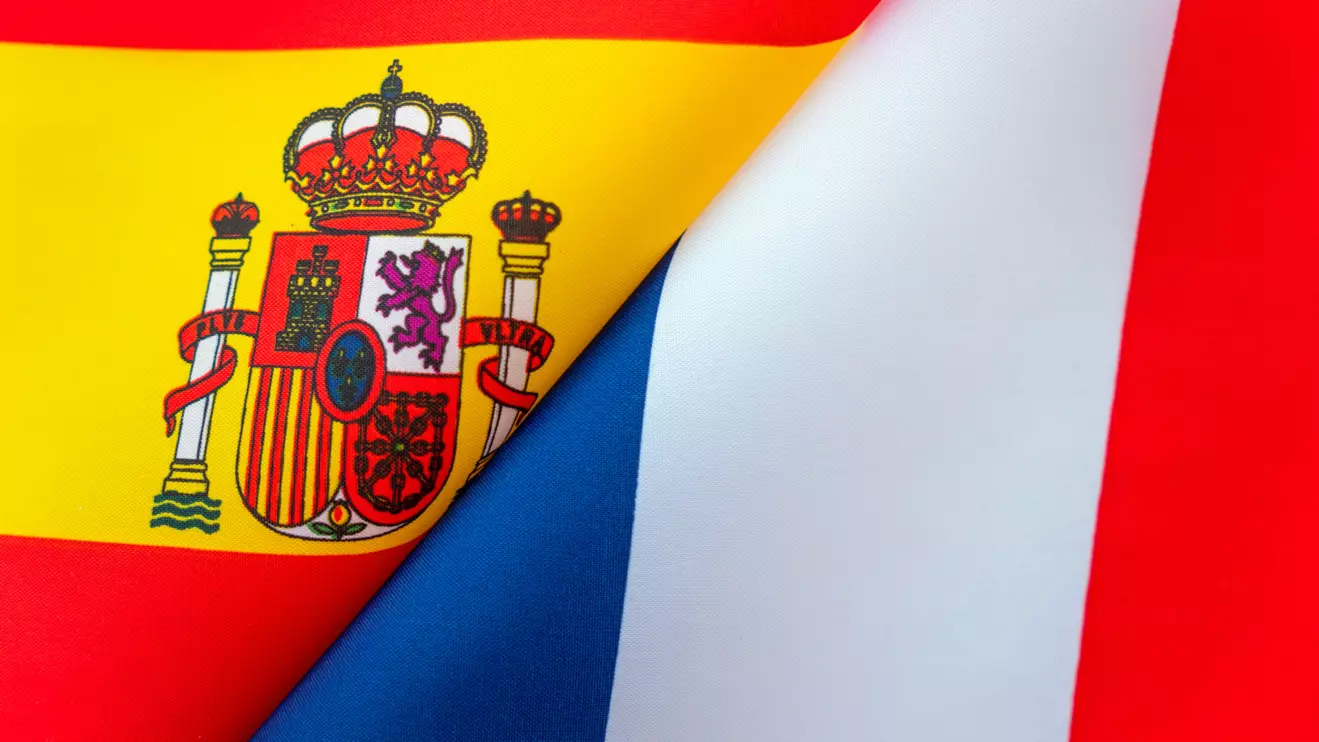
The calls came within hours of each other. Spanish Foreign Minister José Manuel Albares declared it "unacceptable" that Israel continues fighting in Lebanon following the US-Iran truce.
French President Emmanuel Macron echoed the sentiment, insisting the ceasefire must extend to Lebanese territory.
Both men are wrong. And the consequences of their position could be severe.
What Paris and Madrid are proposing is not diplomacy. It is performance, the kind that sounds statesmanlike on a radio programme and disintegrates the moment it meets reality. A ceasefire in Lebanon means one thing above all else: freezing Hezbollah in place. Locking in its tunnel networks, its missile arsenal, its command structures.
Cementing Iran's military footprint on Israel's northern border for another decade. That is not a path to stability. It is a signed guarantee of the next war, written in the language of restraint, delivered with a straight face.
And here is what Macron and Albares consistently fail to mention: it is not only Israel that rejects this logic. Lebanese authorities themselves have no interest in enshrining Hezbollah's stranglehold over their own sovereign territory. The organisation has spent decades systematically hollowing out the Lebanese state, using it as a human shield, a logistics hub, a launchpad. A ceasefire that leaves those structures intact does not protect Lebanon. It imprisons it.
The problem you cannot negotiate away
Hezbollah is not a political movement open to compromise. It is a heavily armed Iranian proxy — disciplined, ideologically rigid, and committed to Israel's destruction in terms no diplomatic communiqué has ever softened.
It has a tunnel network that runs under civilian neighbourhoods. It has a missile stockpile that dwarfs most national armies. And it has a memory that stretches back further than any European foreign minister's attention span.
The precedent is damning. After the 2006 war, Hezbollah rebuilt faster and better than any observer in Paris or Madrid anticipated — rearmed under the nose of UNIFIL, the UN force deployed precisely to prevent it. Two weeks of ceasefire today is not a de-escalation gesture. It is a rearmament window. A breathing space. A gift.
Israel's insistence on a buffer zone is not expansionism. It is the irreducible security requirement of a state that has spent years watching rockets fall on its northern towns while the international community drafted resolutions nobody enforced. Eighteen years of diplomatic notes have produced exactly nothing. The military option is not a choice made in anger — it is the conclusion drawn from exhausting every alternative.
The question nobody in Europe will answer
What, precisely, are Spain and France proposing? That Israel stand down, and then what? That UNIFIL deploy more observers to watch Hezbollah rearm in real time, as it has done since 2006? That the Security Council pass resolution number nineteen, to be ignored like the previous eighteen?
The pattern is not a secret. Europe calls for restraint. Israel absorbs the pressure. The ceasefire lands. The weapons flow back in. Three years pass. The next conflict begins, bloodier, longer, harder to end. Repeat.
Albares and Macron are entitled to their opinions. But there is a particular arrogance in demanding that others stop fighting a war you have no intention of helping to resolve — and then calling it moral leadership. Sometimes the most reckless thing a bystander can do is insist the fighting stop, with no plan, no leverage, and no understanding of what fills the vacuum the moment it does.
That is not diplomacy. That is the illusion of it.