Iran
No deal required, Trump says of Iran's enriched uranium
U.S. President Donald Trump on Thursday said that Washington did not need a deal with Iran to get enriched uranium from the country.
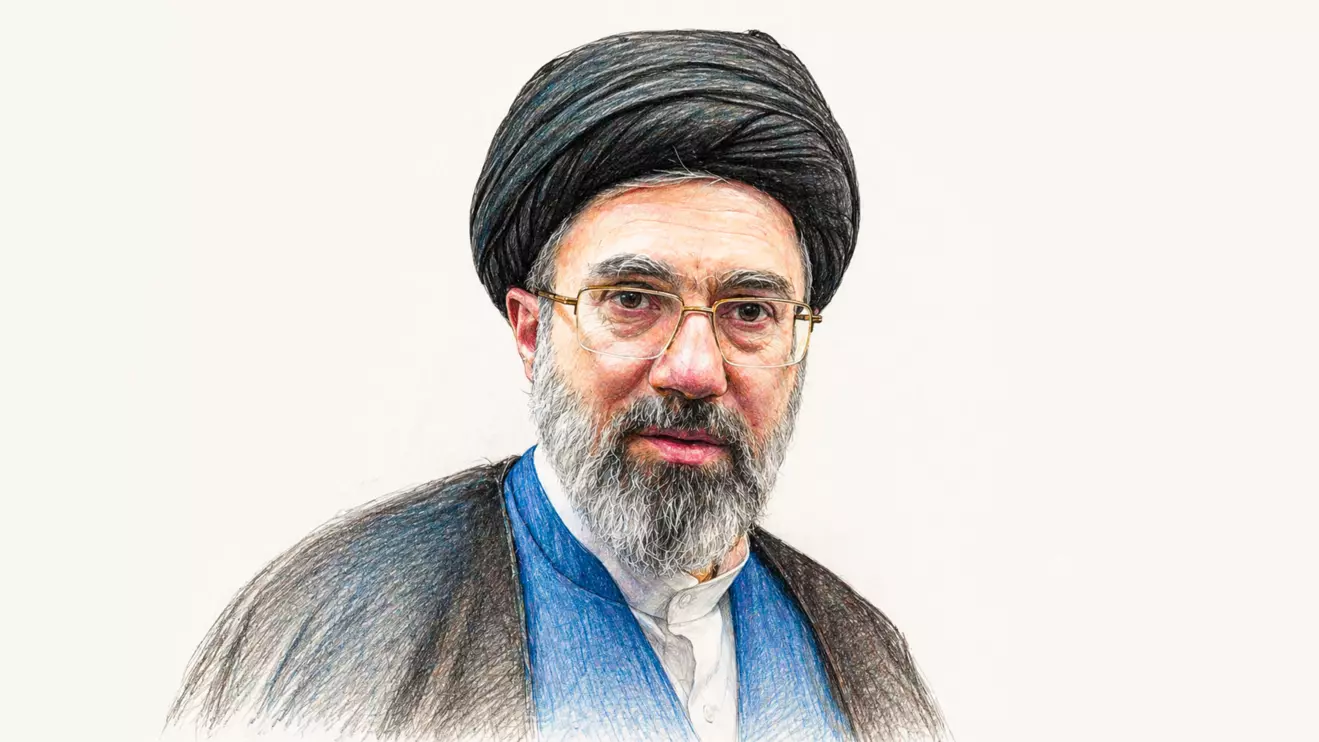
A message attributed to Mojtaba Khamenei, who has not been seen in public since being gravely wounded on 28 March, has been broadcast by Iranian state television. The regime's credibility problem is hiding in plain sight.
Mojtaba Khamenei © Mena Today
Iranian state television broadcast a remarkable message Thursday, attributed to Supreme Leader Mojtaba Khamenei, declaring that the United States had suffered a "humiliating defeat" two months into the war triggered by the joint Israeli-American offensive against Iran.
There is just one problem. Khamenei has not been seen in public since 28 March. No image, no appearance, no verifiable proof of life. Sources close to the Iranian leadership suggest he was gravely wounded in the strikes. Some go further.
Yet according to Tehran, this same man - unable to show his face to the world - somehow found the strength to craft a polished political statement declaring that "a new chapter opens for the Gulf and the Strait of Hormuz."
The message itself is a masterpiece of creative fiction. The United States, which deployed two carrier strike groups, tens of thousands of troops and dozens of combat aircraft to the region, has apparently been humiliated. Iran, whose supreme leader is missing, whose economy Donald Trump describes as being in "a state of collapse," and whose military has been severely degraded, has apparently won.
The regime is not speaking to Washington or Jerusalem. It is speaking to its own population, and hoping they still believe it.
Increasingly, that is a very big ask.
U.S. President Donald Trump on Thursday said that Washington did not need a deal with Iran to get enriched uranium from the country.
In a striking political declaration, Fahad Al Masri, President of the National Salvation Front in Syria, has issued a bold call for a strategic alliance between post-Assad Syria, the United States and Israel, a move that would represent a seismic shift in the region's diplomatic landscape.
Hezbollah rejected a ceasefire plan agreed by the Lebanese and Israeli governments in U.S.-mediated talks, as Israel kept up strikes in southern Lebanon on Thursday and said it wouldn't be withdrawing from the south.
To make this website run properly and to improve your experience, we use cookies. For more detailed information, please check our Cookie Policy.
Necessary cookies enable core functionality. The website cannot function properly without these cookies, and can only be disabled by changing your browser preferences.