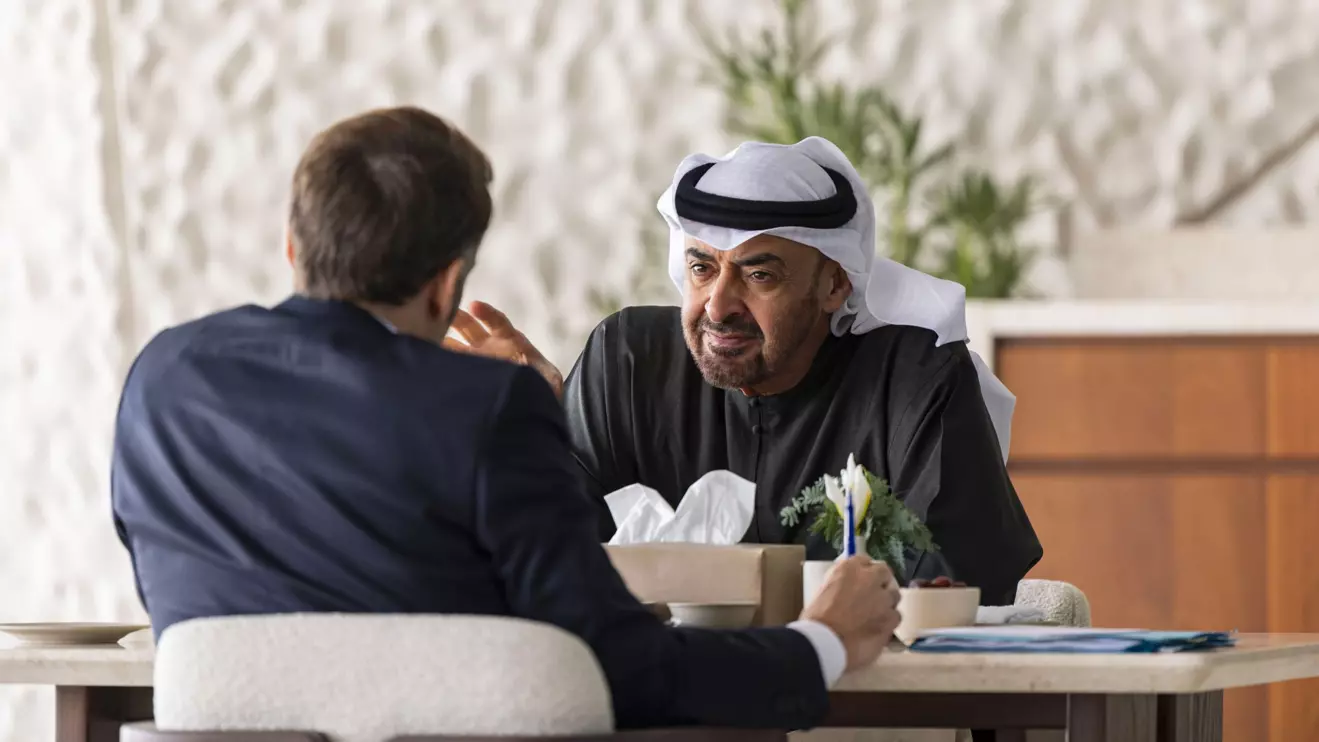
French President Emmanuel Macron arrived in the United Arab Emirates on Sunday to spend Christmas with French troops deployed abroad and to highlight France’s strategic partnership with the Gulf state.
Behind the diplomatic language, however, one issue stands out: France’s push for stronger cooperation against drug trafficking.
During his visit, Macron is due to meet UAE President Mohammad bin Zayed Al Nahyan. Paris is seeking greater Emirati support in what the French government has described as an all-out fight against narcotics networks, many of whose leaders are now based in Dubai.
Dubai as a haven for French traffickers
For several years, Dubai has become home to a growing number of high-profile French drug traffickers. Some have built sizeable real estate portfolios and live openly, driving luxury cars and frequenting the emirate’s most exclusive restaurants and hotels.
Known locally as the “French Arabic,” these figures are mainly from France’s Maghrebi community and are accused by French authorities of continuing to run or profit from their criminal networks from abroad. While a small number have been extradited to France, most remain out of reach, allowing their businesses to flourish.
French officials also regularly point to the local financial environment. Banks in the emirate are often criticised for not scrutinising the origin of funds closely enough, making it easier to launder money generated by drug trafficking.
Security cooperation already in place
The issue comes against the backdrop of an already strong military presence. More than 900 French soldiers are stationed across three bases in the UAE. France is involved in Aspides, a mission aimed at protecting shipping from Houthi attacks in the Red Sea, and in Operation Chammal, part of the international coalition against the Islamic State group.
For Paris, the challenge now is to extend this close defence partnership into deeper judicial and police cooperation.
As Macron meets Emirati leaders, the visible and enduring presence of French drug traffickers in Dubai has become a central, and sensitive, issue on the bilateral agenda.