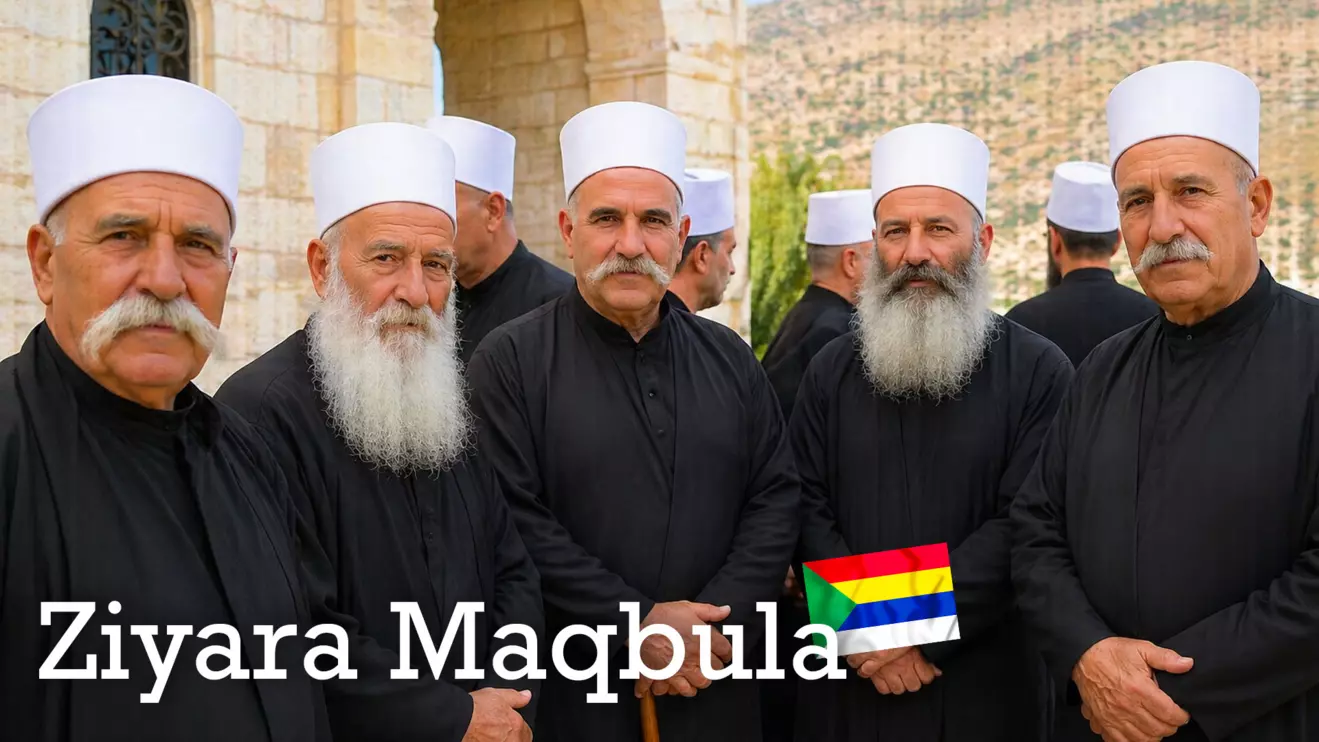
Every year, in the rolling hills of the Galilee in northern Israel, one of the Middle East's most distinctive religious communities comes together for its most sacred annual event.
The Druze pilgrimage of Ziyara Nabi Shuaib, the visitation of the Prophet Shuaib, known in the Hebrew Bible as Jethro, draws tens of thousands of worshippers to the tomb of the prophet near the town of Hittin, transforming the site into a vibrant gathering of faith, community and cultural identity.
In Druze tradition, Nabi Shuaib, identified with the biblical Jethro, father-in-law of Moses, holds a place of supreme spiritual importance. He is considered one of the greatest prophets in the Druze faith, a figure of wisdom, guidance and moral integrity.
According to tradition, his tomb is located near the site of the ancient village of Hittin in the Lower Galilee, and it is here that the community gathers each spring for the Ziyara, meaning "visitation" in Arabic.
Jethro's significance in Druze theology goes beyond his role as Moses's father-in-law. He is revered as a spiritual teacher and a symbol of the covenant between the Druze people and the land — making his tomb one of the holiest sites in the Druze world.
A gathering of community and identity
The Ziyara is far more than a religious pilgrimage. It is the single most important communal event in the Druze calendar, a moment when families travel from every Druze village in Israel, from the Galilee to the Carmel and the Golan Heights, to reunite, pray and reaffirm their collective identity.
The atmosphere is at once solemn and festive. Prayers and religious ceremonies mark the spiritual core of the event, while the surrounding area fills with food stalls, music and the reunions of extended families. Elders in traditional dress, young men and women, children — all generations of the community are present, making the Ziyara a living expression of Druze continuity across time.
The Druze community in Israel numbers approximately 145,000 people, concentrated primarily in villages in the Galilee, the Carmel region and the Golan Heights.
Uniquely among Arab communities in Israel, Druze men serve in the Israeli Defence Forces, a reflection of a covenant of loyalty with the state that dates back to Israel's founding and is a source of both pride and ongoing debate within the community.
The Ziyara Nabi Shuaib serves as a powerful annual reminder of what makes the Druze community distinctive: a faith that is largely secret and closed to outsiders, a fierce sense of communal solidarity, and deep roots in the land of the Galilee that predate the modern states of the region by many centuries.