On October 7, 2023, Hamas terrorists stormed southern Israel and massacred 1,200 people, men, women, children, elderly, in the deadliest assault on Jewish people since the Holocaust. They took 250 hostages. They filmed their crimes with pride.
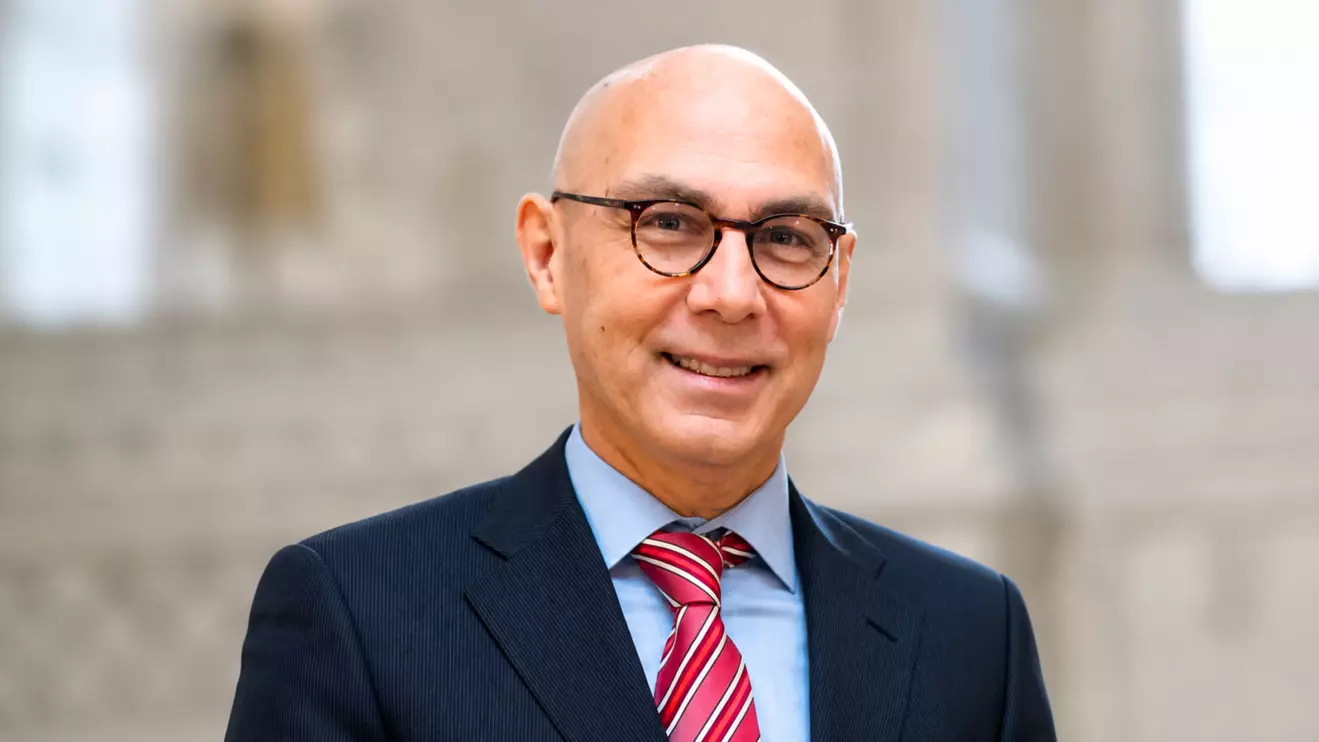
Volker Türk, the UN's High Commissioner for Human Rights, had relatively little to say about that.
But Israel's military response? That, apparently, is genocide.
Genocide is one of the gravest accusations in international law. It requires specific intent, the deliberate aim to destroy a people in whole or in part. It is not a synonym for war, for civilian casualties, or for military operations that cause devastating harm. It is a precise legal concept with a precise legal threshold.
Türk has invoked it so repeatedly, so reflexively and so selectively that he has effectively stripped it of meaning, turning a legal standard into a political weapon.
No international court has found Israel guilty of genocide. The International Court of Justice issued provisional measures, carefully worded, deliberately inconclusive. Yet Türk speaks as though the verdict is in. It is not.
Since October 7, Türk has issued report after report, statement after statement, each one more damning than the last, and each one focused almost exclusively on Israel. Not on Hamas, which deliberately embeds its military infrastructure in hospitals, schools and civilian areas. Not on the hostages in Gaza. Not on Iran's role in financing and directing regional terror.
Just Israel.
This is not impartiality. It is not even close.
Words that kill
Senior UN officials are not neutral observers. Their words carry institutional weight. When Türk reaches for terms like genocide and ethnic cleansing, without definitive legal rulings, without full context, without equivalent scrutiny of Hamas's conduct, those words do not disappear into the diplomatic ether.
They are amplified by pro-Hamas networks across social media. They are cited by antisemitic movements to justify harassment and violence against Jewish communities worldwide. They are used by those who seek not a two-state solution but the elimination of one state entirely.
Türk may consider himself a voice for the voiceless. He should consider more carefully whose agenda his voice is serving.
An institution that has lost its way
The UN's credibility on this conflict is in tatters, and not without reason.
UNRWA, its Palestinian refugee agency, employed staff who participated in the October 7 massacres. Its reporting has been systematically skewed. Its Human Rights Council counts among its members some of the world's most repressive regimes, all too happy to pile on Israel while their own populations suffer in silence.
An organisation that was created to prevent another Holocaust has allowed itself to become a platform for those who would celebrate one.
Volker Türk has a choice. He can be a serious human rights official, rigorous, balanced, legally precise. Or he can continue as he has: a megaphone for one side of the most complex conflict on earth.
He cannot be both.