From Mediterranean coast to desert oasis: Egypt's double archaeological triumph

1 min Chantal Stambouli

Egyptian archaeologists have announced two significant discoveries, a series of Greco-Roman tombs on the Mediterranean coast and the remains of a Byzantine-era city deep in the western desert.

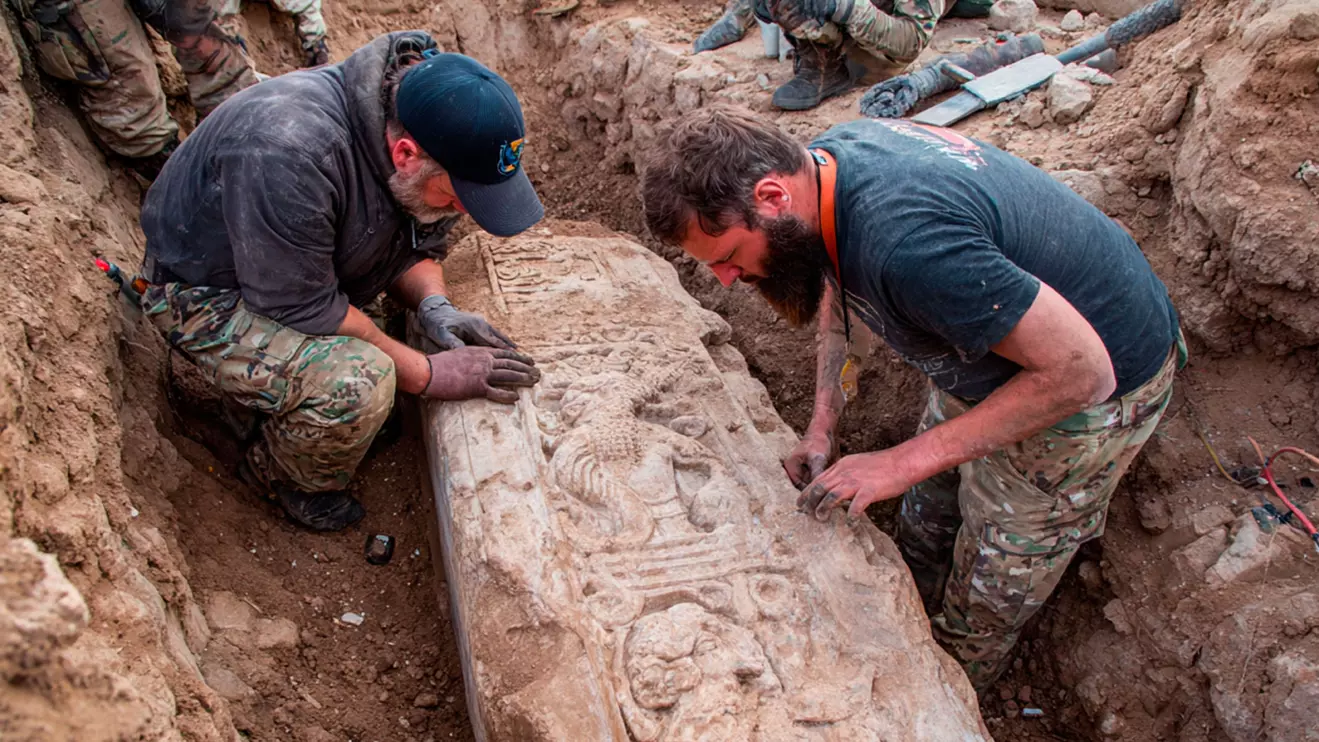
Egypt regularly showcases major archaeological finds as part of its strategy to boost tourism revenues © Mena Today 

Egypt regularly showcases major archaeological finds as part of its strategy to boost tourism revenues © Mena Today 

Egyptian archaeologists have announced two significant discoveries, a series of Greco-Roman tombs on the Mediterranean coast and the remains of a Byzantine-era city deep in the western desert.

At Marina El-Alamein, some 100 kilometres west of Alexandria, excavations have revealed 18 Greco-Roman tombs dating back nearly 2,000 years, several with their stone sealing slabs still in place. 

A granite sarcophagus measuring approximately 2.5 metres was found with its lid intact, suggesting the burial had remained undisturbed for two millennia. 

Inside, archaeologists found human remains, pottery, amphorae and other funerary objects. Among the most striking finds: 24 gold objects placed in the mouths of several individuals, a burial practice linked to ancient beliefs about the afterlife.

The site is believed to be the ancient port city of Leukaspis, which flourished from the Hellenistic through the Byzantine periods. This latest discovery brings the total number of known tombs at Marina El-Alamein to 44 since the site was first identified in 1986.

In the Dakhla Oasis in Egypt's western desert, archaeologists uncovered the remains of a Byzantine village at Ain al-Sabil, dating to around the 4th century AD. 

Built in mud brick, the site features an organised street network, public squares, residential buildings, a basilica-style church and defensive structures. Some 200 ostraca written in Coptic and Greek were found alongside bronze and gold coins, including some from the reign of Roman Emperor Constantius II (337–361 AD).

Egypt regularly showcases major archaeological finds as part of its strategy to boost tourism revenues, a vital source of foreign currency alongside Suez Canal income and remittances from Egyptians abroad.

Tags

Chantal Stambouli

Chantal Stambouli

Based in Dubai, Chantal Stambouli covers lifestyle, fashion, emerging trends, and gastronomy across the UAE, Kuwait, Qatar, Bahrain, Saudi Arabia, Oman and Morocco 

Related

Egypt

The EU-Egypt money pipeline: €1.5 billion, with more before autumn

Money is on its way to Cairo. Egyptian Foreign Minister Badr Abdelatty confirmed Saturday that a €1.5 billion tranche from the European Union's macro-financial assistance package will arrive within days, the first of two remaining instalments from a €5 billion facility that forms the centrepiece of a broader EU-Egypt financial partnership.

Egypt

Salah injury scare clouds Egypt's last-16 qualification

Egypt qualified for the Round of 16 at the 2026 World Cup but left Seattle with concerns over Mohamed Salah after the star forward was substituted off in the 57th minute during Friday's 1-1 draw against Iran, applying an ice pack to his left thigh.

Egypt

Iran peace diplomacy shifts to Cairo

The foreign ministers of Egypt, Saudi Arabia, Turkey and Pakistan are due to meet in Cairo on Sunday to discuss the fragile US-Iran peace framework, as Israeli strikes in southern Lebanon killed 47 people and wounded nearly 100, dealing a severe blow to the ceasefire the agreement was supposed to deliver.

Subscribe to our newsletter

Mena banner 4

To make this website run properly and to improve your experience, we use cookies. For more detailed information, please check our Cookie Policy.

  • Necessary cookies enable core functionality. The website cannot function properly without these cookies, and can only be disabled by changing your browser preferences.