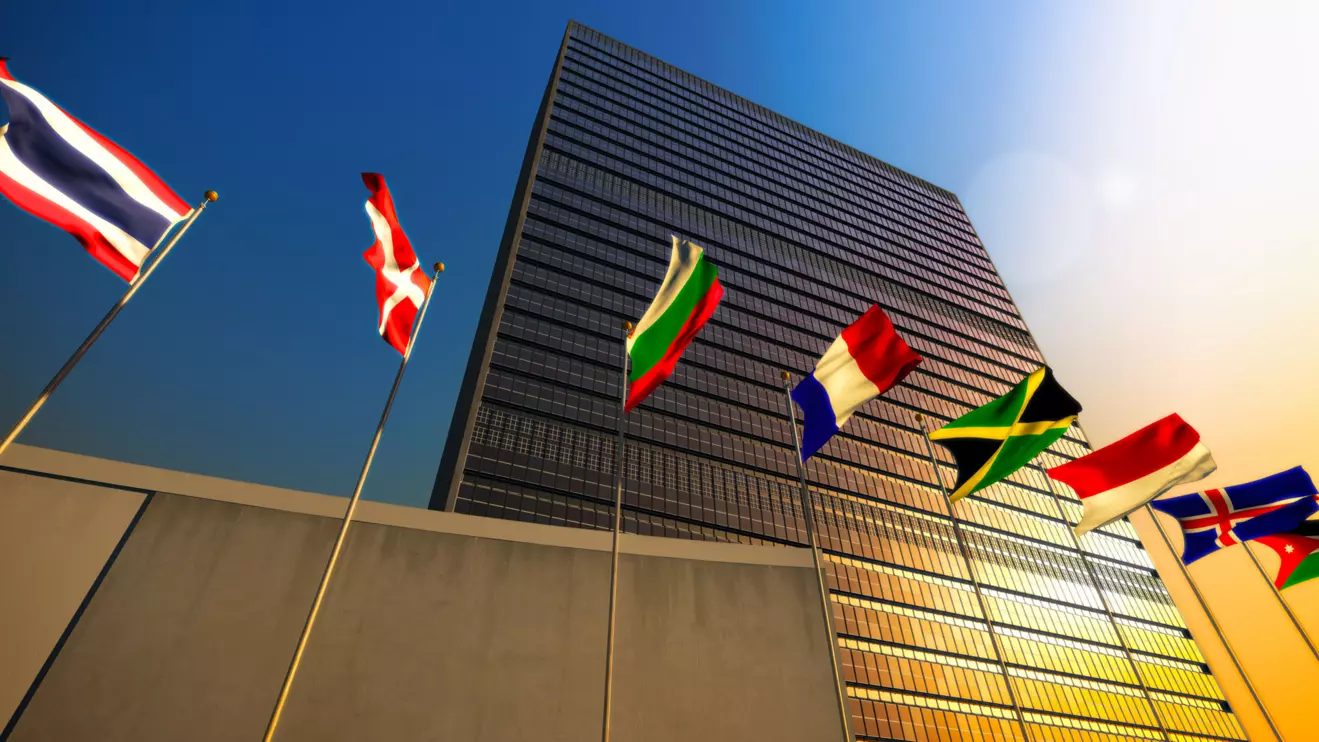
At the United Nations, France enjoys an enviable status. Its permanent seat on the Security Council gives it the illusion of being one of the world’s great powers.
Yet behind the grand speeches, France faces domestic turmoil, economic decline, and foreign policy failures. In this fragile context, President Emmanuel Macron is preparing to take the marble rostrum in New York to announce France’s recognition of a Palestinian state.
But what state, exactly? A “state” with no defined borders, no functioning institutions, no unity—only a number, the 194th member of the UN. By joining the 145 countries that have already recognized this phantom entity, France is not reviving peace but rewarding violence.
For decades, Israel has been the UN’s scapegoat, targeted more than all other nations combined.
Ninety percent of General Assembly motions and half of Human Rights Council resolutions obsessively condemn the Jewish state, while regimes guilty of mass atrocities are barely scrutinized.
This fixation has stripped the UN of credibility. Macron’s decision to side with this automatic majority only deepens the injustice.
Let us be clear: recognition of Palestine under current circumstances is not diplomacy—it is capitulation. It is a gift to Hamas, the group that carried out the October 7 massacre, continues to hold Israeli hostages, and rules Gaza through fear and terror.
Rather than isolating extremists, France is legitimizing them by bypassing the very conditions Macron himself once outlined: the release of hostages, the disarmament of Hamas, and a reformed Palestinian Authority. None of these conditions have been met.
The joint declaration with Saudi Arabia is presented as a roadmap for peace. In reality, it is a catalogue of illusions: a corruption-free Palestinian Authority, democratic elections within a year, a magically disarmed Hamas, Israel integrated into a regional security framework, and a multinational force securing Gaza. This is not a plan—it is fantasy, reminiscent of past UN failures like the ineffective peacekeeping in southern Lebanon.
As former U.S. President Bill Clinton observed, Israel offered peace five times, and Yasser Arafat rejected it five times. October 7 changed everything: Israelis no longer see territorial compromise as a path to peace but as a path to vulnerability.
To recognize a Palestinian state now, while Hamas still holds power in Gaza, is to ignore this reality—and to signal that terrorism can deliver political victories.
This is not a bold step toward peace. It is a moral surrender to terror.