
Turkey
Partnership yes. Membership no
Turkey's crackdown on LGBT groups, the opposition and the media is pushing it further from European Union membership, EU Enlargement Commissioner Marta Kos said on Friday during an official visit.

The White House unveiled the first members of a so-called Board of Peace, tasked with overseeing the temporary governance of Gaza, a territory under a fragile ceasefire since October.
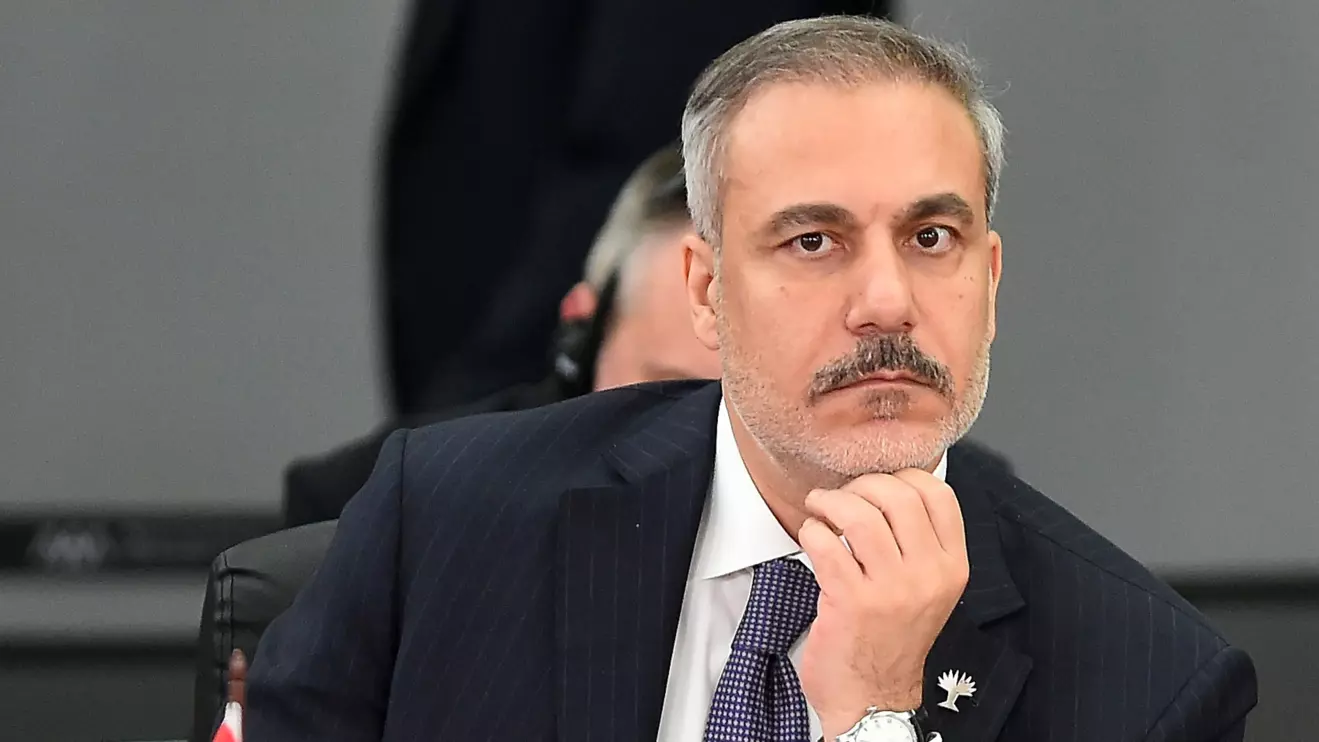
Hakan Fidan © Mena Today
The White House unveiled the first members of a so-called Board of Peace, tasked with overseeing the temporary governance of Gaza, a territory under a fragile ceasefire since October.
The board includes U.S. Secretary of State Marco Rubio, President Donald Trump’s special envoy Steve Witkoff, former British Prime Minister Tony Blair, and Trump’s son-in-law Jared Kushner. Trump himself will chair the board, according to the plan presented by the White House in October.
Alongside this structure, Washington also announced the creation of an 11-member Gaza Executive Board. Among those named are Turkey’s foreign minister Hakan Fidan, UN Middle East peace coordinator Sigrid Kaag, UAE minister Reem Al-Hashimy, and Israeli-Cypriot billionaire Yakir Gabay.
It is the inclusion of Hakan Fidan that stands out, and alarms.
A former head of Turkish intelligence, Fidan is not a neutral technocrat. He represents a government that has openly backed Hamas for years. Ankara has never hidden its political support for the Islamist movement, designated as a terrorist organization by the United States and the European Union.
President Recep Tayyip Erdoğan has also never clearly condemned the massacres of October 7, 2023, in Israel. Since then, his attacks against Israel have only intensified, becoming harsher and more systematic.
Placing Hakan Fidan on the Gaza Executive Board is, at best, a risky gamble. At worst, it sends a deeply contradictory signal.
Can a country that shields Hamas play an honest role in shaping Gaza’s future? Can a senior figure of Ankara’s security apparatus be expected to act as a stabilizing force rather than a political proxy?
The Trump administration may believe it can keep Turkey close, and under watch, by giving it a seat at the table. Washington may be trying to appease a NATO ally, or to moderate Turkish hostility toward Israel through engagement rather than confrontation.
But inclusion is not neutrality. And legitimacy is not guaranteed by a title.
In Gaza, symbols matter. Appointments matter. And placing a known Hamas-friendly figure at the heart of a post-war governance structure risks undermining the very credibility this “Board of Peace” claims to embody.
Turkey's crackdown on LGBT groups, the opposition and the media is pushing it further from European Union membership, EU Enlargement Commissioner Marta Kos said on Friday during an official visit.
Benjamin Netanyahu's military secretary on October 7, 2023, has accused the prime minister of passing up chances to bring hostages home alive in order to protect his coalition. Netanyahu rejects the claim.
President Donald Trump said on Thursday that the US will not launch an attack on Iran before November's US midterm congressional elections, asserting that the two countries are having "productive" talks about ending the six-month-old war.

To make this website run properly and to improve your experience, we use cookies. For more detailed information, please check our Cookie Policy.
Necessary cookies enable core functionality. The website cannot function properly without these cookies, and can only be disabled by changing your browser preferences.